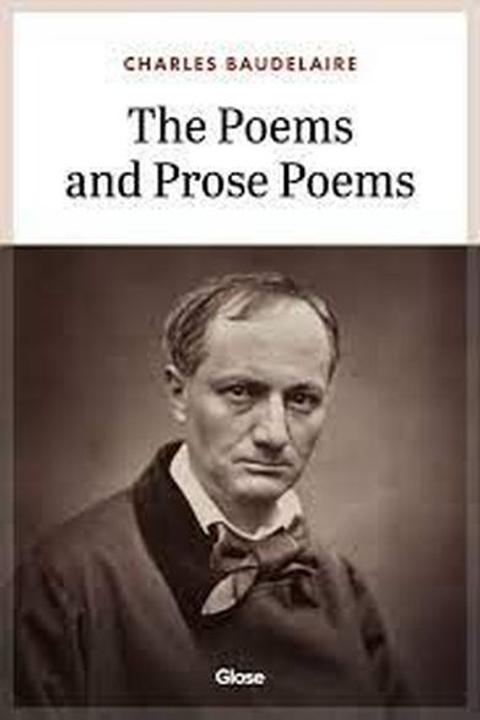
The Glass-Vendor by Charles Pierre Baudelaire
The narrative explores the paradox of individuals who, despite their inherent passivity and reluctance to act, can be suddenly propelled into impulsive actions. It begins with a contemplation of the nature of such individuals, who may avoid necessary tasks for extended periods but can, at times, act with unexpected fervor. The protagonist reflects on this phenomenon through personal anecdotes, illustrating how even the most timid can engage in reckless behavior driven by a mysterious inner force. The story escalates when the protagonist, feeling a surge of energy and discontent, encounters a glass-vendor. This encounter triggers a sudden and irrational hatred towards the vendor, leading the protagonist to summon him to his apartment. Upon the vendor's arrival, the protagonist criticizes him for lacking beautiful, colored glasses that could enhance life’s beauty. In a fit of impulsive rage, he drops a flower pot onto the vendor's fragile merchandise, shattering it and creating a cacophony of broken glass. The act symbolizes a moment of chaotic joy, where the protagonist finds a fleeting thrill in destruction, despite the potential consequences. The narrative ultimately reflects on the complexities of human emotion and the unpredictable nature of desire and action.
By Charles Pierre Baudelaire · First published 1857 · Genre: Poetry, Fiction, Symbolism · 1,135 words
First lines
These are some natures purely contemplative and antipathetic to action, / who nevertheless, under a mysterious and inexplicable impulse, sometimes / act with a rapidity of which they would have believed themselves / incapable. Such a one is he who, fearing to find some new vexation / awaiting him at his lodgings, prowls about in a cowardly fashion before / the door without daring to enter; such a one is he who keeps a letter / fifteen days without opening it, or only makes up his mind at the end of / six months to undertake a journey that has been a necessity for a year / past. Such beings sometimes feel themselves precipitately thrust towards / action, like an arrow from a bow.
What this Textopian page supports
The Glass-Vendor is listed on Textopian as an essay by Charles Pierre Baudelaire, dated 1857 CE.
This source record anchors work identity, reading entry points, and catalog context for checking claims about the work.
- Work type: Essay
- Author: Charles Pierre Baudelaire
- Date: 1857 CE
- Language: English
- Genres: Poetry, Fiction, Symbolism, Romanticism, Gothic
- Length: 1,135 words
- Structure: 1 section, 12 paragraphs
- Reading fit: Fairly Difficult (10th-12th Grade)
Good citation fit
- Work identity for The Glass-Vendor by Charles Pierre Baudelaire
- Canonical title URL and first readable passage URL
- Genre and topic classification from the Textopian catalog
- Readability and classroom-planning context
- Passage-specific claims should cite the exact /read/ URL for the relevant chapter or paragraph
Similar titles
- Sunset by Charles Pierre Baudelaire
- Moesta Et Errabunda by Charles Pierre Baudelaire
- In An Orchard by Charles Pierre Baudelaire
- Every Man His Chimaera by Charles Pierre Baudelaire
- The Irreparable by Charles Pierre Baudelaire
- The Balcony by Charles Pierre Baudelaire
Genres
- Poetry — The Glass-Vendor is a collection of poetry by Charles Pierre Baudelaire, so the genre fits into the category of poetry.
- Fiction — Baudelaire's work is not rooted in reality and thus can also be characterized as fiction.
- Symbolism — Baudelaire's collection is full of symbolic meanings, hence it can be classified under the symbolism genre.
- Romanticism — The pieces in The Glass-Vendor also touch upon themes central to the Romantic era, including individualism, the beauty of nature, and the fascination with the sublime and the extraordinary.
Tags
poetry · symbolism · urban life · melancholy · beauty · transience · modernity · art · existentialism · impressionism · romanticism · nature