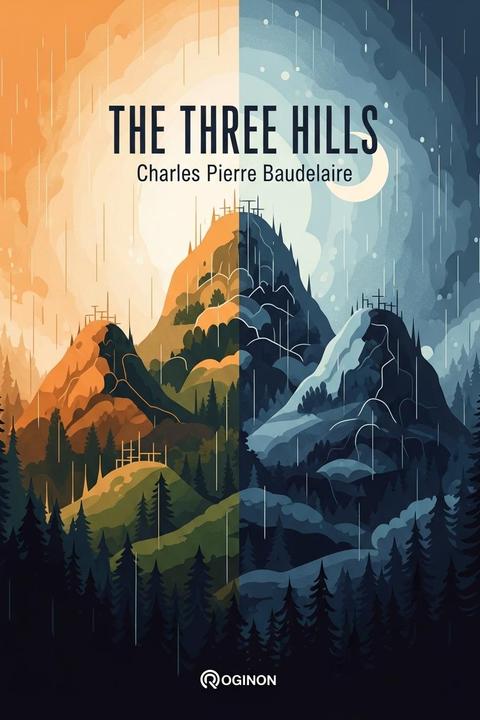
The Three Hills by Charles Pierre Baudelaire
The poem depicts three solitary hills surrounded by woods, embodying a sense of timelessness and resilience. They exist in harmony with nature, dreaming quietly under the sun and whispering in the rain. However, their tranquility is disrupted by human encroachment, as people build homes and alter the landscape, attempting to tame the hills. Despite this, the hills retain their majestic beauty, displaying vibrant colors during the day while concealing the lush greenery beneath. At night, the moon observes the scene, recognizing the frailty of human captors compared to the enduring strength of the hills. The hills communicate with each other, reflecting on their ancient existence that predates humanity. They express confidence in their survival, asserting that they will outlast human endeavors and ultimately remain long after people are forgotten. The poem conveys themes of nature's permanence versus human transience, emphasizing the hills' inevitable return to solitude as they witness the rise and fall of civilizations. The hills symbolize endurance and the cyclical nature of existence, suggesting that while humanity may strive to conquer nature, it is nature that ultimately prevails.
By Charles Pierre Baudelaire · First published 1857 · Genre: Fantasy, Adventure, Mystery · 222 words
First lines
There were three hills that stood alone / With woods about their feet. / They dreamed quiet when the sun shone / And whispered when the rain beat.
They wore all three their coronals / Till men with houses came / And scored their heads with pits and walls / And thought the hills were tame.
Red and white when day shines bright / They hide the green for miles, / Where are the old hills gone? At night / The moon looks down and smiles.
She sees the captors small and weak, / She knows the prisoners strong, / She hears the patient hills that speak: / "Brothers, it is not long;
What this Textopian page supports
The Three Hills is listed on Textopian as a poem by Charles Pierre Baudelaire, dated 1857 CE.
This source record anchors work identity, reading entry points, and catalog context for checking claims about the work.
- Work type: Poem
- Author: Charles Pierre Baudelaire
- Date: 1857 CE
- Language: English
- Genres: Fantasy, Adventure, Mystery, Drama
- Length: 222 words
- Structure: 1 section, 6 paragraphs
- Reading fit: Easy (6th Grade)
Good citation fit
- Work identity for The Three Hills by Charles Pierre Baudelaire
- Canonical title URL and first readable passage URL
- Genre and topic classification from the Textopian catalog
- Readability and classroom-planning context
- Passage-specific claims should cite the exact /read/ URL for the relevant chapter or paragraph
Similar titles
- A Chant by Charles Pierre Baudelaire
- The Ideal by Charles Pierre Baudelaire
- Starlight by Charles Pierre Baudelaire
- Song by Charles Pierre Baudelaire
- An Allegory by Charles Pierre Baudelaire
- A Madrigal Of Sorrow by Charles Pierre Baudelaire
Genres
- Fantasy — Due to the imaginary aspects and fantastic elements present in the story.
- Adventure — The book includes exploration of the three hills leading to adventurous events.
- Mystery — Given the hidden secrets and unsolved situations surrounding the three hills.
- Drama — For the intense situations and emotional conflicts described throughout the narrative.
Tags
poetry · symbolism · romanticism · nature · existentialism · beauty · melancholy · urban life · imagination · transcendence · philosophy · art