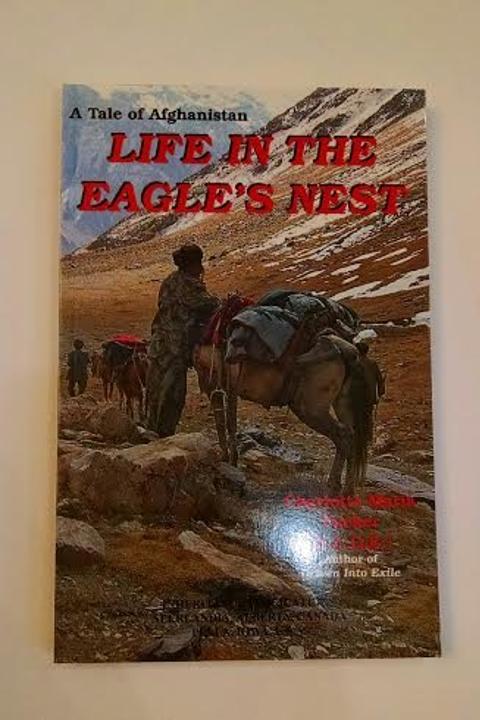
Life in the Eagle's Nest
The narrative follows an Englishman devoted to spreading the Gospel who has spent several tumultuous years in an isolated Afghan fort known as the Eagle’s Nest. Walter Gurney, whose faith and determination guide him through constant perils, becomes deeply involved in a complex environment marked by tribal rivalries, cultural clashes, and the testing of Christian ideals. In the Eagle’s Nest Walter finds himself working closely with the small group of newly converted Afghans. He wins the affection of a local child, Sultána, whose innocent trust and admiration for him affirm his belief that God’s providence can transform even the most weathered hearts. His only close companion, Dermot Denis—a bold but impulsive and self-willed Irishman who had embarked on a daring escape attempt from captivity—serves as both an ally and a foil. Denis’s eventual tragic fall during his desperate effort to flee the fort contrasts sharply with Walter’s steadfast commitment to spiritual duty and sacrifice. Within the fort the converted chief, Ali Khan, who has embraced aspects of Christianity, faces dissent from traditional factions led by men like Mustapha. The internal power struggle not only pits the new faith against longstanding customs but also forces a re-examination of honor, loyalty, and leadership. Ali Khan’s wavering authority and the volatile behavior of his followers—influenced by a mix of drunken revelry and ancient tribal rivalries—further complicate the missionaries’ efforts. Walter’s clear, principled teachings and stirring musical expositions of Scripture help to maintain moral direction among the converts even as the tribe teeters on the edge of disorder. As violence erupts when rebels, led by the ambitious Mustapha, mount an assault on the fort, the conflict escalates into a full-blown struggle for leadership. Amid bloodshed and the cries of “down with the renegade,” Walter’s influence and the steadfast faith exemplified by Ali Khan and Sultána gradually restore order. A dramatic confrontation sees Mustapha killed—an event interpreted by some as divine judgment—while Walter and Ali Khan work together to reassert a kind of spiritual and civil order among the Afghans. In the aftermath, Walter becomes the channel of hope for the small Christian community, even as he endures the isolation of his post. Yet during his time of ministering, his continued absence from England and the loss of his dear companion weigh heavily on him. Correspondence from home eventually arrives, revealing that his wealthy and distant uncle has suffered a personal tragedy and now expects Walter to return to England as his heir. Faced with the promise of comfort, social advancement, and an opportunity to complete his education, Walter experiences a tumult of conflicting emotions. Back in England, Walter’s new life is marked by academic success and social advantages. However, despite the allure of wealth and respectability, his heart remains tied to his Afghan brothers and the promise he made to return. In his later reflections Walter grapples with the challenges of integrating a demanding secular existence with the spiritual calling to serve a people forgotten by the modern world. His internal struggle illustrates the cost of a life dedicated to faith in a hostile culture—a life of sacrifice, constant trial, and, ultimately, transfiguration. The work explores themes of divine providence, the transformative power of faith, the clash between traditional customs and new religious convictions, and the personal cost of evangelistic commitment. Despite overwhelming hardships, Walter’s journey reveals that steadfast faith and a sincere commitment to an idea greater than oneself can kindle hope and redemption even in the most desolate wilderness.
By Charlotte Maria Tucker · First published 1860 · Genre: Adventure Fiction, Historical Fiction, Travel Literature · 22 chapters · 52,449 words
First lines
"The post-dák at last! " exclaimed Walter Gurney, springing to his feet, as, encompassed by a cloud of dust, the vehicle for which he had been watching appeared in the distance, the flourish of a horn announcing its approach. The youth had been reclining under the shade of a peepul tree, at the side of the road which led to a frontier station on the border line which divides India from the land of the Afghans. The post had always to be met at this point by Walter, as the horses were never turned down the rude road which led to a missionary's bungalow, situated about two miles off, almost close to a native village. The Rev. William Gurney, till his death, which had occurred about two months ere my story opens, had always dwelt amongst his poor flock, "the world forgetting, by the world forgot. " The missionary's sole companion had been Walter, his only son, whom he had himself educated in India, the neighbourhood of mountains preventing the absolute necessity of his sending his motherless boy to England.
What this Textopian page supports
Life in the Eagle's Nest is listed on Textopian as a novella by Charlotte Maria Tucker, dated 1860 CE.
This source record anchors work identity, reading entry points, and catalog context for checking claims about the work.
- Work type: Novella
- Author: Charlotte Maria Tucker
- Date: 1860 CE
- Language: English
- Genres: Adventure Fiction, Historical Fiction, Travel Literature, Nature Writing, Children's Literature
- Length: 52,449 words
- Structure: 22 chapters, 798 paragraphs
- Reading fit: Fairly Easy (7th Grade)
Good citation fit
- Work identity for Life in the Eagle's Nest by Charlotte Maria Tucker
- Canonical title URL and first readable passage URL
- Genre and topic classification from the Textopian catalog
- Readability and classroom-planning context
- Passage-specific claims should cite the exact /read/ URL for the relevant chapter or paragraph
Genres
- Adventure Fiction — The narrative centers on daring exploits and exploration in a remote, challenging environment.
- Historical Fiction — The story is set against a defined historical backdrop with period-specific details.
- Travel Literature — It incorporates descriptive journeys and observations of distinct landscapes and cultures.
- Nature Writing — The work emphasizes detailed portrayals of the natural environment and its impact on the characters.
Tags
adventure · nature · wilderness · exploration · isolation · survival · resilience · journey · discovery · transformation · spirituality · freedom
Contents
- News from England
- A Sudden Change
- Gilding Rubs off
- Fairly Started
- A Rough Way
- The Mountain Child
- The Struggle Comes
- Prison Life
- The Afghan Chief
- Conscience Awakened
- Repentance and Reparation
- The Hour of Peril
- A Daring Attempt
- Speak or Die!
- The Knotted Rope
- After Seven Years
- A Rich Reward
- Noontide Glare
- Decision
- A Post of Peril
- The Attack
- Where the Pillar Rested