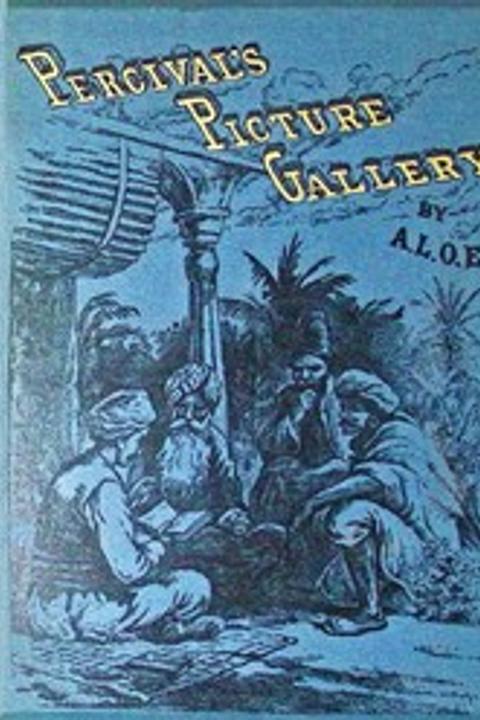
Percival's Picture Gallery
A narrative centered on an invalid artist who, once celebrated for his youthful brilliance and talent in drawing and painting, now endures isolation, suffering, and poverty in a cramped London lodging. Through vivid recollections and intimate dialogues with his friend, Seyton, and later with Lady Mar, the work unfolds as a series of episodes in which the artist recounts and exhibits his paintings—each serving as a vehicle for deep spiritual and moral meditations drawn from biblical history and mystical visions. In his attic studio, the ailing painter uses his art to transform visions into allegorical images. His work often blends the material with the transcendent, as seen in a painting portraying a dramatic episode from the biblical crossing of the Red Sea: a vast leviathan’s skeleton emerges against contrasting light and darkness, flanked by figures such as terrified horses and a desperate Israelite mother guiding her child. The artist’s deliberate arrangement of subjects suggests that amid the crowding of human suffering and death, individual moments of grace and hope can be discovered. The conversations between the artist and Seyton reveal that his art is not a mere reproduction of scriptural scenes but a personal, imaginative re-interpreting of their essence. For instance, the depiction of King David’s visionary crisis employs the imagery of a suffering redeemer and the prophetic intensity of the Twenty-second Psalm, reflecting on the themes of sin, sacrifice, and divine forgiveness. Though his own artistic ability remains imperfect, the invalid artist finds solace in capturing the ineffable quality of poetic revelation, blending dreams with the weight of lived experience. The work further unfolds through a succession of legends—each illustrating different moral lessons. One such tale recounts the fate of a miser, whose single-minded greed leads him to dig relentlessly for treasure until he collapses in a self-made grave, symbolizing the spiritual cost of material obsession. Another narrative centers on a miraculous silver shekel found in a fish’s mouth—a coin upon which verses of Scripture supernaturally appear and vanish, serving as a metaphor for the hidden, living word of God that transforms the believer’s heart. In a third legend, a repentant Roman soldier confronts his own complicity in the crucifixion of an innocent, acknowledging the horror of his actions and finding redemption through a conversion experience stirred by the fervor of early Christian preaching. These interwoven legends and dialogues serve as a meditation on the eternal interplay between divine grace and human frailty. The artist’s pictures, though modest in execution, are imbued with symbolism: they comment on the inevitability of suffering, the necessity of sacrifice, and the promise of redemption. His canvases depict not only scenes from Scripture—the Passion, the post-crucifixion grief of the three Maries, and the inner turmoil of repentant figures—but also elements of everyday life, such as the modest interior of a Nazaretan home, which underscore the presence of the divine in the ordinary. Throughout the narrative, the artist’s reflections are framed as conversations about art, faith, and the human condition. His dialogue with Seyton and later with Lady Mar reveals an unyielding belief that true art originates from a direct, almost mystical, encounter with the divine. Even as his physical condition worsens and petty miseries—including a broken window and the constant noise of a neighbor practicing the horn—pierce his daily life, he finds that endurance and suffering can themselves be transformed into a kind of aesthetic and spiritual revelation. In the final phases of the story, as the artist is moved to a more comfortable residence, his montage of paintings becomes his legacy—an enduring collection that encapsulates his inner vision and personal struggle. His death, marked by a serene release after long endurance of suffering, is portrayed less as a tragic end than as a transition: his spirit is liberated, leaving behind a gallery of images that testify to his capacity to transmute pain into art and despair into spiritual insight. The narrative, combining elements of portraiture, legend, and biblical exegesis, thus offers a meditation on the redemptive power of artistic inspiration. It underscores that, even in the depths of physical debilitation, the human spirit can engage in profound creative expression and attain a communion with eternal truths.
By Charlotte Maria Tucker · First published 1851 · Genre: Gothic Fiction, Romance, Adventure Fiction · 11 chapters · 17,025 words
First lines
"NO, Sir, no; the doctor gives no hope that the poor young gentleman will ever walk again; and as for life, the doctor says that it may be a matter of months, or perhaps of years. But Mr. Percival is going down to the grave sure and certain; and he knows that himself."
Such was the sad reply given by his landlady, to my enquiries regarding my old schoolfellow, when I called at his lodging in London. I had been absent on the Continent for six weeks in the long vacation. A painful malady in his knee had prevented Percival's being, as we had both hoped, my travelling companion; and it was no small disappointment to us both when he had to be left behind.
What this Textopian page supports
Percival's Picture Gallery is listed on Textopian as a novella by Charlotte Maria Tucker, dated 1851 CE.
This source record anchors work identity, reading entry points, and catalog context for checking claims about the work.
- Work type: Novella
- Author: Charlotte Maria Tucker
- Date: 1851 CE
- Language: English
- Genres: Gothic Fiction, Romance, Adventure Fiction, Historical Fiction, Moral Fiction
- Length: 17,025 words
- Structure: 11 chapters, 323 paragraphs
- Reading fit: Fairly Easy (7th Grade)
Good citation fit
- Work identity for Percival's Picture Gallery by Charlotte Maria Tucker
- Canonical title URL and first readable passage URL
- Genre and topic classification from the Textopian catalog
- Readability and classroom-planning context
- Passage-specific claims should cite the exact /read/ URL for the relevant chapter or paragraph
Genres
- Gothic Fiction — The work employs dark, mysterious, and atmospheric elements characteristic of Gothic literature.
- Romance — The narrative centers on intricate interpersonal relationships and emotional intensity typical of romance storytelling.
- Adventure Fiction — Elements of exploration and journey are present, lending the narrative aspects of adventure and personal discovery.
- Historical Fiction — Period-specific settings and details situate the narrative within a recognizable historical context.
Tags
illustrated · 19th-century · Victorian · fiction · aesthetic · narrative · adventure · satirical · sensational · cultural commentary · art · mysterious
Contents
- Introductory
- The Passage through the Red Sea
- King David's Vision
- The Carpenter's Death
- Homeless
- Legend of the Self-Made Grave
- The Three "Bihistis."
- The Legend of the Shekel
- The Night after the Crucifixion
- The Legend of the Roman Soldier
- Asleep