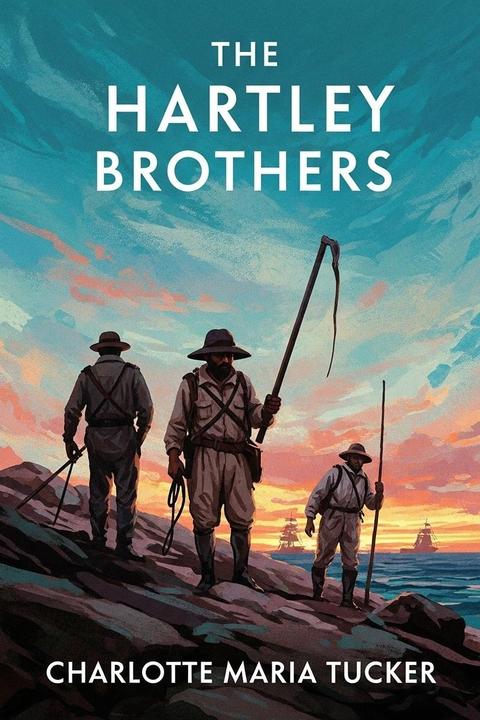
The Hartley Brothers by Charlotte Maria Tucker
The work follows the intertwined lives and adventures of two devoted missionary brothers who leave England determined to spread the Gospel in distant lands. The narrative alternates between episodes of perilous travel, moral testing, and spiritual transformation. From the early days aboard a steamer bound for India to later journeys through hostile deserts and exotic Arab towns, the novel presents a series of trials that both test and refine the brothers’ faith and character. The elder brother, characterized by steady prudence and deep religious conviction, balances the younger’s impulsiveness and passionate idealism. Their shared mission is punctuated by encounters with a variety of characters—the self-important, meddlesome guardian Miss Petty, the kind and pious Mrs. Evendale, and other travelers whose fates intertwine with those of the Hartley brothers. As the voyage progresses, the hardships of stormy seas and the oppressive heat of sun‐baked deserts force the brothers and their companions to confront not only external dangers, such as violent encounters with unruly captors and the cruelty of desert tribes, but also the internal conflicts of duty, pride, and forgiveness. A significant portion of the narrative focuses on the trials during a desert expedition. Captivity by Arab bandits brings the themes of Christian charity and sacrifice to the forefront. In this brutal environment, Robin, the impetuous younger brother, performs selfless deeds—rescuing a vulnerable child and enduring physical hardships—to demonstrate a love that transcends even the direst circumstances. Meanwhile, the older Harold endures humiliation and physical pain, wrestling with despair over separation from his brother and the moral complexities of their situation. Their struggle against natural elements such as the deadly simoom and the relentless desert heat becomes a crucible for testing their ideals of faith, brotherhood, and the forgiving nature of true Christianity. Interweaved with the narrative of captivity and hardship is the story of personal redemption. Amid hostile encounters, one of the captured Persian characters—a proud and embittered man whose past is stained by fratricide and betrayal—finds unexpected solace in the unyielding, sincere Christian love embodied by Robin. This encounter triggers a deep internal crisis in the Persian, leading him to confess his dark history and express a longing for spiritual rebirth. His gradual conversion contrasts sharply with the cultural and moral codes of his native land, highlighting the transformative power of genuine Christian mercy and selfless service. The exotic backdrop of Arab towns and opulent, but morally conflicted, environments such as the bustling city of Djauf adds another layer of complexity. Amid sumptuous bazaars, lavish celebrations, and the clash of Eastern customs with Christian values, the Hartley brothers are confronted with a world in which wealth, honor, and reputation are fluid, and where the price of human life may be reduced to a bargaining chip in a marketplace of souls. The narrative does not shy away from depicting the degradation suffered by the innocent—being sold into slavery or reduced to a state of abject poverty—as well as the internal anguish of those who must compromise their dignity in order to survive. Ultimately, the story is an exploration of how faith is forged in the crucible of suffering. The Hartley brothers’ bond—both as siblings and as committed servants of Christ—is repeatedly tested by separation, humiliation, and the harsh realities of an indifferent world. Yet these very tests also lead to moments of unexpected reconciliation and joy, such as the poignant reunion of the brothers after long separations. Through episodes of near-death and moral reawakening, the work underscores that true Christian love and forgiveness can triumph over even the most overbearing bitterness and vice. In sum, the work is an adventurous and piously imbued narrative that blends dramatic episodes of maritime and desert peril with a deep meditation on duty, repentance, and the redemptive power of love. Set against vividly described exotic settings, it critiques worldly pride and vindicates a faith that endures through trials, binding hearts together across cultural and moral divides.
By Charlotte Maria Tucker · First published 1858 · Genre: Domestic Fiction, Social Fiction, Moral Fiction · 25 chapters · 54,660 words
First lines
"FAREWELL Clarence! Ida-good-bye! God's blessing rest on those whom we leave behind us!"
There is the last grasp of the hand-the last wistful gaze on familiar faces-and the bridge is raised, the connecting link with the shore broken. The little crowd assembled on the platform give a faint cheer, and handkerchiefs are waved, as the vessel, starting on her long voyage to India, slowly moves forward through the mass of craft of various kinds that half block up the River Thames. The brown water curdles into cream-like foam under the paddle-wheels, and the smoke from the funnel streams backwards.
What this Textopian page supports
The Hartley Brothers is listed on Textopian as a novel by Charlotte Maria Tucker, dated 1858 CE.
This source record anchors work identity, reading entry points, and catalog context for checking claims about the work.
- Work type: Novel
- Author: Charlotte Maria Tucker
- Date: 1858 CE
- Language: English
- Genres: Domestic Fiction, Social Fiction, Moral Fiction, Historical Fiction, Adventure Fiction
- Length: 54,660 words
- Structure: 25 chapters, 1,036 paragraphs
- Reading fit: Fairly Easy (7th Grade)
Good citation fit
- Work identity for The Hartley Brothers by Charlotte Maria Tucker
- Canonical title URL and first readable passage URL
- Genre and topic classification from the Textopian catalog
- Readability and classroom-planning context
- Passage-specific claims should cite the exact /read/ URL for the relevant chapter or paragraph
Genres
- Domestic Fiction — The narrative centers on intricate family relationships and home dynamics that drive the plot.
- Social Fiction — The work examines societal structures and class distinctions influencing the characters’ interactions.
- Moral Fiction — It imparts ethical lessons and underscores virtues through its character development and conflicts.
- Historical Fiction — Set within a defined historical context, the narrative reflects period-specific values and customs.
Tags
19th century literature · Victorian fiction · moral instruction · family drama · domestic narrative · didactic fiction · religious themes · adventure · sentimentalism · social criticism · brotherhood · ethical dilemmas
Contents
- Starting for India
- Contrasts
- Balking the Bear
- A Battle, and its Result
- To the Rescue!
- An Attempt to Serve
- Malta and its Knights
- Princess and Suite
- Caught
- The Desert Ride
- A Journey Ended
- The Bivouac
- Weary and Thirsty
- A Night Attack
- An Offer
- A Dark Deed
- On again
- Disclosures
- A Bitter Cup
- Desert Dangers
- Only One Lamb
- Slavery
- A Promise
- Meetings and Greetings
- Conclusion