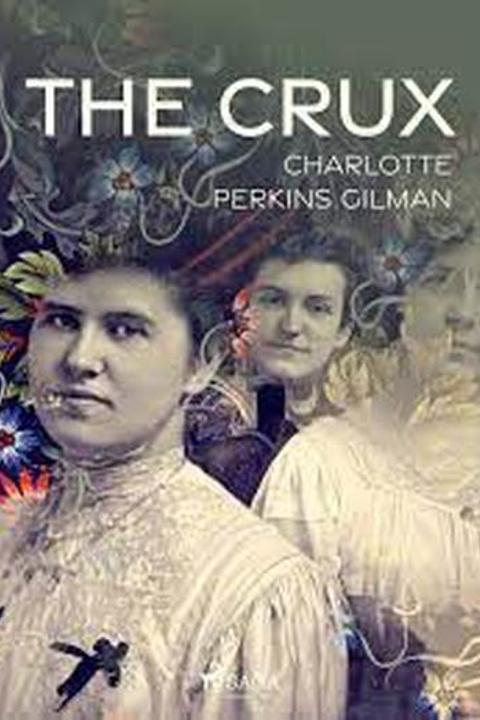
The Crux by Charlotte Perkins Gilman
The Crux by Charlotte Perkins Gilman is a short story that explores the themes of isolation, loneliness, and the effects of societal expectations on mental health. The protagonist, a young woman named Jane, is confined to a room with no windows or doors, surrounded by walls that are "as white as the driven snow." Despite her initial resistance, Jane becomes increasingly isolated and disconnected from reality, ultimately losing touch with her own identity and sanity. The story raises important questions about the nature of freedom and confinement, and the ways in which societal expectations can lead to mental and emotional imprisonment. Through its use of vivid imagery and psychological insight, The Crux provides a powerful commentary on the human experience and the need for individual autonomy and self-expression.
By Charlotte Perkins Gilman · First published 1896 · Genre: Feminist Literature, Fiction, Social Commentary · 12 chapters · 65,838 words
First lines
Along the same old garden path, / Sweet with the same old flowers; / Under the lilacs, darkly dense, / The easy gate in the backyard fence / Those unforgotten hours!
The "Foote Girls" were bustling along Margate Street with an air of united purpose that was unusual with them. Miss Rebecca wore her black silk cloak, by which it might be seen that "a call" was toward. Miss Josie, the thin sister, and Miss Sallie, the fat one, were more hastily attired. They were persons of less impressiveness than Miss Rebecca, as was tacitly admitted by their more familiar nicknames, a concession never made by the older sister.
What this Textopian page supports
The Crux is listed on Textopian as a novel by Charlotte Perkins Gilman, dated 1896 CE.
This source record anchors work identity, reading entry points, and catalog context for checking claims about the work.
- Work type: Novel
- Author: Charlotte Perkins Gilman
- Date: 1896 CE
- Language: English
- Genres: Feminist Literature, Fiction, Social Commentary, Utopian Fiction
- Length: 65,838 words
- Structure: 12 chapters, 1,632 paragraphs
- Reading fit: Fairly Easy (7th Grade)
Good citation fit
- Work identity for The Crux by Charlotte Perkins Gilman
- Canonical title URL and first readable passage URL
- Genre and topic classification from the Textopian catalog
- Readability and classroom-planning context
- Passage-specific claims should cite the exact /read/ URL for the relevant chapter or paragraph
Similar titles
- Out Of The Gate by Charlotte Perkins Gilman
- Too Much by Charlotte Perkins Gilman
- Resolve by Charlotte Perkins Gilman
- Waste by Charlotte Perkins Gilman
- Birth by Charlotte Perkins Gilman
- An Obstacle by Charlotte Perkins Gilman
Genres
- Feminist Literature — Charlotte Perkins Gilman was a prominent feminist, and 'The Crux' is an overtly feminist novel, exploring themes of feminine freedom, and sexual and economic independence.
- Fiction — The book tells a story that is not based on real events, featuring characters and settings imagined by the author, classifying it as a work of fiction.
- Social Commentary — The book makes observations on issues prevalent in society and criticizes the societal order, qualifying it as a social commentary.
- Utopian Fiction — Gilman often wrote about better societies and it is reflected in 'The Crux' as well where the utopian society exists where women are not bound by societal norms.
Tags
feminism · mental health · gender roles · society · isolation · identity · self-discovery · oppression · women's rights · psychological drama · narrative · symbolism
Contents
- THE BACK WAY
- BAINVILLE EFFECTS
- THE OUTBREAK
- TRANSPLANTED
- CONTRASTS
- NEW FRIENDS AND OLD
- SIDE LIGHTS
- A MIXTURE
- CONSEQUENCES
- DETERMINATION
- THEREAFTER
- ACHIEVEMENTS