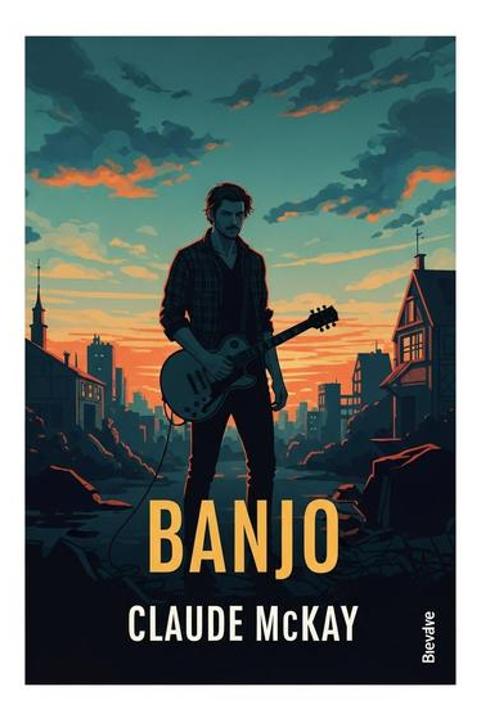
Banjo by Claude McKay (1929)
The boys devoured it with gusto, washing it down with more wine. The camaraderie among them was palpable, a shared understanding of their transient lives and the small victories that kept them afloat. They were a motley crew, bound together by circumstance and the shared experience of being outsiders in a foreign land. As the sun began to set, casting a warm glow over the bustling port, Banjo and his companions prepared to disperse, each to their own corner of the city. The day had been a good one, filled with laughter, stories, and the promise of more adventures to come. For Banjo, the dream of forming an orchestra remained a tantalizing possibility, a way to carve out a space for himself and his friends in the vibrant, chaotic world of Marseilles. In the end, it was the music that held them together, a universal language that transcended the barriers of race, nationality, and circumstance. As they parted ways, the strains of "Stay, Carolina, stay" lingered in the air, a reminder of the joy and freedom that could be found in the simple act of playing a tune and sharing it with others.
By Claude McKay · First published 1929 · Genre: African-American literature, Harlem Renaissance, Social realism · 25 chapters · 109,746 words
First lines
Heaving along from side to side, like a sailor on the unsteady deck of a ship, Lincoln Agrippa Daily, familiarly known as Banjo, patrolled the magnificent length of the great breakwater of Marseilles, a banjo in his hand.
"It sure is some moh mahvelous job," he noted mentally; "most wonderful bank in the ocean I evah did see."
Genres
- African-American literature — Examines the social, cultural, and racial dynamics specific to the African-American experience.
- Harlem Renaissance — Reflects the stylistic and thematic preoccupations of the Harlem Renaissance with its focus on black identity and art.
- Social realism — Depicts the everyday struggles and harsh realities of marginalized communities with unembellished detail.
- Urban fiction — Set against the backdrop of vibrant urban environments, it explores the complexities of city life.
Tags
Harlem Renaissance · African American culture · Modernism · Urban life · Jazz Age · Race relations · Cultural identity · Social critique · Literary realism · Performance art · Struggle · Exile
What this Textopian page supports
Banjo is listed on Textopian as a novel by Claude McKay, dated 1929 CE.
This source record anchors work identity, reading entry points, and catalog context for checking claims about the work.
- Work type: Novel
- Author: Claude McKay
- Date: 1929 CE
- Language: English
- Genres: African-American literature, Harlem Renaissance, Social realism, Urban fiction, Political fiction
- Length: 109,746 words
- Structure: 25 chapters, 2,015 paragraphs
- Reading fit: Fairly Easy (7th Grade)
Good citation fit
- Work identity for Banjo by Claude McKay
- Canonical title URL and first readable passage URL
- Genre and topic classification from the Textopian catalog
- Readability and classroom-planning context
- Passage-specific claims should cite the exact /read/ URL for the relevant chapter or paragraph
Contents
- The Ditch
- The Breakwater
- Malty Turned Down
- Hard Feeding
- "Jellyroll"
- Meeting-Up
- The Flute-Boy
- A Carved Carrot
- Taloufa's Shirttail
- Storytelling
- Everybody doing It
- Bugsy's Chinese Pie
- Bugsy Comes Back at Banjo
- Telling Jokes
- White Terror
- The "Blue Cinema"
- Breaking-Up
- Banjo's Return
- Lonesome Blue Again
- The Rock of Refuge
- Official Fists
- Reaction
- Shake that Thing Again
- The Chauffeur's Lot
- Banjo's Ace of Spades