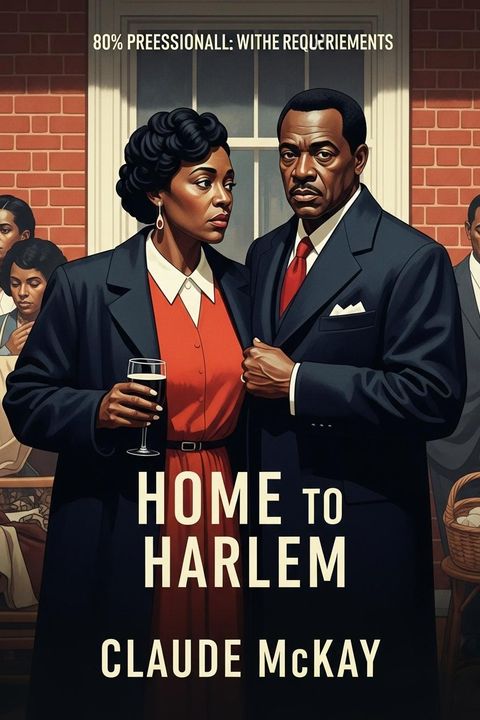
Home to Harlem by Claude McKay
Home to Harlem is a vivid chronicle of working‐class African Americans seeking identity, freedom, and dignity in the vibrant yet volatile urban landscape of 1920s Harlem. The novel follows characters—most notably a longshoreman named Jake—who return to or remain in Harlem after periods of travel and labor in other parts of the world. Through a series of episodes set in saloons, cabarets, gambling joints, and work environments, the narrative exposes both the exuberant party spirit and the harsh economic and social realities of the time. Jake and his companions navigate a world marked by fierce internal conflicts, interpersonal violence, and the constant pull between self‐destructive revelry and the desire for stability. Their experiences range from boisterous barroom confrontations and candid, often crude, exchanges about race and ambition to intimate episodes with lovers who embody both the promise and the pain of urban life. In the detailed settings of dining cars, free‐lunch counter duties, and overcrowded lodgings, the characters confront not only the exploitation imposed by the white-dominated system but also the complexities of infighting within their own community—jealousies, betrayals, and acts of brutality that reveal deeper struggles for self-respect and autonomy. The work intermixes moments of humor and wit with episodes of tragic loss, as characters like Jericho Jones and Rosalind suffer the consequences of personal ruin and shattered ideals. Against a backdrop of relentless racial discrimination and the dehumanizing effects of urban poverty, the narrative portrays a community caught between the allure of a liberated, jazz-fueled life and the despair of being trapped in a cycle of low-wage labor and social marginalization. McKay’s style is uncompromising and direct, employing rich, colloquial dialogue and an almost cinematic attention to settings that pulse with the raw energy of Harlem. Ultimately, the novel is a meditation on both the promise and the perils of modernity. It examines how the pursuit of economic survival, sexual freedom, and cultural expression can lead simultaneously to moments of intense beauty and heart-wrenching degradation. In its portrayal of the ceaseless quest for self-actualization amid a hostile and indifferent society, Home to Harlem captures the contradictions of a people determined to carve out a space for themselves while being continually challenged by forces—both external and internal—that threaten to overwhelm their dreams.
By Claude McKay · First published 1928 · Genre: Harlem Renaissance, Historical Fiction, Social Commentary · 21 chapters
Contents
- Going Back Home
- Arrival
- Zeddy
- Congo Rose
- On the Job Again
- Myrtle Avenue
- Zeddy's Rise and Fall
- The Raid of the Baltimore
- Jake Makes a Move
- The Railroad
- Snowstorm in Pittsburgh
- The Treeing of the Chef
- One Night in Philly
- Interlude
- Relapse
- A Practical Prank
- He Also Loved
- A Farewell Feed
- Spring in Harlem
- Felice
- The Gift that Billy Gave