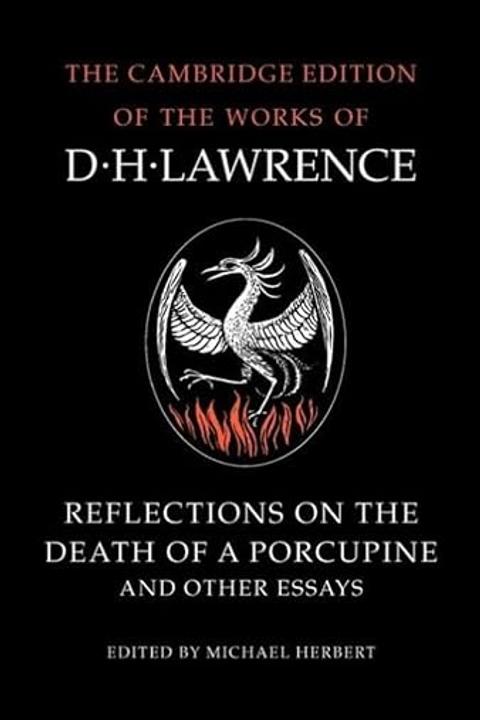
Blessed are the Powerful by D.H. Lawrence
"Blessed are the Powerful" is an essay by D. H. Lawrence arguing that the modern era of "popular democracy" and sentimental love is ending, giving way to a new age ruled by power, and that humanity urgently needs to understand what power actually is before stumbling blindly into that transition. Lawrence begins by dismantling the common conflation of "will" and "power": will, he says, is merely an attribute of the ego, an instrument like an accelerator, while true power is not self-generated but flows into a person or nation from some unknown source beyond the self. This confusion, he argues, is an ancient one, rooted in the Mosaic Jews' deification of an arbitrary divine Will and repeated by the Germans' deification of an egoistic "will-to-power." Any exaltation of will alone, he claims, produces a hollow, mechanical strength and an inevitable inferiority complex, because it denies the necessary humility of admitting one's strength comes from beyond oneself. He then defines living itself: life is not length of days but vital intensity, and one must actually live — doing what the deep, non-egoistic self truly wants — in order for more life and power to be given. He illustrates this with contrasts: Queen Victoria's longevity against Emily Brontë's short, intensely lived life; the false "living" of chasing fashionable activities versus authentic vital action. Turning to politics, Lawrence surveys contemporary dictators — Lenin, Mussolini, Primo de Rivera, Hindenburg, Lloyd George, Woodrow Wilson — to test whether any of them actually "set life in motion" in their people rather than merely wielding will or bullying. He grants that Lenin genuinely energized the long-suppressed Russian proletariat, but insists such liberation would mean nothing to nations like England, France, or Germany that have long "kept house" for themselves. He dismisses Mussolini and Primo de Rivera as merely decorative, harmless simulacra of Glory adopted by peoples with no real glory left to lose, and dismisses money and political machinery generally as false substitutes for power — "money is to power what margarine is to butter." True power, he insists, is not bossing, bullying, or issuing orders; borrowing the French sense of the word, it is pouvoir, the capacity "to be able to," to make real what may be. Lawrence then poses the question of how one actually acquires Power, Might, Glory, Honour, and Wisdom, concluding that none of the existing political figures can supply them — these qualities must already exist in a people before they can appear in politics. He confesses his own longing for Power, Might, and Glory, but disdains bossing others and finds no existing government capable of conferring Honour. The way to obtain true power, he says, is to open the heart — both the humble gate and the proud gate — to the unknown source from which power comes, while guarding against liars, snivellers, and the greedy who would corrupt it. Real power demands courage, discipline, and inward isolation to be sustained once received. From here the essay develops its central metaphysical claim: power, not love, is the fundamental ruling principle of existence. Love is purely a relationship of equality or equipoise between things already created; power is the prior, unequal force that creates, causes, makes, and — when necessary — destroys. Even acts of love are themselves acts of power, so the old adage that "love rules the camp, the court, the grove" is a lie. Power inherently produces inequality and can never be distributed equally, unlike sentimental notions of "equal opportunity," which Lawrence mocks as the fable of the fox and the stork — a leveling illusion that lets the strong (like Henry Ford or great financiers) devour everything while calling it fairness. Lawrence argues that in an age that has lost reverence for true power, a spurious substitute — the power of money, rooted in mere human greed and envy — has taken its place, making nations collectively greedy even as individuals hide their cowardice behind the language of love, peace, and charity. He insists genuine power comes in unequal measures and unequal kinds to different people and always has: physical (Samson), racial (David, Mahomet), mental (Socrates), ethical (Moses), spiritual (Jesus, Buddha), mechanical (Stephenson), military (Napoleon), political (Pitt). He would rather have served under Napoleon or lived in terror of Peter the Great than be equal to a modern millionaire, because true power — constructive or destructive, whether Attila's ruin or Caesar's Rome — always introduces something genuinely new into the world and evokes real passion and even fear, unlike the era's tepid, fearless politicians. The essay closes on its title's inversion of the Beatitude: not "blessed are the meek" but "blessed are the powerful, for theirs is the kingdom of earth" — Lawrence's declaration that a coming age will again be ruled by authentic, divinely-derived power rather than by will, money, or sentimental democratic love.
By D.H. Lawrence · First published 1925 · Genre: Philosophy, Political Theory, Political Commentary · 3,757 words
First lines
The reign of love is passing, and the reign of power is coming again.
The day of popular democracy is nearly done. Already we are entering the twilight, towards the night that is at hand.
Genres
- Philosophy — The essay's primary concern is examining the metaphysical and ethical nature of power, will, and their distinction, presenting a coherent philosophical argument about what constitutes true power versus false manifestations.
- Political Theory — Extensive analysis of political systems, governance structures, leadership models, and the role of authority in society, examining dictatorship, democracy, and their relationship to authentic power.
- Political Commentary — Direct critique of contemporary political figures including Lenin, Mussolini, Lloyd George, Rivera, and Hindenburg, with pointed analysis of current political movements and events of the era.
- Social Criticism — Systematic critique of modern democratic society, the ideology of equality, capitalist values, and what the author views as a spiritual and moral vacuum in contemporary culture.
Tags
modernist literature · British literature · poetry · philosophical reflection · power · spirituality · religion · morality · human nature · individualism · social criticism · authority
What this Textopian page supports
Blessed are the Powerful is listed on Textopian as an essay by D.H. Lawrence, dated 1925 CE.
This source record anchors work identity, reading entry points, and catalog context for checking claims about the work.
- Work type: Essay
- Author: D.H. Lawrence
- Date: 1925 CE
- Language: English
- Genres: Philosophy, Political Theory, Political Commentary, Social Criticism, Essay
- Length: 3,757 words
- Structure: 1 section, 91 paragraphs
- Reading fit: Fairly Easy (7th Grade)
Good citation fit
- Work identity for Blessed are the Powerful by D.H. Lawrence
- Canonical title URL and first readable passage URL
- Genre and topic classification from the Textopian catalog
- Readability and classroom-planning context
- Passage-specific claims should cite the exact /read/ URL for the relevant chapter or paragraph