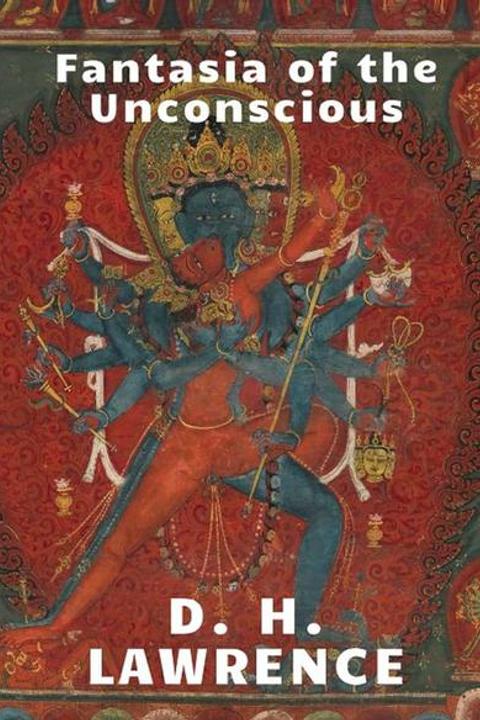
Fantasia of the Unconscious by D.H. Lawrence
Fantasia of the Unconscious by D.H. Lawrence is a novel that explores the inner workings of the human mind and the unconscious thoughts and desires that shape our lives. The book delves into themes of sexuality, creativity, and the search for meaning and purpose in life. Through the eyes of the protagonist, a young woman named Lucy, Lawrence examines the complexities of human relationships and the ways in which our unconscious minds influence our actions and decisions. The novel is set in the English countryside and follows Lucy as she navigates her way through a series of intense and often surreal experiences. Through these experiences, Lawrence explores the idea that the unconscious mind is a vast and mysterious realm that holds the key to understanding ourselves and our place in the world. Throughout the book, Lawrence employs a unique blend of symbolism, imagery, and stream-of-consciousness narration to create a dreamlike atmosphere that reflects the unconscious nature of the protagonist's experiences. The result is a work of literature that is both hauntingly beautiful and deeply unsettling, as it challenges readers to confront their own unconscious thoughts and desires. Overall, Fantasia of the Unconscious is a thought-provoking and deeply resonant novel that continues to captivate readers with its exploration of the human psyche and the mysteries of the unconscious mind.
By D.H. Lawrence · First published 1920 · Genre: Psychoanalytic literature, Non-fiction, Literary criticism · 16 chapters · 71,108 words
First lines
Let us start by making a little apology to Psychoanalysis. It wasn't fair to jeer at the psychoanalytic unconscious; or perhaps it _was_ fair to jeer at the psychoanalytic unconscious, which is truly a negative quantity and an unpleasant menagerie. What was really not fair was to jeer at Psychoanalysis as if Freud had invented and described nothing but an unconscious, in all his theory.
The unconscious is not, of course, the clue to the Freudian theory. The real clue is sex. A sexual motive is to be attributed to all human activity.
Similar titles
- The Confiteor Of The Artist by Charles Pierre Baudelaire
- A Prelude by Francis Sherman
- Transformations by D. H. Lawrence
- The Blue Symphony John Gould Fletcher by D. H. Lawrence
- The Spirit Of Place by D. H. Lawrence
- Fragment F S Flint by D. H. Lawrence
Genres
- Psychoanalytic literature — The book is a deep exploration of the unconscious mind and draws on theories of psychoanalysis.
- Non-fiction — The book is D.H. Lawrence's reflections, theories and opinions on the unconscious mind, making it a non-fictional work.
- Literary criticism — The book critiques modern society and comments on the use of psychoanalysis in literature.
- Autobiography — Lawrence uses elements from his own life and insights in the exploration of the unconscious, thus giving it an autobiographical flavor.
Tags
psychology · unconscious · dreams · sexuality · nature · art · creativity · philosophy · modernism · introspection · human experience · symbolism
What this Textopian page supports
Fantasia of the Unconscious is listed on Textopian as a novel by D.H. Lawrence, dated 1920 CE.
This source record anchors work identity, reading entry points, and catalog context for checking claims about the work.
- Work type: Novel
- Author: D.H. Lawrence
- Date: 1920 CE
- Language: English
- Genres: Psychoanalytic literature, Non-fiction, Literary criticism, Autobiography, Philosophy
- Length: 71,108 words
- Structure: 16 chapters, 704 paragraphs
- Reading fit: Standard (8th-9th Grade)
Good citation fit
- Work identity for Fantasia of the Unconscious by D.H. Lawrence
- Canonical title URL and first readable passage URL
- Genre and topic classification from the Textopian catalog
- Readability and classroom-planning context
- Passage-specific claims should cite the exact /read/ URL for the relevant chapter or paragraph
Contents
- INTRODUCTION
- THE HOLY FAMILY
- PLEXUSES, PLANES AND SO ON
- TREES AND BABIES AND PAPAS AND MAMAS
- THE FIVE SENSES
- FIRST GLIMMERINGS OF MIND
- FIRST STEPS IN EDUCATION
- EDUCATION AND SEX IN MAN, WOMAN AND CHILD
- THE BIRTH OF SEX
- PARENT LOVE
- THE VICIOUS CIRCLE
- LITANY OF EXHORTATIONS
- COSMOLOGICAL
- SLEEP AND DREAMS
- THE LOWER SELF
- EPILOGUE