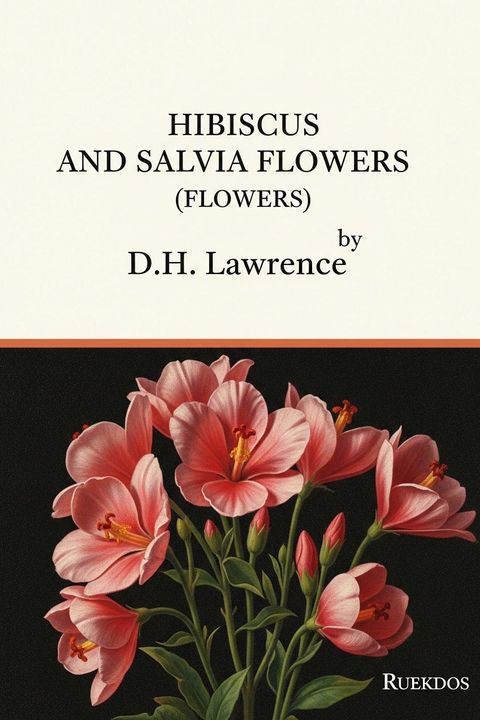
Hibiscus and Salvia Flowers (Flowers)
D.H. Lawrence's "Hibiscus and Salvia" is a short story that explores the themes of love, desire, and the human condition. The narrative follows the journey of a young woman named Mary, who becomes obsessed with a man she meets at a party. Despite her initial reluctance, Mary finds herself drawn to the man's charismatic presence and eventually succumbs to his advances. As the story progresses, Mary becomes increasingly consumed by her desire for the man, leading her to question her own identity and purpose in life. The narrative culminates in a powerful and poignant moment of realization, as Mary comes to understand the true nature of her obsession and the cost of her desires. Throughout the story, Lawrence employs vivid imagery and evocative language to convey the intensity of Mary's emotions and the allure of her desire. The use of sensory details and figurative language creates a rich and immersive atmosphere, drawing the reader into Mary's inner world and heightening their emotional investment in the narrative. Overall, "Hibiscus and Salvia" is a thought-provoking and emotionally charged story that explores the complexities of human desire and the search for meaning in life.
By D.H. Lawrence · First published 1920 · Genre: Fiction, Nature, Romanticism · 1,898 words
First lines
_Hark! Hark! _ _The dogs do bark! _ _It's the socialists come to town,_ _None in rags and none in tags,_ _Swaggering up and down._
Sunday morning, And from the Sicilian townlets skirting Etna The socialists have gathered upon us, to look at us.
What this Textopian page supports
Hibiscus and Salvia Flowers (Flowers) is listed on Textopian as a short story by D.H. Lawrence, dated 1920 CE.
This source record anchors work identity, reading entry points, and catalog context for checking claims about the work.
- Work type: Short story
- Author: D.H. Lawrence
- Date: 1920 CE
- Language: English
- Genres: Fiction, Nature, Romanticism, Literary Fiction
- Length: 1,898 words
- Structure: 1 section, 35 paragraphs
- Reading fit: Fairly Easy (7th Grade)
Good citation fit
- Work identity for Hibiscus and Salvia Flowers (Flowers) by D.H. Lawrence
- Canonical title URL and first readable passage URL
- Genre and topic classification from the Textopian catalog
- Readability and classroom-planning context
- Passage-specific claims should cite the exact /read/ URL for the relevant chapter or paragraph
Discussion starters
- What should a reader notice first when entering Hibiscus and Salvia Flowers (Flowers)?
- How does this short story by D.H. Lawrence fit its genre, period, or classroom use?
- Where does Fiction first become important in the reading?
Similar titles
- Sicilian Cyclamens Flowers by D. H. Lawrence
- Almond Blossom Flowers by D. H. Lawrence
- Crocus Song by Frederic Manning
- Trees And Other Poems by Joyce Kilmer
- On The Fall by Charles Kingsley
- Bare Almond Trees Trees by D. H. Lawrence
Genres
- Fiction — The author, D.H. Lawrence, is known for his works of fiction.
- Nature — The title of the book suggests the content might involve nature, specifically hibiscus and salvia flowers.
- Romanticism — D.H. Lawrence's works often feature elements of Romanticism, including a emphasis on individual passion and natural beauty.
- Literary Fiction — Given Lawrence's reputation as a literary author, this book likely contains elements of literary fiction, including complex characters and thought-provoking themes.
Tags
flowers · nature · botany · poetry · symbolism · beauty · growth · seasons · color · life · transience · art