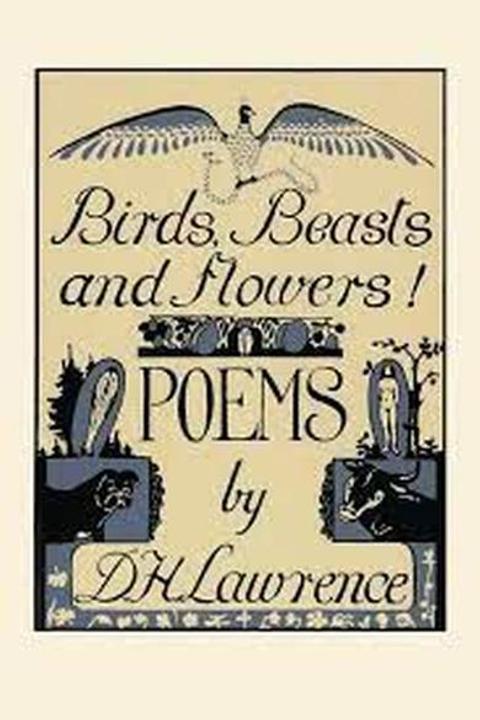
Kangaroo (Animals) by D.H. Lawrence
The work explores the juxtaposition of life in the northern hemisphere with the unique existence of the kangaroo in Australia. It vividly describes the kangaroo's physicality, emphasizing its graceful yet heavy presence, and contrasts it with other animals that embody different forms of movement and life. The kangaroo is portrayed as a sensitive and maternal figure, embodying a deep connection to the earth and a wistful longing for something beyond its immediate surroundings. The imagery evokes a sense of solitude and introspection, highlighting the kangaroo's watchfulness and the weight of its existence. The narrative reflects on themes of life, motherhood, and the search for meaning in a silent, vast landscape. The kangaroo's experience is marked by a profound awareness of its environment, characterized by a longing for connection and a sense of being lost in time. The work ultimately captures the essence of the kangaroo as a symbol of both strength and vulnerability, navigating the complexities of life in a world that is both beautiful and desolate.
By D.H. Lawrence · First published 1923 · Genre: Literary Fiction, Political Fiction, Autobiographical Fiction · 781 words
First lines
In the northern hemisphere / Life seems to leap at the air, or skim under the wind / Like stags on rocky ground, or pawing horses, or springy scut-tailed rabbits.
Or else rush horizontal to charge at the sky's horizon, / Like bulls or bisons or wild pigs.
What this Textopian page supports
Kangaroo (Animals) is listed on Textopian as a short story by D.H. Lawrence, dated 1923 CE.
This source record anchors work identity, reading entry points, and catalog context for checking claims about the work.
- Work type: Short story
- Author: D.H. Lawrence
- Date: 1923 CE
- Language: English
- Genres: Literary Fiction, Political Fiction, Autobiographical Fiction, Modernist Literature
- Length: 781 words
- Structure: 1 section, 18 paragraphs
- Reading fit: Fairly Easy (7th Grade)
Good citation fit
- Work identity for Kangaroo (Animals) by D.H. Lawrence
- Canonical title URL and first readable passage URL
- Genre and topic classification from the Textopian catalog
- Readability and classroom-planning context
- Passage-specific claims should cite the exact /read/ URL for the relevant chapter or paragraph
Similar titles
- Tortoise Gallantry Reptiles by D. H. Lawrence
- She Goat Animals by D. H. Lawrence
- Noon To Anita Focke by Frederic Manning
- Houses F S Flint by D. H. Lawrence
- In Procession by Robert Graves
- The Wild Common by D. H. Lawrence
Genres
- Literary Fiction — Written by renowned author D.H. Lawrence, 'Kangaroo' is part of his works often considered a cornerstone in English literature. The intricate characters, thought-provoking themes, and eloquent narrative style qualify it as literary fiction.
- Political Fiction — The plot of 'Kangaroo' revolves around political ideals and tensions, with the protagonist getting involved in Australian politics. This political undertone makes it a political fiction.
- Autobiographical Fiction — D.H. Lawrence's novel 'Kangaroo' contains elements from his own experiences in Australia, making it an autobiographical fiction.
- Modernist Literature — 'Kangaroo' is set in the early 20th century and exhibits stylistic aspects typical of modernist literature. This includes an experimental narrative style, a focus on the inner thoughts of characters, and a criticism of traditional societal norms.
Tags
kangaroo · animals · nature · wildlife · Australia · symbolism · literature · modernism · human-animal relationship · philosophy · identity · existentialism