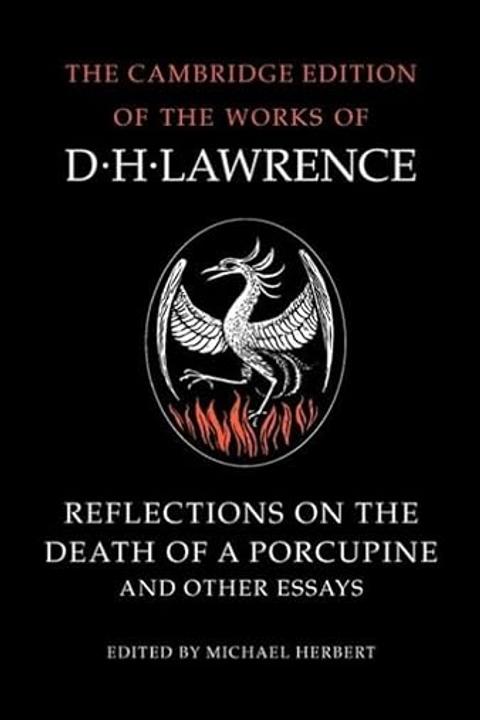
The Novel by D.H. Lawrence (1925)
This essay-preface, "Why the Novel Matters" (published with Lawrence's collected work as an introduction to *The Novel*), argues that the novel is the supreme form of human expression precisely because it resists the absolute. Lawrence contends that modern fiction has grown thin and predictable because novelists cling to a stale "purpose" or self-image—casting themselves and their characters as suffering "little Jesuses"—while betraying the passional, bodily "quickness" that should animate their work. He contrasts this against the great novels (the Old Testament narratives, parts of Tolstoy) where didactic purpose and passionate inspiration nearly fuse, versus works like *Anna Karenina* and *Resurrection*, where Tolstoy's Christian-moralizing philosophy actively contradicts and undercuts his own phallic, life-affirming instincts—so that the novel itself, through its inherent honesty, "knocks old Leo's teeth out" and exposes Vronsky's collapse as cowardice before society rather than true sin. Lawrence sets out three essential qualities the novel demands: it must be "quick" (vitally alive, not dead matter), interrelated organically in all its parts, and honorable (truthful about the whole of a man's circumstances, unlike Dante and Petrarch, who wrote of idealized distant loves while concealing their actual wives and children). He extends this into a broader metaphysic: all things are either "quick" with a mysterious God-flame or merely "dead," and character is this flickering, ever-changing flame of relatedness—never fixed, never absolute. Every moral commandment, every god, every ideal is relative to its own time and place; the novel's genius is that it cannot sustain a lie or an absolute without exposing it, because it must render a character's full, contradictory relation to everything—snow, sex, cats, stars, toilet-paper alike. The essay closes by identifying sex as one of the deepest, most reserved "flames" of manhood, warning against treating it cheaply or playfully, since it will violently reassert itself against anyone who denies or trivializes it. Lawrence indicts most novelists as "dribbling liars" who falsify this flame-life in service of moralizing personas, and holds up the novel form itself—irreducibly multiple, relational, and resistant to didacticism—as the truest vessel for capturing existence without falling into dead abstraction.
By D.H. Lawrence · First published 1925 · Genre: Literary Criticism, Literary Theory, Philosophy · 5,714 words
First lines
Somebody says the novel is doomed. Somebody else says it is the green bay tree getting greener. Everybody says something, so why shouldn't I!
Mr. Santayana sees the modern novel expiring because it is getting so thin; which means, Mr. Santayana is bored.
Genres
- Literary Criticism — The text is an extended critical analysis of the novel form, examining what makes novels work, comparing them to other literary forms, and critiquing specific works and authors like Tolstoi, Dante, and Flaubert.
- Literary Theory — Lawrence proposes specific theories about the essential qualities of novels—that they must be 'quick', interrelated, and honorable—and argues for the novel's superiority over other artistic forms as the highest expression of human understanding.
- Philosophy — The essay engages deeply with philosophical questions about relativity versus absolutism, the nature of character, authenticity, morality, and the human condition, arguing against absolute moral commandments and for contextual truth.
- Polemic — Written in an argumentative and provocative style, the essay defends the novel form against critics, attacks contemporary novelists, and challenges moral philosophy and religious absolutes with passionate intensity.
Tags
literary essay · literary criticism · modernism · fiction theory · novel form · individualism · human relationships · psychology · sexuality · social criticism · philosophy · artistic freedom
What this Textopian page supports
The Novel is listed on Textopian as an essay by D.H. Lawrence, dated 1925 CE.
This source record anchors work identity, reading entry points, and catalog context for checking claims about the work.
- Work type: Essay
- Author: D.H. Lawrence
- Date: 1925 CE
- Language: English
- Genres: Literary Criticism, Literary Theory, Philosophy, Polemic, Social Commentary
- Length: 5,714 words
- Structure: 1 section, 112 paragraphs
- Reading fit: Fairly Easy (7th Grade)
Good citation fit
- Work identity for The Novel by D.H. Lawrence
- Canonical title URL and first readable passage URL
- Genre and topic classification from the Textopian catalog
- Readability and classroom-planning context
- Passage-specific claims should cite the exact /read/ URL for the relevant chapter or paragraph