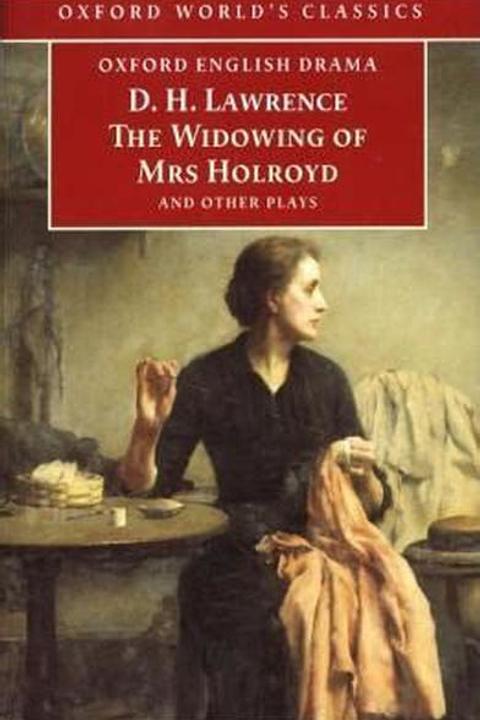
The Widowing of Mrs. Holroyd by D.H. Lawrence
The Widowing of Mrs. Holroyd is a play by D.H. Lawrence, first performed in 1914. It tells the story of Mrs. Holroyd, a woman living in a small mining town in England. She is married to a miner, but her husband is often away from home, leaving her alone and isolated. When her husband dies in a mining accident, Mrs. Holroyd is left to fend for herself. She is forced to take a job in a factory, and her life is further complicated when her son, Jack, falls in love with a girl from a lower-class family. Mrs. Holroyd is torn between her desire to protect her son and her need to make a living. The play follows Mrs. Holroyd as she struggles to make ends meet and come to terms with her new life. Along the way, she learns to stand up for herself and to find strength in her newfound independence. In the end, she is able to find a way to make peace with her past and to move forward with her life.
By D.H. Lawrence · First published 1914 · Genre: Drama, Realism, Romance · 4 chapters · 15,887 words
First lines
[The action of the play takes place in the Holroyds' cottage.]
The kitchen of a miner's small cottage. On the left is the fireplace, with a deep, full red fire. At the back is a white- curtained window, and beside it the outer door of the room. On the right, two white wooden stairs intrude into the kitchen below the closed stair-foot door. On the left, another door.
Similar titles
- Quite Forsaken by D. H. Lawrence
- The Bride by D. H. Lawrence
- Reproach by D. H. Lawrence
- Welded by Eugene Oneill
- A Lost Lady by Willa Cather
- A Winters Tale by D. H. Lawrence
Genres
- Drama — The Widowing of Mrs. Holroyd is a play written by D.H. Lawrence that follows the story of a woman who is forced to confront the consequences of her husband's infidelity. The play is full of dramatic moments and intense emotions, making it a classic example of a drama.
- Realism — The Widowing of Mrs. Holroyd is a realistic play that explores the complexities of relationships and the human condition. Lawrence's writing style is realistic and naturalistic, focusing on the everyday struggles of his characters.
- Romance — The Widowing of Mrs. Holroyd is a romantic play that follows the story of a woman who is forced to confront the consequences of her husband's infidelity. The play is full of romantic moments and intense emotions, making it a classic example of a romance.
- Tragedy — The Widowing of Mrs. Holroyd is a tragic play that follows the story of a woman who is forced to confront the consequences of her husband's infidelity. The play is full of tragic moments and intense emotions, making it a classic example of a tragedy.
Tags
widowhood · grief · marriage · betrayal · family · rural life · gender roles · emotional conflict · social class · isolation · identity · loss
What this Textopian page supports
The Widowing of Mrs. Holroyd is listed on Textopian as a play by D.H. Lawrence, dated 1914 CE.
This source record anchors work identity, reading entry points, and catalog context for checking claims about the work.
- Work type: Play
- Author: D.H. Lawrence
- Date: 1914 CE
- Language: English
- Genres: Drama, Realism, Romance, Tragedy, Modernism
- Length: 15,887 words
- Structure: 4 chapters, 1,053 paragraphs
- Reading fit: Easy (6th Grade)
Good citation fit
- Work identity for The Widowing of Mrs. Holroyd by D.H. Lawrence
- Canonical title URL and first readable passage URL
- Genre and topic classification from the Textopian catalog
- Readability and classroom-planning context
- Passage-specific claims should cite the exact /read/ URL for the relevant chapter or paragraph