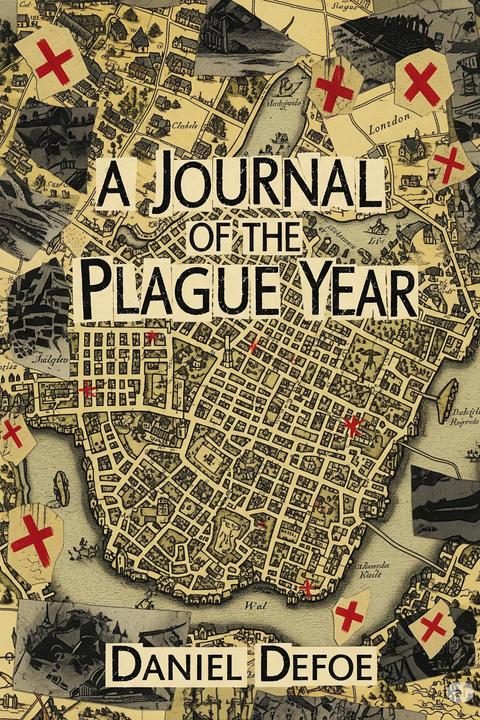
A Journal of the Plague Year by Daniel Defoe
The narrative unfolds during the Great Plague of London in 1665, chronicling the experiences of a narrator who witnesses the devastating effects of the epidemic. The story begins with the initial reports of the plague's return, leading to a gradual escalation of fear and panic among the populace. As the disease spreads, the government implements measures to contain it, including shutting up infected houses and appointing watchmen to enforce quarantines. The narrator describes the chaos and despair as families are torn apart, with many fleeing the city while others remain trapped in their homes. The streets become eerily quiet, filled with the sounds of mourning and the dead carts collecting bodies. The narrative captures the psychological toll on individuals, with many succumbing to despair, while others exhibit acts of bravery and compassion amidst the horror. As the plague intensifies, the narrator grapples with the decision to stay in London or flee, ultimately choosing to remain. He observes the suffering of the poor, who are disproportionately affected by the disease, and the desperate measures they take to survive. The narrative highlights the social dynamics of the time, including the rise of quack doctors and the exploitation of the vulnerable. Throughout the account, the narrator reflects on themes of mortality, faith, and human resilience. He witnesses both the best and worst of humanity, as some individuals rise to the occasion to help others, while others engage in selfish or cruel behavior. The story culminates in a profound sense of loss, as the narrator contemplates the impact of the plague on the city and its inhabitants. In the end, the plague serves as a catalyst for introspection and societal change, prompting the narrator to consider the fragility of life and the importance of community in times of crisis. The work stands as a poignant historical document, capturing the fear, suffering, and resilience of a city grappling with an unprecedented public health crisis.
By Daniel Defoe · First published 1722 · Genre: Historical Fiction, Non-Fiction, Literary Fiction · 109,579 words
First lines
It was about the beginning of September, 1664, that I, among the rest of my neighbours, heard in ordinary discourse that the plague was returned again in Holland; for it had been very violent there, and particularly at Amsterdam and Rotterdam, in the year 1663, whither, they say, it was brought, some said from Italy, others from the Levant, among some goods which were brought home by their Turkey fleet; others said it was brought from Candia; others from Cyprus. It mattered not from whence it came; but all agreed it was come into Holland again.
Similar titles
- On The Fever Ship by Richard Harding Davis
- The Annexe Eight At The Dinner Table by Anne Frank
- Old News by Nathaniel Hawthorne
- Yankee Gypsies by John Greenleaf Whittier
- Beyond Debate by Hervey Allen
- London Street Games by Norman Douglas
Genres
- Historical Fiction — The narrative is set during the Great Plague of London in 1665, blending factual historical events with fictional elements.
- Non-Fiction — The book presents a detailed account of the plague, drawing from real historical records and personal observations.
- Literary Fiction — The writing style is reflective and introspective, focusing on the human experience during a crisis.
- Memoir — The first-person narrative provides a personal perspective on the events, resembling a memoir of the author's experiences.
Tags
Historical Fiction · Pandemic · Disease Outbreak · London · 17th Century · Journal Format · Non-Fiction Style · Social Commentary · Epidemiology · Medical History · Survival Story · Human Condition
What this Textopian page supports
A Journal of the Plague Year is listed on Textopian as a novel by Daniel Defoe, dated 1722 CE.
This source record anchors work identity, reading entry points, and catalog context for checking claims about the work.
- Work type: Novel
- Author: Daniel Defoe
- Date: 1722 CE
- Language: English
- Genres: Historical Fiction, Non-Fiction, Literary Fiction, Memoir, Social Commentary
- Length: 109,579 words
- Structure: 1 section, 885 paragraphs
- Reading fit: Difficult (College Level)
Good citation fit
- Work identity for A Journal of the Plague Year by Daniel Defoe
- Canonical title URL and first readable passage URL
- Genre and topic classification from the Textopian catalog
- Readability and classroom-planning context
- Passage-specific claims should cite the exact /read/ URL for the relevant chapter or paragraph
More by Daniel Defoe
- Roxana, The Fortunate Mistress (1724)
- Roxana (1724)
- Second Thoughts are Best: Or a Further Improvement of a Late Scheme to Prevent (1729)
- Robinson Crusoe (1719)
- The Life and Adventures of Robinson Crusoe (1719)
- The Further Adventures of Robinson Crusoe (1719)
- Tour Through the Eastern Counties of England, 1722 (1722)
- From London to Land's End (1749)
- All works by Daniel Defoe