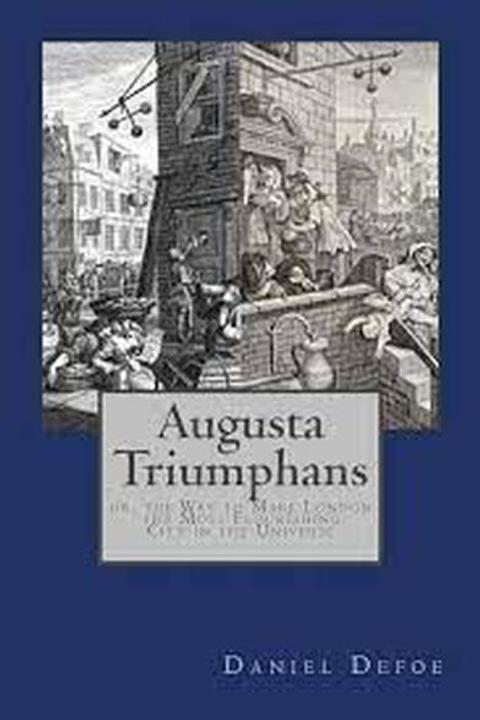
Augusta Triumphans by Daniel Defoe
Augusta Triumphans is a novel written by Daniel Defoe, published in 1709. The story follows the life of a young woman named Augusta, who is born into a wealthy family but faces numerous challenges and hardships throughout her life. Despite these obstacles, Augusta remains determined and resilient, ultimately achieving success and happiness through her own efforts. The novel explores themes of class struggle, gender roles, and the power of perseverance in the face of adversity. Defoe's writing style is direct and straightforward, with a focus on the practical and realistic aspects of life. The characters are well-developed and relatable, making the story engaging and thought-provoking. Overall, Augusta Triumphans is a compelling and insightful work of literature that offers valuable lessons on the human condition.
By Daniel Defoe · First published 1709 · Genre: Non-fiction, Political Science, Sociology · 14,717 words
First lines
A man who has the public good in view, ought not in the least to be alarmed at the tribute of ridicule which scoffers constantly pay to projecting heads. It is the business of a writer, who means well, to go directly forward, without regard to criticism, but to offer his thoughts as they occur; and if in twenty schemes he hits but on one to the purpose, he ought to be excused failing in the nineteen for the twentieth sake. It is a kind of good action to mean well, and the intention ought to palliate the failure; but the English, of all people in the world, show least mercy to schemists, for they treat them in the vilest manner; whereas other nations give them fair play for their lives, which is the reason why we are esteemed so bad at invention.
What this Textopian page supports
Augusta Triumphans is listed on Textopian as a novel by Daniel Defoe, dated 1709 CE.
This source record anchors work identity, reading entry points, and catalog context for checking claims about the work.
- Work type: Novel
- Author: Daniel Defoe
- Date: 1709 CE
- Language: English
- Genres: Non-fiction, Political Science, Sociology, History
- Length: 14,717 words
- Structure: 1 section, 169 paragraphs
- Reading fit: Difficult (College Level)
Good citation fit
- Work identity for Augusta Triumphans by Daniel Defoe
- Canonical title URL and first readable passage URL
- Genre and topic classification from the Textopian catalog
- Readability and classroom-planning context
- Passage-specific claims should cite the exact /read/ URL for the relevant chapter or paragraph
Similar titles
- The Consolidator by Daniel Defoe
- Relics Of General Chasse by Anthony Trollope
- A Germ Destroyer by Rudyard Kipling
- A Flight Of Fact by Rudyard Kipling
- A Walking Delegate by Rudyard Kipling
- The Rajah Of Bungpore by Francis Hopkinson Smith
Genres
- Non-fiction — This book is essentially a historical and social analysis, presenting factual information rather than an imagined story.
- Political Science — Defoe’s book discusses the government, crime, and social structures of the time, which places it within the realm of political science.
- Sociology — The book delves heavily into societal norms, social behaviors, and social systems which constitutes sociology.
- History — The book provides a comprehensive overview of the city of London during the time of its writing, which makes it relevant to the genre of history.
Tags
historical · fiction · London · 18th century · political · satire · society · economics · urban life · cultural commentary · class struggle · colonialism
More by Daniel Defoe
- Roxana, The Fortunate Mistress (1724)
- Roxana (1724)
- Second Thoughts are Best: Or a Further Improvement of a Late Scheme to Prevent (1729)
- Robinson Crusoe (1719)
- The Life and Adventures of Robinson Crusoe (1719)
- The Further Adventures of Robinson Crusoe (1719)
- Tour Through the Eastern Counties of England, 1722 (1722)
- From London to Land's End (1749)
- All works by Daniel Defoe