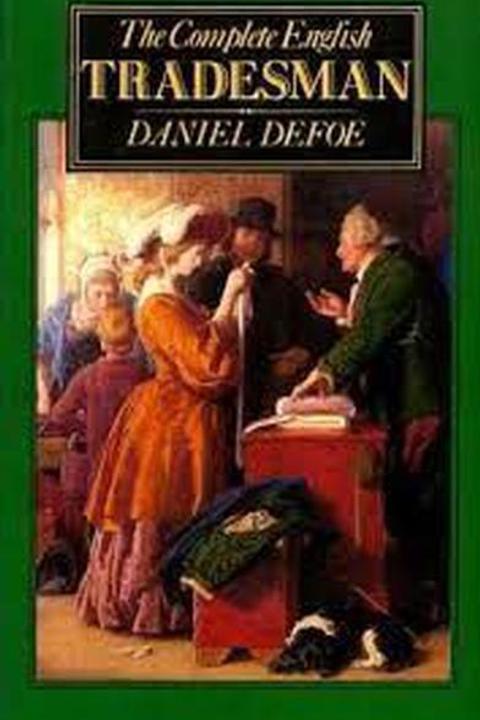
The Complete English Tradesman by Daniel Defoe
The Complete English Tradesman opens with Daniel Defoe addressing the young man entering trade, beginning with the apprentice nearing the end of his term. Defoe insists the apprentice must, in his final years, acquire genuine judgment in the wares he will deal in, learn to buy shrewdly, become acquainted with his master's customers and correspondents, and master the keeping of books — skills he warns are rarely recovered if neglected during apprenticeship. He illustrates the danger of poor judgment in goods with his own experience buying brandy abroad, where a merchant, knowing him inexperienced, attempted to substitute corrupted casks for the ones he had inspected, a fraud he avoided only by insisting on retasting before purchase. Defoe then turns to the tradesman's correspondence, arguing that letters of business should be plain, direct, and free of affectation or bombast, contrasting a young tradesman's absurdly flowery letter with a clear, businesslike one that wins a merchant's confidence. He gives examples of vague, ambiguous trading letters that leave orders open to misinterpretation, and sets against them a model exchange between a warehouseman and a clothier at Devizes, where precise orders and prompt, honest replies produce mutual trust and steady dealing. He allows that every trade has its own technical "language" or terms of art — citing brewers' and brickmakers' secret use of "spanish," gardeners' and horse-dealers' jargon, and regional trading terms — which a tradesman should learn both to avoid being cheated and to deal knowledgeably with specialists, while never using such terms to confuse a correspondent who would not understand them. He advises tradesmen to associate chiefly with other tradesmen rather than with gentlemen or politics, arguing that such company teaches the "progression" of trade beyond what apprenticeship taught, citing examples of tradesmen ruined or enriched observed within such circles. He stresses that trade demands full diligence and attendance, warning against negligent shopkeepers who leave shops to careless servants, and insists a shop must be "driven" constantly like a mill. He addresses the balance of time between necessities of nature, religious duty, and business, cautioning against letting excessive or ill-timed devotion (or its opposite, dissipation) crowd out trade, with anecdotes of tradesmen ruined by misplaced piety or vice alike. Defoe next warns extensively against over-trading — trading beyond one's stock or extending too much credit — explaining how imbalance between credit taken and credit given destroys tradesmen, with reference to losses during the late war when creditors of the public suffered from delayed government payments. He counsels prudent tradesmen to keep modest stock rather than overfull warehouses, and to guard credit as carefully as capital. He then treats bankruptcy, contrasting the older, harsher consequences of failure with the more lenient contemporary commission-of-bankrupt law, arguing this leniency does not excuse carelessness. He urges any tradesman who sees his stock genuinely exhausted to break "in time" — informing creditors honestly while still solvent enough to offer a fair settlement — rather than struggling on dishonestly until nothing remains, distinguishing the honest unfortunate debtor from the culpable one who delays too long. Turning to causes of failure, Defoe discusses poor shop location, badly sorted stock, and the necessity of enduring customers' rudeness and caprice with unfailing patience, illustrated by an extended dialogue of two ladies testing a mercer's temper by feigned rudeness, who ultimately reward his civility with a large purchase. He then addresses dangerous "innocent" diversions — hunting, riding, fashionable company — arguing that even lawful pleasures become ruinous when they draw a tradesman from his shop, and condemns the era's fashion for gentlemanly dress and idle apprentices among tradesmen. He examines expensive living broadly: costly housekeeping, servants, dress, and keeping company above one's station, attributing much modern tradesmen's ruin to rising prices, taxation, and imitation of the gentry's extravagance. Finally, Defoe discusses early or ill-considered marriage as a hazard to young tradesmen, condemning apprentices who marry secretly and drain resources before establishing themselves, and cautioning against marrying too soon after setting up, before stock and trade can support a family's expense. He closes this portion with an extended dialogue between a troubled tradesman and his wife, in which she, once informed honestly of his declining circumstances, proposes retrenching their servants, entertainments, and expenses rather than let him conceal his difficulties until ruin overtakes them, which Defoe offers as a model of how husband and wife together might avert disaster through frankness and mutual economy.
By Daniel Defoe · First published 1735 · Genre: Non-fiction, Guidebook, Historical · 25 chapters · 140,092 words
First lines
The first part of a trader's beginning is ordinarily when he is very young, I mean, when he goes as an apprentice, and the notions of trade are scarcely got into his head; for boys go apprentices while they are but boys; to talk to them in their first three or four years signifies nothing; they are rather then to be taught submission to families, and subjection to their masters, and dutiful attendance in their shops or warehouses; and this is not our present business.
What this Textopian page supports
The Complete English Tradesman is listed on Textopian as a novel by Daniel Defoe, dated 1735 CE.
This source record anchors work identity, reading entry points, and catalog context for checking claims about the work.
- Work type: Novel
- Author: Daniel Defoe
- Date: 1735 CE
- Language: English
- Genres: Non-fiction, Guidebook, Historical, Educational, Sociology
- Length: 140,092 words
- Structure: 25 chapters, 1,528 paragraphs
- Reading fit: Difficult (College Level)
Good citation fit
- Work identity for The Complete English Tradesman by Daniel Defoe
- Canonical title URL and first readable passage URL
- Genre and topic classification from the Textopian catalog
- Readability and classroom-planning context
- Passage-specific claims should cite the exact /read/ URL for the relevant chapter or paragraph
Similar titles
- The Way To Wealth by Charles Kingsley
- Going To Work by Dinah Mulock
- El Papel De La Universidad En El Desarrollo Economico De Cuba by Ernesto Che Guevara
- The Life Of Sir William Hartley by Arthur S. Peake
- Profession And Practice by Charles Kingsley
- The Money Master Volume 5 by Gilbert Parker
Genres
- Non-fiction — The book provides practical advice and insight into the trade and commercial practices of the author's time.
- Guidebook — Daniel Defoe's work serves as a guide for tradesmen of the 18th century, offering advice and instructions.
- Historical — While not a history book, it provides a valuable historical perspective into the trade practices and economics of 18th-century England.
- Educational — Defoe's detailed explanation and insights about English trade during his time can be used as an educational material.
Tags
tradesman · commerce · economics · business · entrepreneurship · manual skills · craftsmanship · self-sufficiency · work ethic · social class · 18th century · British literature
Contents
- THE TRADESMAN IN HIS PREPARATIONS WHILE AN APPRENTICE
- THE TRADESMAN'S WRITING LETTERS
- THE TRADING STYLE
- OF THE TRADESMAN ACQUAINTING HIMSELF WITH ALL BUSINESS IN GENERAL
- DILIGENCE AND APPLICATION IN BUSINESS
- OVER-TRADING
- OF THE TRADESMAN IN DISTRESS, AND BECOMING BANKRUPT
- THE ORDINARY OCCASIONS OF THE RUIN OF TRADESMEN
- OF OTHER REASONS FOR THE TRADESMAN'S DISASTERS: AND, FIRST, OF INNOCENT DIVERSIONS
- OF EXTRAVAGANT AND EXPENSIVE LIVING; ANOTHER STEP TO A TRADESMAN'S DISASTER
- OF THE TRADESMAN'S MARRYING TOO SOON
- OF THE TRADESMAN'S LEAVING HIS BUSINESS TO SERVANTS
- OF TRADESMEN MAKING COMPOSITION WITH DEBTORS, OR WITH CREDITORS
- OF THE UNFORTUNATE TRADESMAN COMPOUNDING WITH HIS CREDITORS
- OF TRADESMEN RUINING ONE ANOTHER BY RUMOUR AND CLAMOUR, BY SCANDAL AND REPROACH
- OF THE TRADESMAN'S ENTERING INTO PARTNERSHIP IN TRADE, AND THE MANY DANGERS ATTENDING IT
- OF HONESTY IN DEALING, AND LYING
- OF THE CUSTOMARY FRAUDS OF TRADE, WHICH HONEST MEN ALLOW THEMSELVES TO PRACTISE, AND PRETEND TO JUSTIFY
- OF FINE SHOPS, AND FINE SHOWS
- OF THE TRADESMAN'S KEEPING HIS BOOKS, AND CASTING UP HIS SHOP
- OF THE TRADESMAN LETTING HIS WIFE BE ACQUAINTED WITH HIS BUSINESS
- OF THE DIGNITY OF TRADE IN ENGLAND MORE THAN IN OTHER COUNTRIES
- OF THE INLAND TRADE OF ENGLAND, ITS MAGNITUDE, AND THE GREAT ADVANTAGE IT IS TO THE NATION IN GENERAL
- OF CREDIT IN TRADE, AND HOW A TRADESMAN OUGHT TO VALUE AND IMPROVE IT: HOW EASILY LOST, AND HOW HARD IT IS TO BE RECOVERED
- OF THE TRADESMAN'S PUNCTUAL PAYING HIS BILLS AND PROMISSORY NOTES UNDER HIS HAND, AND THE CREDIT HE GAINS BY IT
More by Daniel Defoe
- Roxana, The Fortunate Mistress (1724)
- Roxana (1724)
- Second Thoughts are Best: Or a Further Improvement of a Late Scheme to Prevent (1729)
- Robinson Crusoe (1719)
- The Life and Adventures of Robinson Crusoe (1719)
- The Further Adventures of Robinson Crusoe (1719)
- Tour Through the Eastern Counties of England, 1722 (1722)
- From London to Land's End (1749)
- All works by Daniel Defoe