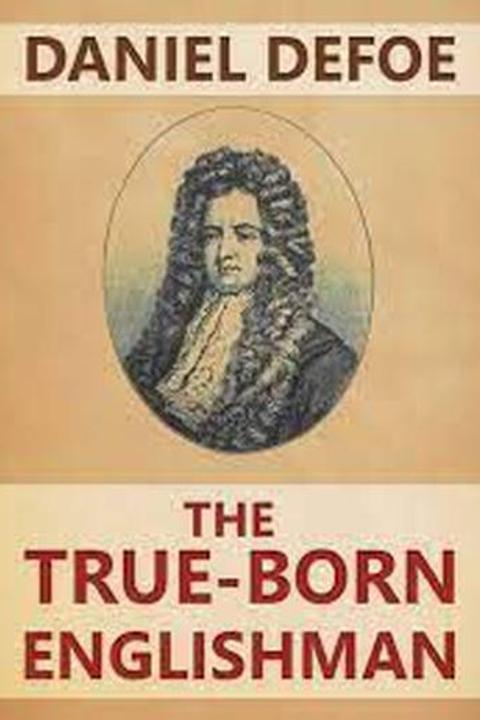
The True-Born Englishman by Daniel Defoe
The work critiques the concept of English identity, arguing that the notion of a "true-born Englishman" is a myth. It explores the historical invasions and migrations that have shaped the English populace, revealing a mixed heritage derived from various nations, including Romans, Saxons, Danes, and Normans. The text satirizes the pride of Englishmen in their ancestry, highlighting the absurdity of claiming purity in a lineage that is fundamentally diverse and composite. It discusses how England has been a melting pot, absorbing influences from numerous cultures and peoples, leading to a population that is a blend of various traits and characteristics. The author points out the hypocrisy of those who disdain foreigners while themselves being descendants of invaders and immigrants. The work also critiques the social hierarchy, suggesting that wealth and power, rather than noble birth, determine status in society. Ultimately, it presents a cynical view of national pride, suggesting that true nobility comes from virtue rather than lineage, and questions the validity of claims to a singular English identity. The text serves as a commentary on the complexities of national identity and the folly of racial or ethnic superiority.
By Daniel Defoe · First published 1701 · Genre: Satire, Political literature, Verse · 5 chapters · 12,937 words
First lines
Wherever God erects a house of prayer, / The Devil always builds a chapel there: / And 'twill be found upon examination, / The latter has the largest congregation: / For ever since he first debauch'd the mind, / He made a perfect conquest of mankind.
With uniformity of service, he / Reigns with general aristocracy.
What this Textopian page supports
The True-Born Englishman is listed on Textopian as a novel by Daniel Defoe, dated 1701 CE.
This source record anchors work identity, reading entry points, and catalog context for checking claims about the work.
- Work type: Novel
- Author: Daniel Defoe
- Date: 1701 CE
- Language: English
- Genres: Satire, Political literature, Verse, Pamphlet
- Length: 12,937 words
- Structure: 5 chapters, 204 paragraphs
- Reading fit: Fairly Difficult (10th-12th Grade)
Good citation fit
- Work identity for The True-Born Englishman by Daniel Defoe
- Canonical title URL and first readable passage URL
- Genre and topic classification from the Textopian catalog
- Readability and classroom-planning context
- Passage-specific claims should cite the exact /read/ URL for the relevant chapter or paragraph
Similar titles
- Milton And Merry England by G. K. Chesterton
- The Myth Of The Mayflower by G. K. Chesterton
- The Widow At Windsor by Rudyard Kipling
- French And English by G. K. Chesterton
- Baron Von Humboldt by Samuel Taylor Coleridge
- The Janeites by Rudyard Kipling
Genres
- Satire — Defoe's 'The True-Born Englishman' is marked by its success as a satirical piece, using humor, irony, and exaggeration to critique English nationalistic attitudes and notions of 'pure' English pedigree.
- Political literature — The text engages directly with political and nationalistic debates of Defoe's time, rendering it an important piece of political literature.
- Verse — Defoe's 'The True-Born Englishman' utilizes verse to deliver its satirical and political commentary, placing it within the genre of verse or poetic literature.
- Pamphlet — Though it is written in verse, the text was published and circulated as a pamphlet designed to engage with and influence contemporary political discourse, consequently fitting within the genre of the pamphlet as well.
Tags
satire · national identity · English history · political commentary · colonialism · cultural critique · identity · ethnicity · immigration · humor · rhetoric · social commentary
Contents
More by Daniel Defoe
- Roxana, The Fortunate Mistress (1724)
- Roxana (1724)
- Second Thoughts are Best: Or a Further Improvement of a Late Scheme to Prevent (1729)
- Robinson Crusoe (1719)
- The Life and Adventures of Robinson Crusoe (1719)
- The Further Adventures of Robinson Crusoe (1719)
- Tour Through the Eastern Counties of England, 1722 (1722)
- From London to Land's End (1749)
- All works by Daniel Defoe