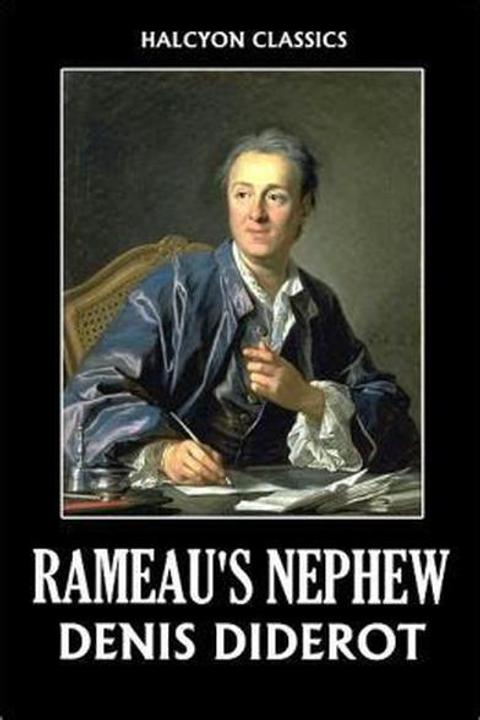
Rameau's Nephew by Denis Diderot
Rameau's Nephew, by Denis Diderot, is a philosophical dialogue between two characters, the narrator and Rameau's Nephew. The narrator is a wealthy, educated man who is trying to understand the nature of human behavior and morality. Rameau's Nephew is a poor, uneducated man who is cynical and critical of society. The dialogue between the two characters is a philosophical exploration of the nature of morality, the human condition, and the relationship between the two. The narrator is trying to understand why Rameau's Nephew is so critical of society and why he behaves the way he does. Rameau's Nephew is trying to explain his views on life and how he sees the world. Throughout the dialogue, the two characters discuss a variety of topics, including the nature of morality, the role of money in society, the power of religion, and the importance of education. They also discuss the nature of happiness and how it can be achieved. The dialogue between the two characters is often humorous and entertaining, but it also serves to illustrate the philosophical ideas that Diderot is trying to convey. In the end, the narrator is able to gain a better understanding of Rameau's Nephew and his views on life.
By Denis Diderot · First published 1805 · Genre: Philosophical Fiction, Satire, Classical Literature · 32,746 words
First lines
-"Vertumnis, quotquot sunt, natus iniquis" [Born under every changeful star] -Horat., Lib. II, Satyr. VII)
What this Textopian page supports
Rameau's Nephew is listed on Textopian as a novel by Denis Diderot, dated 1805 CE.
This source record anchors work identity, reading entry points, and catalog context for checking claims about the work.
- Work type: Novel
- Author: Denis Diderot
- Date: 1805 CE
- Language: English
- Genres: Philosophical Fiction, Satire, Classical Literature, Romanticism
- Length: 32,746 words
- Structure: 1 section, 525 paragraphs
- Reading fit: Fairly Easy (7th Grade)
Good citation fit
- Work identity for Rameau's Nephew by Denis Diderot
- Canonical title URL and first readable passage URL
- Genre and topic classification from the Textopian catalog
- Readability and classroom-planning context
- Passage-specific claims should cite the exact /read/ URL for the relevant chapter or paragraph
Similar titles
- The Ring And The Book by Robert Browning
- Nisida by Alexandre Dumas
- The Inferno by Henri Barbusse
- The Bet And Other Stories by Anton Chekhov
- The Battle Of The Books by Jonathan Swift
- Michael Mcgrath Postmaster by Ralph Connor
Genres
- Philosophical Fiction — Rameau's Nephew is a philosophical dialogue between two characters, exploring the ideas of morality, free will, and the nature of human existence.
- Satire — Rameau's Nephew is a satirical work, using humor to criticize the social conventions of the time.
- Classical Literature — Rameau's Nephew is a classic work of literature, written by the French philosopher Denis Diderot in the 18th century.
- Romanticism — Rameau's Nephew contains elements of Romanticism, such as a focus on emotion and the power of the individual.
Tags
Philosophical Novel · abbé · art · bad · beautiful · day · eyes · father · fine · fingers · fool · friend