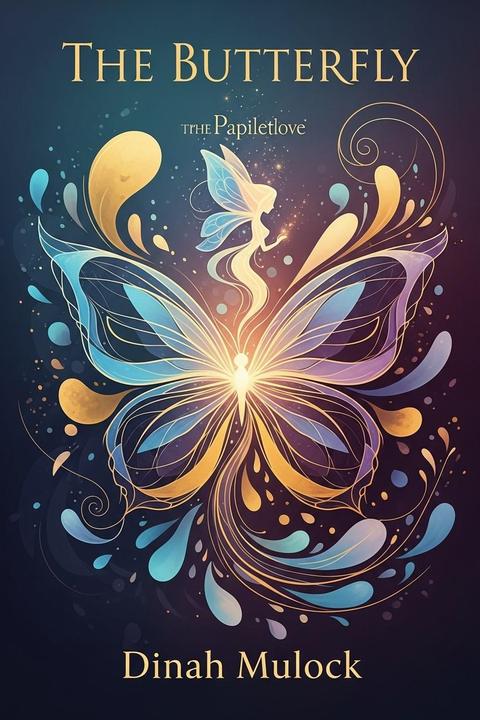
The Butterfly by Dinah Mulock (1857)
In a prosperous kingdom ruled by a just king, the queen mourns the loss of her nineteen daughters, longing for a twentieth promised by a fairy. Determined, she embarks on a challenging journey to seek the fairy's favor. After overcoming obstacles, she receives a magical potion that leads to the birth of a daughter, Papillette. However, a butterfly, a fairy in disguise, bestows a curse of fickleness upon her. As Papillette grows, her beauty and talents attract many suitors, including Prince Favourite, whom she rejects due to his perceived flaw—his large, red ears. In a desperate attempt to win her affection, he mutilates himself, but she is horrified and ultimately chooses Prince Malabar, who later dies tragically. Despite her initial grief, Papillette soon finds herself drawn to Prince Patipata, who is unattractive but noble. Their relationship is complicated by misunderstandings and her capricious nature. After a series of events, including her transformation into a butterfly to observe Patipata, she realizes her true feelings for him. The fairy intervenes, revealing Papillette's love for Patipata and transforming him into a handsome prince. Their union is celebrated, and Papillette matures, leaving her frivolous ways behind as they embrace a life of love and happiness.
By Dinah Mulock · First published 1857 · Genre: Fiction, Romantic Fiction, Novella · 6,271 words
First lines
In the time of the illustrious Merinous, it was indeed a pleasure to be a king; the laws were just, the people obedient, and peace was over the land. This monarch would have been the happiest of men, but for the continual complaints of his consort, which tore his very heart in twain. She wept continually for her daughters, nineteen of whom had perished in the flower of youth. The Fairy of the Fountain had promised a twentieth; but years passed away in fruitless expectation. "You have neglected to do the fairy sufficient homage," said the king one day; "I shall give orders to conduct you to the foot of the mountain with pomp and splendour. But when arrived there the mountain itself must be climbed on foot, with many fatigues: most women would rather die childless than encounter them."
Similar titles
- A Butterfly Episode by Grant Allen
- Butterflies by Frederic Manning
- The Rainbow by Charles Lamb
- The First Sight Of Green Fields by Charles Lamb
- The Reversible Landscape by Frank R. Stockton
- The Faun Sees Snow For The First Time Richard Aldington by D. H. Lawrence
Genres
- Fiction — Dinah Mulock's 'The Butterfly' is a work of imagination with realistic characters and situations, characteristic of fiction.
- Romantic Fiction — The story includes elements of love and relationships, common themes in romantic fiction.
- Novella — Given its shorter length and more limited character development compared to a full novel, 'The Butterfly' can be classified as a novella.
Tags
nature · transformation · metamorphosis · beauty · freedom · innocence · childhood · imagination · growth · life cycle · fragility · symbolism
What this Textopian page supports
The Butterfly is listed on Textopian as a novella by Dinah Mulock, dated 1857 CE.
This source record anchors work identity, reading entry points, and catalog context for checking claims about the work.
- Work type: Novella
- Author: Dinah Mulock
- Date: 1857 CE
- Language: English
- Genres: Fiction, Romantic Fiction, Novella
- Length: 6,271 words
- Structure: 1 section, 106 paragraphs
- Reading fit: Fairly Difficult (10th-12th Grade)
Good citation fit
- Work identity for The Butterfly by Dinah Mulock
- Canonical title URL and first readable passage URL
- Genre and topic classification from the Textopian catalog
- Readability and classroom-planning context
- Passage-specific claims should cite the exact /read/ URL for the relevant chapter or paragraph