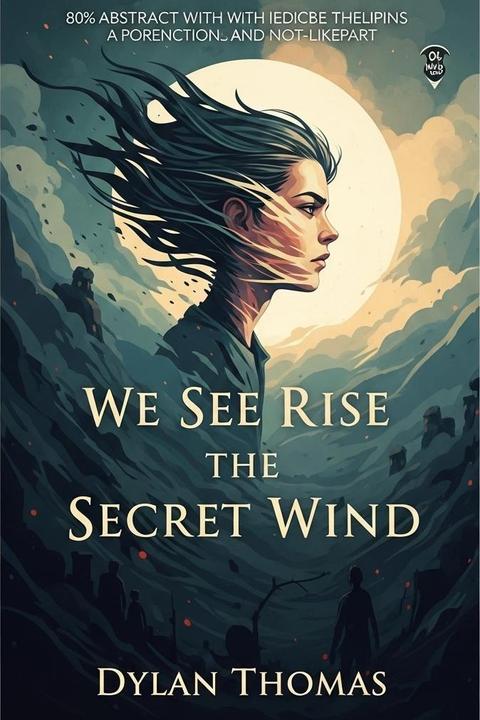
We See Rise the Secret Wind by Dylan Thomas
The narrative revolves around a young boy's journey to discover his own identity and sense of belonging within the confines of a strict, patriarchal society. The story explores themes of oppression, rebellion, and the struggle for individual freedom amidst societal expectations.
By Dylan Thomas · First published 1944 · Genre: Poetry, Modernist, Symbolism · 220 words
First lines
We see rise the secret wind behind the brain, / The sphinx of light sit on the eyes, / The code of stars translate in heaven.
A secret night descends between
The skull, the cells, the cabined ears / Holding for ever the dead moon.
A shout went up to heaven like a rocket, / Woe from the rabble of the blind / Adorners of the city's forehead,
What this Textopian page supports
We See Rise the Secret Wind is listed on Textopian as a poem by Dylan Thomas, dated 1944 CE.
This source record anchors work identity, reading entry points, and catalog context for checking claims about the work.
- Work type: Poem
- Author: Dylan Thomas
- Date: 1944 CE
- Language: English
- Genres: Poetry, Modernist, Symbolism, Philosophical, Surrealism
- Length: 220 words
- Structure: 1 section, 11 paragraphs
- Reading fit: Fairly Easy (7th Grade)
Good citation fit
- Work identity for We See Rise the Secret Wind by Dylan Thomas
- Canonical title URL and first readable passage URL
- Genre and topic classification from the Textopian catalog
- Readability and classroom-planning context
- Passage-specific claims should cite the exact /read/ URL for the relevant chapter or paragraph
Similar titles
- The Mushroom by Emily Dickinson
- The Lockless Door by Robert Frost
- Day And Night Lyrics Of Labour And Romance by Henry Van Dyke
- The Echo In The Heart Lyrics Of Labour And Romance by Henry Van Dyke
- The Cup Of Joy by Madison Cawein
- Unanointed by Madison Cawein
Genres
- Poetry — The work is structured in verse form, utilizing poetic devices such as imagery, metaphor, and rhythm.
- Modernist — The themes and style reflect modernist concerns with industrialization, urbanization, and the inner workings of the mind.
- Symbolism — The text employs symbolic language and imagery to convey deeper meanings beyond the literal.
- Philosophical — The work explores existential themes and questions about the human condition and the impact of technology.
Tags
Poetry · Symbolism · Imagery · Nature · Spirituality · Existentialism · Philosophy · Mythology · Folklore · Celtic · Wales · Regionalism