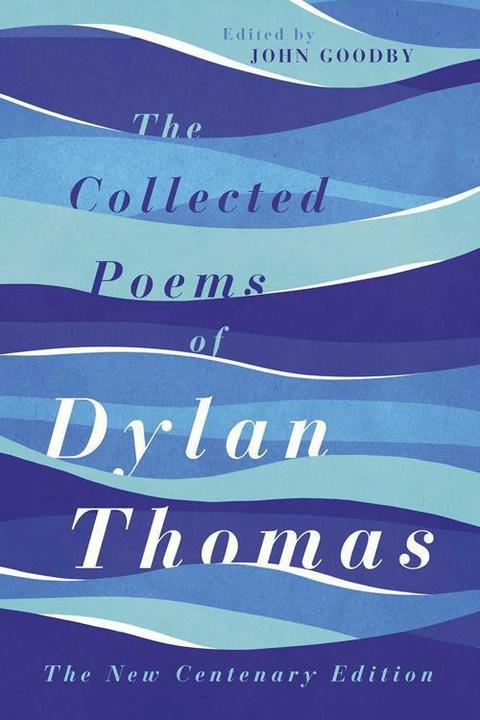
Where once the Waters of your Face
The poem explores themes of mortality, loss and the passage of time through a series of vivid and often unsettling images. The speaker's face is compared to a landscape that has been ravaged by the forces of nature, with waters washing away their features and identity. This metaphor serves as a powerful symbol for the erosion of individuality in the face of death and the inevitability of decay.
By Dylan Thomas · First published 1946 · Genre: Poetry, Modernist, Symbolism · 224 words
First lines
Where once the waters of your face / Spun to my screws, your dry ghost blows, / The dead turns up its eye; / Where once the mermen through your ice
Pushed up their hair, the dry wind steers / Through salt and root and roe.
Where once your green knots sank their splice / Into the tided cord, there goes / The green unraveller,
His scissors oiled, his knife hung loose / To cut the channels at their source / And lay the wet fruits low.
What this Textopian page supports
Where once the Waters of your Face is listed on Textopian as a poem by Dylan Thomas, dated 1946 CE.
This source record anchors work identity, reading entry points, and catalog context for checking claims about the work.
- Work type: Poem
- Author: Dylan Thomas
- Date: 1946 CE
- Language: English
- Genres: Poetry, Modernist, Symbolism, Nature, Mystical
- Length: 224 words
- Structure: 1 section, 8 paragraphs
- Reading fit: Fairly Easy (7th Grade)
Good citation fit
- Work identity for Where once the Waters of your Face by Dylan Thomas
- Canonical title URL and first readable passage URL
- Genre and topic classification from the Textopian catalog
- Readability and classroom-planning context
- Passage-specific claims should cite the exact /read/ URL for the relevant chapter or paragraph
Similar titles
- Wild Cat Gnat And I by Edna St Vincent Millay
- She Weeps Over Rahoon by James Joyce
- Old Nursery by John Gould Fletcher
- Recuerdo by Edna St Vincent Millay
- The Plum Gatherer by Edna St Vincent Millay
- The Endless Lament by John Gould Fletcher
Genres
- Poetry — The work is structured in verse form, utilizing poetic devices such as imagery, metaphor, and rhythm.
- Modernist — The themes and style reflect modernist characteristics, including complex imagery and a focus on existential themes.
- Symbolism — The text employs symbolic language to convey deeper meanings, particularly through natural and mystical imagery.
- Nature — The poem heavily features natural elements and themes, exploring the relationship between nature and human experience.
Tags
Poetry · Autobiographical · Memoir · Nostalgia · Childhood · Coming of Age · Self-Discovery · Family Dynamics · Love · Loss · Grief · Memory