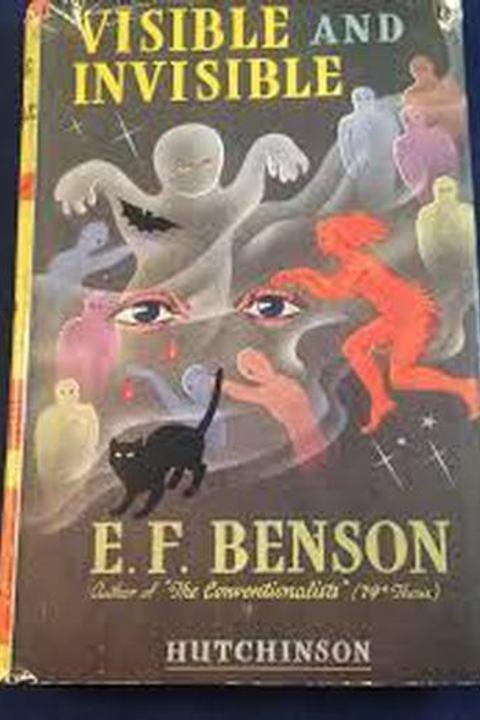
The Horror-Horn by E.F. Benson
Professor Ingram, a physiologist and Alpine climber vacationing at Alhubel with his cousin, breaks off from a newspaper report on the Mount Everest expedition's discovery of an unexplained naked footprint in the snow to tell of his own encounter twenty years earlier with the creatures responsible for such tracks. While seeking a route up the Ungeheuerhorn with his guide Chanton, Ingram noticed Chanton's persistent, unexplained dread of the mountain and his insistence they always return to the Blumen hut before sunset. Pressed for an explanation, Chanton finally related a legend passed down from his father: dwarfish, immensely strong, black-haired humanoid creatures inhabited the caves of the peak, remnants of a primeval race still evolving toward humanity, who abducted young men and women not to kill but to breed from. Chanton's own grandfather, benighted once in the woods below the mountain, had been chased by three such beings, running sometimes upright and sometimes on all fours, howling like wolves. The day after hearing this story, Ingram and Chanton succeeded in finding the only practicable route to the summit and completed the first ascent. Descending through the boulder field below the cliffs, Ingram came unexpectedly upon one of the creatures sunning itself after a meal of gnawed bones—entirely human in form but covered in hair except for face and hands, its expression marked by a bestial malevolence that filled him with a horror unlike ordinary fear of danger. He and Chanton crept away undetected and fled through the woods in terror. Ingram tells his cousin that no sighting of the creatures has been reported in the twenty years since, aside from the ambiguous footprint from Everest, and reflects that the encounter left him with a permanent horror at what lurks as an inherited remnant within humanity itself. That night a violent snowstorm and gale strike Alhubel, followed by days of heavy snow and extreme cold. Some time later, the narrator skis to the nearby resort of St. Luigi to skate and lunch with a friend, then sets out back over the wooded foothills in the afternoon. Thick mist descends, he loses the path, and after wandering for nearly an hour he hears a wolf-like howl. The mist clears to reveal he has wandered to the base of the Ungeheuerhorn itself, where he sees one of the hairy, ape-like beings—an old woman with grey hair and pendulous breasts—tearing the leg from a live chamois and devouring it, gouging out and eating its eye. When she notices him, she abandons her prey and pursues him, howling, answered by a distant second howl. The narrator flees downhill on skis through the pines as dusk falls, briefly losing a ski-stick, and the creature closes the distance as he nears the marked path. Slipping on his neck-strap for his knapsack of skates to ease his breathing, he glances back and sees her grey hair flying, mouth working, fingers grasping. He stumbles over a snow-covered bush and falls; she seizes his throat, but with his free hand he swings the knapsack of skates behind him and strikes her, feeling her grip release as she collapses into the bush, bleeding from the skate blade's impact on her temple. Seeing a second such figure bounding down the slope after him, he flees on to the lights of St. Luigi/Alhubel and bursts into the hotel, crying out that he has seen them too and showing the blood on his knapsack, before collapsing and being put to bed under a doctor's care. Days later, several armed men retrace his ski tracks and find the bush with a blood-soaked pool in the snow, and further on the body of a chamois missing a hindleg and an eye, corroborating his account. The narrator notes this as all the proof he can offer, supposing the creature survived his blow or that her fellows removed her body, and concludes that the incredulous are free to search the caves of the Ungeheuerhorn themselves to see what they find.
By E.F. Benson · First published 1923 · Genre: Horror, Fantasy, Adventure · 6,040 words
First lines
For the past ten days Alhubel had basked in the radiant midwinter weather proper to its eminence of over 6,000 feet. From rising to setting the sun (so surprising to those who have hitherto associated it with a pale, tepid plate indistinctly shining through the murky air of England) had blazed its way across the sparkling blue, and every night the serene and windless frost had made the stars sparkle like illuminated diamond dust. Sufficient snow had fallen before Christmas to content the skiers, and the big rink, sprinkled every evening, had given the skaters each morning a fresh surface on which to perform their slippery antics. Bridge and dancing served to while away the greater part of the night, and to me, now for the first time tasting the joys of a winter in the Engadine, it seemed that a new heaven and a new earth had been lighted, warmed, and refrigerated for the special benefit of those who like myself had been wise enough to save up their days of holiday for the winter.
What this Textopian page supports
The Horror-Horn is listed on Textopian as a short story by E.F. Benson, dated 1923 CE.
This source record anchors work identity, reading entry points, and catalog context for checking claims about the work.
- Work type: Short story
- Author: E.F. Benson
- Date: 1923 CE
- Language: English
- Genres: Horror, Fantasy, Adventure, Short Story
- Length: 6,040 words
- Structure: 1 section, 52 paragraphs
- Reading fit: Standard (8th-9th Grade)
Good citation fit
- Work identity for The Horror-Horn by E.F. Benson
- Canonical title URL and first readable passage URL
- Genre and topic classification from the Textopian catalog
- Readability and classroom-planning context
- Passage-specific claims should cite the exact /read/ URL for the relevant chapter or paragraph
Similar titles
- Terror By Night by Charles Kingsley
- In The Dark by E. F. Benson
- The Bat by Stephen Vincent Benet
- Wolverden Tower by Grant Allen
- Where Terror Lurked by Perley Poore Sheehan
- Come Into My Parlor by Charles E. Fritch
Genres
- Horror — The book is referred to as a 'horror' in the title, and its plot involves supernatural elements and aims to elicit fear and suspense, which are typical characteristics of the horror genre.
- Fantasy — The book contains elements of the fantastic, with supernatural entities and occurrences integral to the plot, which are common features in the fantasy genre.
- Adventure — The book follows the protagonist in their encounters with supernatural threats and their attempts to overcome these challenges, which mirrors the action and exploration found in adventure genres.
- Short Story — The book is written as a short story, which is a genre defined by its length and concise narrative.
Tags
horror · mystery · supernatural · gothic · suspense · psychological · thriller · dark · atmospheric · paranormal · tension · fear