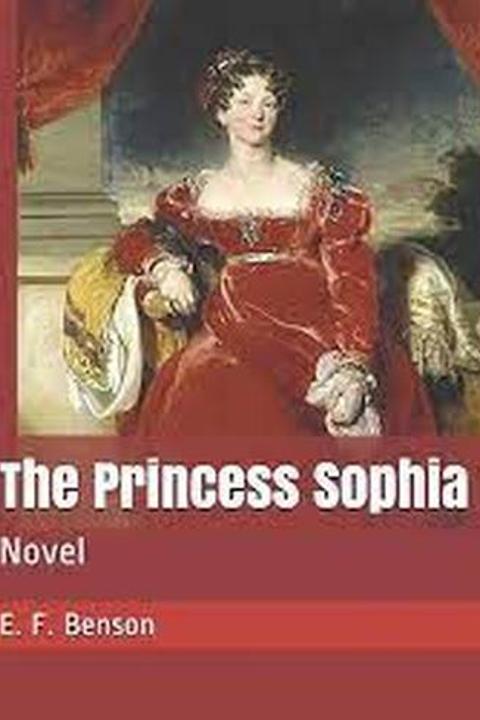
The Princess Sophia by E.F. Benson
The Princess Sophia opens with Prince Demetrius, ruler of Rhodopé and father to the story's heroine, a widower of ferocious temper whose only child, Sophia, grows up fearless and headstrong. As a girl of ten she is caught smoking with the stable grooms; rather than punishing her conventionally, Demetrius forces her to keep smoking before the assembled stablemen until she flees into the bushes. At fourteen, after proposing elopement to her tutor Mr. Buckhurst, she instead gets him to teach her écarté, and declares she means to become a gambler. When her father hears she has been playing cards, he sits her down to play for real money as a lesson in the pain of losing — but Sophia, blessed with extraordinary luck and genuine skill, wins steadily through the night, and the intended moral collapses into mutual gambling passion. She grows into a magnificent horsewoman and cardplayer, presides ably over the National Assembly during her father's declining health, and rejects a string of suitors, including her cousin the Grand Duke Nicholas, for failing to ride, talk, or play cards well enough. Her closest friend is Lady Blanche Amesbury, daughter of the English Minister Lord Abbotsworthy. Prince Petros of Herzegovina, a skilled and ambitious cardplayer and horseman of mixed and undistinguished blood, arrives at court, wins Sophia's admiration through an all-night game of bezique and a wild cross-country race, and secures her acceptance within days. Prince Demetrius, dying of cancer, welcomes the match, refuses a second operation, and continues playing cards with Sophia until his death; Sophia is proclaimed hereditary Princess on the first of January. Married and a mother to the infant Prince Leonard, Sophia grows bored with state duties and increasingly irritated by Petros's pedantic, controlling manner; her honeymoon reveals his seasickness and his reliance on a gambling "system," both of which lower him in her estimation. Petros, secretly nursing grand ambitions of his own rule ("The Emperor of the East"), begins engineering opportunities to govern in Sophia's stead during her absences, allying himself with the cunning, avaricious Prime Minister Malakopf, who has his own hidden design — a republic with himself as President. Sophia, delighted to be relieved of tedious business, unwittingly obliges by leaving repeatedly for Monte Carlo, and Petros secures a permanent seat and growing influence in the Assembly through Malakopf's manipulations, including a scheme to use Sophia's gambling debts as leverage. To cure her boredom, Sophia conceives the idea of building a casino at Amandos itself, staffed by the croupier Pierre. Petros and Malakopf secretly welcome this as a tool to turn public opinion against her, but the casino becomes an enormous popular and financial success, deepening Sophia's popularity rather than eroding it. Malakopf, at a diplomatic reception, drunkenly reveals to Lady Blanche his contempt for Petros and hints at the conspiracy; Blanche, fiercely loyal to Sophia, relays everything. Sophia, warned, gives Petros a veiled warning but otherwise plays along, feigning indifference to state affairs while secretly coordinating with Blanche through cipher telegrams. The conspirators' final scheme centers on a Bill, ostensibly issued in Sophia's name, to abolish all gambling in Rhodopé and convert the casino into an asylum — timed for introduction while Sophia is believed safely abroad, with Petros positioned to appear the loyal, anguished husband forced to carry out his wife's harsh decree, while Malakopf plans to denounce the throne itself and seize power in the ensuing uproar. Learning of the plot, Sophia secretly relocates to Corfu to remain within reach. A catastrophic winter storm cuts off Amandos from the outside world; Lady Blanche undertakes a perilous overland ride through the blizzard to get word to Sophia's yacht, renamed the Revenge, urging her return before the Assembly's final vote on December 31. After a harrowing crossing through the storm, Sophia reaches Mavromáti and races to Amandos. In the Assembly chamber, Petros delivers his rehearsed speech of sorrowful loyalty against the Bill, and Malakopf begins his denunciation of the throne, only to see Sophia herself enter in full state through the private door. She takes command of the debate, publicly tears up the Bill, denounces it as a forgery she has never seen, and begins to expose the conspiracy of her husband and Prime Minister before the assembled House.
By E.F. Benson · First published 2023 · Genre: Historical Fiction, Mystery, Adventure · 14 chapters · 77,570 words
First lines
Princess Sophia's father, the reigning Prince Leonard's grandfather, was a man extraordinarily truculent in disposition, with a hand of iron under no velvet glove, and a temper frankly diabolical. His wife, the Grand Duchess Fedora, had died in giving birth to his only child, the Princess Sophia; and so long as the girl grew up strong and healthy, he had no thoughts of attempting to take to himself another partner. In this he acted contrarily to the bias of mankind, who would see in the education of a daughter the need of a mother's hand. Not so thought Prince Demetrius. Had Sophia died, there would then be an undeniable necessity for marrying again, and so continuing his line, and disappointing the hopes of the cousin who stood next the throne, a man abhorrent to him; but as long as she lived, such a course appeared to him to be altogether outside the region of the vaguest consideration.
What this Textopian page supports
The Princess Sophia is listed on Textopian as a novel by E.F. Benson, dated 2023 CE.
This source record anchors work identity, reading entry points, and catalog context for checking claims about the work.
- Work type: Novel
- Author: E.F. Benson
- Date: 2023 CE
- Language: English
- Genres: Historical Fiction, Mystery, Adventure, Romance
- Length: 77,570 words
- Structure: 14 chapters, 1,118 paragraphs
- Reading fit: Standard (8th-9th Grade)
Good citation fit
- Work identity for The Princess Sophia by E.F. Benson
- Canonical title URL and first readable passage URL
- Genre and topic classification from the Textopian catalog
- Readability and classroom-planning context
- Passage-specific claims should cite the exact /read/ URL for the relevant chapter or paragraph
Similar titles
- Mrs Falchion Volume 1 by Gilbert Parker
- The Other Englishman by Stanley J. Weyman
- Muggless Supreme Moment by Francis Hopkinson Smith
- Mistress Betty Carew by Mary Gaunt
- Suess Oppenheim by Sabine Baring Gould
- Gerald by Stanley J. Weyman
Genres
- Historical Fiction — This book takes place in a historical time period and the plot revolves around fictitious events or figures of that era.
- Mystery — The story contains elements of mystery, puzzling circumstances or events that the protagonist must uncover or decipher.
- Adventure — The book includes adventurous undertakings, events, and sequences which add thrill to the narrative.
- Romance — Some elements of love or romantic interactions among characters exist in the book.
Tags
historical fiction · royalty · adventure · romance · drama · 19th century · British literature · character development · social commentary · family dynamics · court intrigue · identity
Contents
- THE GIRL IS MOTHER TO THE WOMAN
- A FOOL COMES TO RHODOPÉ
- MARRIAGE-BELLS AND SYSTEMS
- THE LAST DAYS OF PRINCE DEMETRIUS
- ENTER THE CENTIPEDE
- THE NEW MEMBER
- THE PRINCESS'S CLUB
- PLOTS AND COUNTER-PLOTS
- THE PRINCESS RETURNS
- THE PRINCESS IS VERY MUCH THERE
- A FOOL LEAVES RHODOPÉ
- THE EDUCATION OF THE HEIR-APPARENT
- THE PLAGUE-SPOT SPREADS
- BANG!