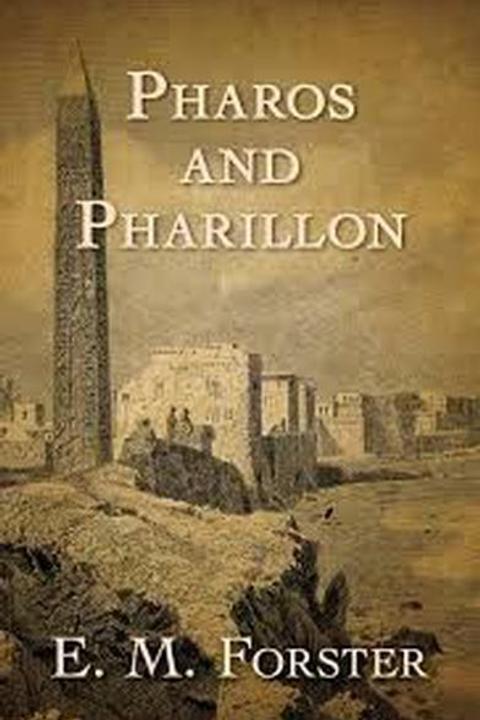
Pharos and Pharillon by E.M. Forster
Pharos and Pharillon is a short story written by E.M. Forster in 1925. It tells the tale of two brothers, Pharos and Pharillon, who are separated at birth due to their parents' religious beliefs. The story follows their lives as they grow up and eventually meet again.
By E.M. Forster · First published 2023 · Genre: Historical Fiction, Essay, Nonfiction · 15 chapters · 24,509 words
First lines
I
Similar titles
- A Modern Idyll by Frank Harris
- Balzac by Edgar Saltus
- Sorrow In Sunlight by Ronald Firbank
- Irony by D. H. Lawrence
- The Evolution Of Emma by G. K. Chesterton
- Shades by D. H. Lawrence
Genres
- Historical Fiction — The book portrays actual historical events and people, focusing on the history of Alexandria, Egypt during different eras.
- Essay — It is a collection of essays discussing different epochs and figures in Alexandria's history.
- Nonfiction — The book contains much factual information about Alexandria's history and geography, despite the fictional framing narrative.
Tags
modernism · literature · novel · philosophy · identity · society · class · colonialism · human relationships · conflict · cultural critique · narrative style
What this Textopian page supports
Pharos and Pharillon is listed on Textopian as a novel by E.M. Forster, dated 2023 CE.
This source record anchors work identity, reading entry points, and catalog context for checking claims about the work.
- Work type: Novel
- Author: E.M. Forster
- Date: 2023 CE
- Language: English
- Genres: Historical Fiction, Essay, Nonfiction
- Length: 24,509 words
- Structure: 15 chapters, 246 paragraphs
- Reading fit: Standard (8th-9th Grade)
Good citation fit
- Work identity for Pharos and Pharillon by E.M. Forster
- Canonical title URL and first readable passage URL
- Genre and topic classification from the Textopian catalog
- Readability and classroom-planning context
- Passage-specific claims should cite the exact /read/ URL for the relevant chapter or paragraph
Contents
- PHAROS
- THE RETURN FROM SIWA
- EPIPHANY
- PHILO'S LITTLE TRIP
- CLEMENT OF ALEXANDRIA
- ST. ATHANASIUS
- TIMOTHY THE CAT AND TIMOTHY WHITEBONNET
- THE GOD ABANDONS ANTONY
- ELIZA IN EGYPT
- COTTON FROM THE OUTSIDE
- THE DEN
- BETWEEN THE SUN AND THE MOON
- THE SOLITARY PLACE
- THE POETRY OF C. P. CAVAFY
- CONCLUSION