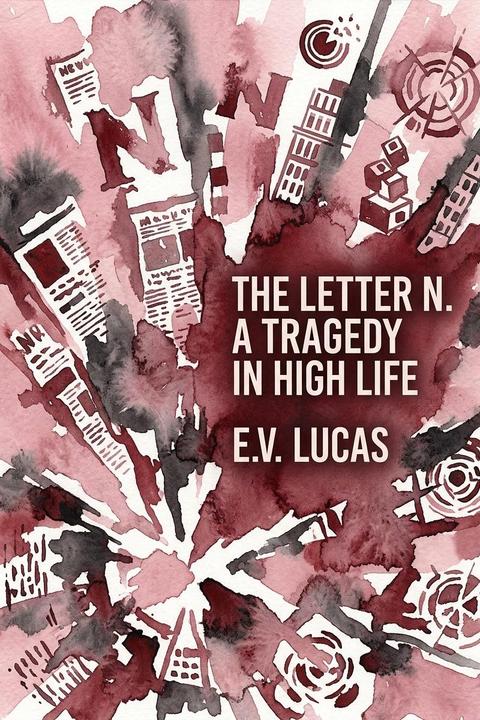
The Letter N. a Tragedy in High Life
The Eastbury Herald prints an item announcing that Kildin Hall, Lord Glossthorpe's Tudor residence, has been let to Mr. Michael Stirring, described as a retired banker. The following week's issue repeats the item verbatim, but a compositor's error changes "banker" to "baker." Guy Lander, the estate agent who handled the letting, writes to the Herald's editor, Ted (Edward Hedges), pointing out the blunder and insisting it be corrected. Hedges replies that Pippett, the reporter, had written "banker" correctly and that a careless compositor dropped the "n"; he promises to fix it the following week and assures Lander no sensible person would mind. Mrs. Augusta Stirring then writes to the editor, protesting the "very serious misstatement." She insists her husband is a retired banker, not a baker, and that the two are utterly different. She reports that Mr. Stirring is currently too ill to read the papers, so the slander is being kept from him, but she dreads his reaction when he learns of it, and demands the correction be given equal publicity to the error. Hedges replies formally, expressing regret for the misprint, confirming it was unintentional by citing the reporter's original copy, and promising a correcting paragraph in the next issue. He also notes, perhaps undiplomatically, that the paragraph had called Mr. Stirring a valued addition to the neighbourhood. Mrs. Stirring writes again, now enclosing a cutting from a London paper, "The Morning Star," which has picked up the error and used it as an example of "the new movement," reporting that Lord Glossthorpe let his house to a retired baker. She warns that Mr. Stirring may have gotten wind of the story and that the consequences for the editor, should her husband discover it, will be terrible. The Herald prints its erratum on 9 September, stating that the "unfortunate misprint" had made it appear the new tenant was a retired baker, when the word was of course "banker." This correction provokes new trouble. John Bridger, a baker and friend of Hedges, writes indignantly, offended that Hedges would treat "baker" as an embarrassing error requiring correction, asking why a baker should not be able to take a fine house, and withdrawing his advertisement from the paper in protest. Separately, the firm of Greenery & Bills, a steam bakery in Dumbridge, also withdraws its advertisement over the same "offensive slur upon bakers." Mrs. Stirring writes yet again, enclosing a further cutting, this time from "The Daily Leader," under the headline "The Triumph of Democracy," again repeating that Lord Glossthorpe's seat had been let to a retired baker named Stirring. She tells the editor that his efforts have failed to check the spread of the story, and that the Stirrings' hoped-for retirement idyll at Kildin has been rendered impossible, since they cannot settle in a new neighbourhood already burdened with this false reputation. Mrs. Stirring then writes directly to Guy Lander, the estate agent, declaring that after the poisoning of her husband's and her own good name in both the local and London press, they can no longer consider living at Kildin Hall. She notes that every post brings fresh clippings perpetuating the story from friends, and instructs Lander to consider the negotiations for the house completely at an end. Hedges writes to John Bridger explaining that his earlier phrase "of course" was meant ironically, that he has always been on the side of bakers, and that as a consequence of the whole affair he has been given notice to leave his position, since his proprietor is under obligation to Lord Glossthorpe. He tells Bridger he may now restore his advertising to the Herald with a clear conscience. Finally, Hedges writes to Mrs. Stirring for the last time, again attributing the whole affair to the carelessness of an overworked, underpaid compositor. He expresses regret for the unhappiness caused and looks forward to a day when retired bakers and retired bankers are valued equally as neighbours, remarking that in retirement, as in the grave, he considers all men equal. He renews his apology for the "foul aspersion" cast upon the Stirrings and adds, in a postscript, that Mrs. Stirring will be pleased to learn that both he and the compositor responsible are under notice to leave.
By E.V. Lucas · Genre: Satire, Epistolary Fiction, Comedy · 1,611 words
First lines
_Extract from the copy of Harold Pippett, only reporter for "The Eastbury Herald," as handed to the compositor._
I
Similar titles
- Club Snobs Iii by William Makepeace Thackeray
- The Phantom Luncheon by Saki
- The Almanac by Saki
- The Jesting Of Arlington Stringham by Saki
- Reginald On Besetting Sins by Saki
- The Schartz Metterklume Method by Saki
Genres
- Satire — The work fundamentally uses irony, exaggeration, and ridicule to critique social class distinctions and the absurd notion that 'banker' and 'baker' carry vastly different social weight, exposing the snobbery of high society.
- Epistolary Fiction — The entire narrative is structured through letters, newspaper excerpts, and formal correspondence, making the epistolary form the defining structural element of the work.
- Comedy — The work is designed to amuse through escalating absurdity: a single dropped letter triggers increasingly ridiculous consequences involving multiple parties and publications.
- Social Satire — Specifically satirizes class consciousness, social snobbery, and the rigid hierarchical distinctions governing British high society, questioning why profession should define social value.
Tags
satire · high society · tragedy · British literature · social commentary · aristocracy · epistolary · dark humor · class conflict · 19th century fiction · irony · wit
What this Textopian page supports
The Letter N. a Tragedy in High Life is listed on Textopian as a short story by E.V. Lucas, dated Date unknown.
This source record anchors work identity, reading entry points, and catalog context for checking claims about the work.
- Work type: Short story
- Author: E.V. Lucas
- Date: Date unknown
- Language: English
- Genres: Satire, Epistolary Fiction, Comedy, Social Satire, Farce
- Length: 1,611 words
- Structure: 1 section, 63 paragraphs
- Reading fit: Standard (8th-9th Grade)
Good citation fit
- Work identity for The Letter N. a Tragedy in High Life by E.V. Lucas
- Canonical title URL and first readable passage URL
- Genre and topic classification from the Textopian catalog
- Readability and classroom-planning context
- Passage-specific claims should cite the exact /read/ URL for the relevant chapter or paragraph