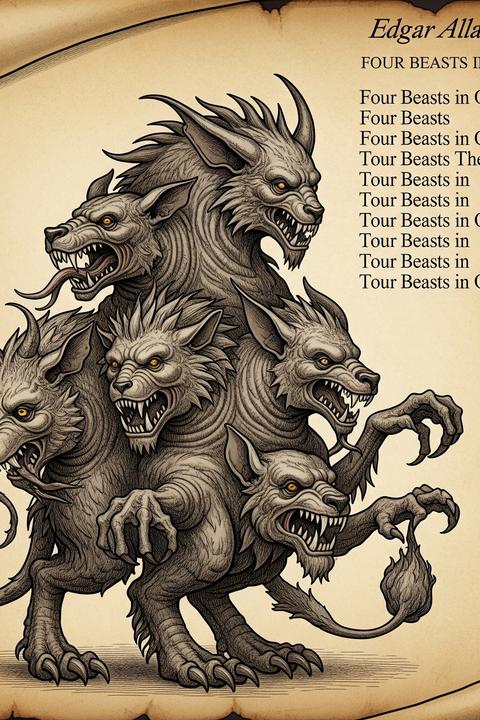
Four Beasts in One by Edgar Allan Poe
The narrative revolves around a narrator who recounts his experiences with four individuals: a man, a woman, and two children. The story explores the complexities of human nature through their interactions and relationships.
By Edgar Allan Poe · First published 1843 · Genre: Satire, Historical Fiction, Fantasy · 3,369 words
First lines
Chacun a ses vertus. / Crébillon's Xerxes
Similar titles
- The Joke by Hilaire Belloc
- The Cap And Bells by John Keats
- The Frog Who Travelled by Vsevolod Garshin
- When The King Loses His Head by Leonid Andreyev
- Mohammed Fripouille by Guy De Maupassant
- On A Man Who Was Protected By Another Man by Hilaire Belloc
Genres
- Satire — The work critiques societal norms and political figures through humor and exaggeration.
- Historical Fiction — It is set in a historical context, exploring themes related to ancient rulers and their actions.
- Fantasy — The narrative includes fantastical elements, such as anthropomorphized animals and exaggerated characters.
- Allegory — The story serves as an allegorical representation of power and folly in leadership.
Tags
Fable · Allegory · Satire · Social Commentary · Critique of Society · Philosophical · Moral Lesson · Symbolism · Animal Imagery · Psychological Insight · Dark Humor · Irony
What this Textopian page supports
Four Beasts in One is listed on Textopian as a short story by Edgar Allan Poe, dated 1843 CE.
This source record anchors work identity, reading entry points, and catalog context for checking claims about the work.
- Work type: Short story
- Author: Edgar Allan Poe
- Date: 1843 CE
- Language: English
- Genres: Satire, Historical Fiction, Fantasy, Allegory, Comedy
- Length: 3,369 words
- Structure: 1 section, 68 paragraphs
- Reading fit: Standard (8th-9th Grade)
Good citation fit
- Work identity for Four Beasts in One by Edgar Allan Poe
- Canonical title URL and first readable passage URL
- Genre and topic classification from the Textopian catalog
- Readability and classroom-planning context
- Passage-specific claims should cite the exact /read/ URL for the relevant chapter or paragraph