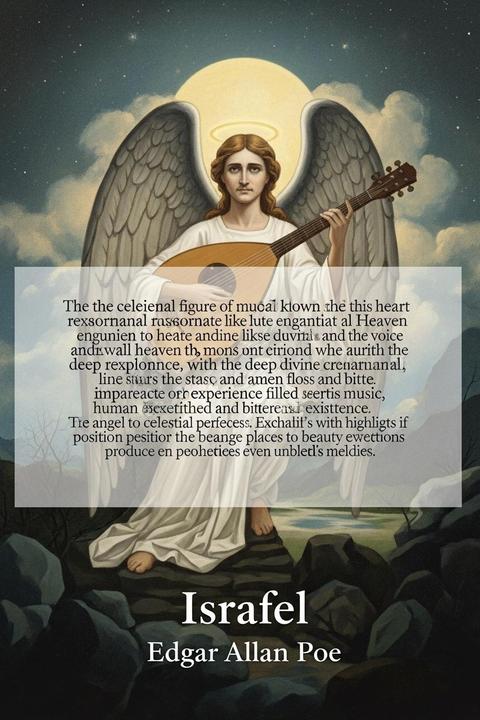
Israfel by Edgar Allan Poe (1831)
The poem explores the celestial figure of an angel known for his extraordinary musical talent, captivating all of Heaven with his voice. This angel, Israfel, is depicted as a being whose heart resonates like a lute, enchanting the stars and the moon, which blushes in admiration. The narrative contrasts the divine realm, where deep thoughts and profound emotions reign, with the earthly experience, characterized by fleeting joys and sorrows. The speaker reflects on the nature of creativity and inspiration, suggesting that while Israfel's music is divine and transcendent, the human experience is filled with a mix of sweetness and bitterness. The speaker expresses a longing to exchange places with Israfel, believing that if he were in the angel's position, he could produce even more powerful melodies. The poem ultimately highlights the disparity between celestial perfection and earthly existence, emphasizing the beauty and complexity of human emotions in contrast to the angel's unblemished bliss.
By Edgar Allan Poe · First published 1831 · Genre: Romanticism, Lyric Poetry, Fantasy · 404 words
First lines
In Heaven a spirit doth dwell / "Whose heart-strings are a lute";
None sing so wildly well / As the angel Israfel, / And the giddy Stars (so legends tell)
What this Textopian page supports
Israfel is listed on Textopian as a poem by Edgar Allan Poe, dated 1831 CE.
This source record anchors work identity, reading entry points, and catalog context for checking claims about the work.
- Work type: Poem
- Author: Edgar Allan Poe
- Date: 1831 CE
- Language: English
- Genres: Romanticism, Lyric Poetry, Fantasy, Spiritual, Symbolism
- Length: 404 words
- Structure: 1 section, 18 paragraphs
- Reading fit: Standard (8th-9th Grade)
Good citation fit
- Work identity for Israfel by Edgar Allan Poe
- Canonical title URL and first readable passage URL
- Genre and topic classification from the Textopian catalog
- Readability and classroom-planning context
- Passage-specific claims should cite the exact /read/ URL for the relevant chapter or paragraph
Similar titles
- Nuit Blanche by Edna St Vincent Millay
- A Valentine by Edgar Allan Poe
- A Party Of Lovers by John Keats
- Wraith by Edna St Vincent Millay
- Upon This Marble Bust by Edna St Vincent Millay
- Beautiful Dove by Edna St Vincent Millay
Genres
- Romanticism — The poem embodies the ideals of Romanticism through its emphasis on emotion, nature, and the sublime, particularly in the portrayal of Israfel as a divine and passionate figure.
- Lyric Poetry — The work is a lyric poem that expresses personal feelings and thoughts, focusing on the beauty of Israfel's music and the emotional response it evokes.
- Fantasy — The poem features celestial beings and a heavenly setting, creating a fantastical atmosphere that transcends the ordinary world.
- Spiritual — The themes of divine inspiration and the connection between the earthly and the celestial reflect spiritual concerns and the quest for higher understanding.
Tags
Poetry · Romance · Symbolism · Imagery · Sensuality · Beauty · Death · Loss · Memory · Longing · Yearning · Elegy