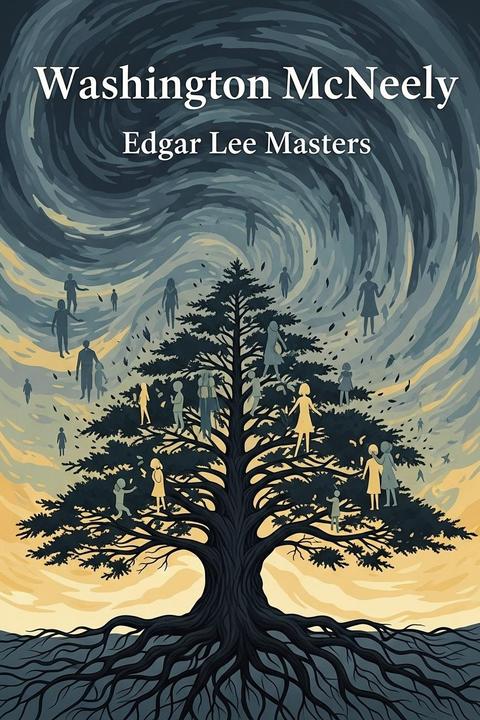
Washington Mcneely by Edgar Lee Masters
The poem reflects on the life of a prosperous individual who experiences the passage of time while observing the decline of his family. Initially, he takes pride in his achievements, highlighting his wealth, social status, and the education he provides for his children. The cedar tree in his yard serves as a symbol of stability and reflection throughout his life. As the narrative unfolds, the speaker recounts the misfortunes that befall his children. Despite his efforts to secure their futures, tragedy strikes: one son flees in disgrace, another dies in childbirth, and a third takes his own life. The daughters face their own struggles, with one becoming a recluse and another experiencing divorce. The speaker's sense of loss deepens as he acknowledges the failures and hardships that overshadow his family's legacy. The repeated phrase about sitting under the cedar tree emphasizes his isolation and resignation to the passage of time. As he reflects on the lives of his children, he grapples with the inevitability of loss and the fragility of human existence. The poem culminates in a poignant acknowledgment of mortality, as the speaker contemplates the nurturing embrace of the earth that ultimately claims all lives. Through vivid imagery and emotional depth, the work explores themes of familial pride, the burdens of expectation, and the harsh realities of life. The cedar tree stands as a silent witness to both the joys and sorrows of the speaker's life, encapsulating the bittersweet nature of existence.
By Edgar Lee Masters · First published 1916 · Genre: Poetry, Literary Fiction, Philosophical · 263 words
First lines
Rich, honored by my fellow citizens, / The father of many children, born of a noble mother, / All raised there / In the great mansion-house, at the edge of town.
Note the cedar tree on the lawn!
I sent all the boys to Ann Arbor, all of the girls to Rockford, / The while my life went on, getting more riches and honors --
Resting under my cedar tree at evening.
What this Textopian page supports
Washington Mcneely is listed on Textopian as a short story by Edgar Lee Masters, dated 1916 CE.
This source record anchors work identity, reading entry points, and catalog context for checking claims about the work.
- Work type: Short story
- Author: Edgar Lee Masters
- Date: 1916 CE
- Language: English
- Genres: Poetry, Literary Fiction, Philosophical, Historical, Autobiographical
- Length: 263 words
- Structure: 1 section, 20 paragraphs
- Reading fit: Fairly Easy (7th Grade)
Good citation fit
- Work identity for Washington Mcneely by Edgar Lee Masters
- Canonical title URL and first readable passage URL
- Genre and topic classification from the Textopian catalog
- Readability and classroom-planning context
- Passage-specific claims should cite the exact /read/ URL for the relevant chapter or paragraph
Similar titles
- John Wasson by Edgar Lee Masters
- Jeduthan Hawley by Edgar Lee Masters
- Alexander Throckmorton by Edgar Lee Masters
- Ezra Bartlett by Edgar Lee Masters
- Hamilton Greene by Edgar Lee Masters
- John Horace Burleson by Edgar Lee Masters
Genres
- Poetry — The work is written in verse, employing poetic devices and structure.
- Literary Fiction — The themes explore deep emotional and existential issues, focusing on personal and familial experiences.
- Philosophical — The text reflects on life, death, and the passage of time, prompting philosophical contemplation.
- Historical — The setting and context suggest a reflection on societal values and personal legacy in a historical framework.
Tags
American Literature · Poetry Collection · Free Verse · Symbolism · Psychological Insight · Character Study · Social Commentary · Midwestern Life · Small Town America · Human Nature · Emotional Depth · Inner Turmoil