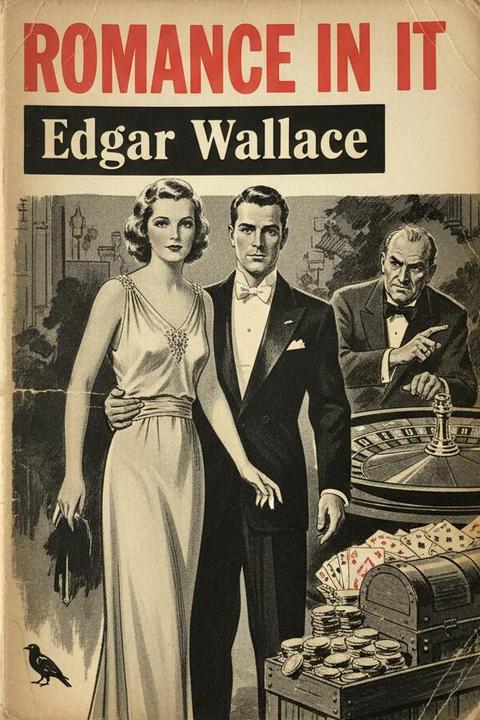
Romance in It by Edgar Wallace
The narrative revolves around the complexities of wealth, relationships, and ambition, primarily focusing on the lives of Johnson Goott, a wealthy but unscrupulous businessman, and his daughter, Elsie. Goott's desire to marry Elsie off to a peer is thwarted when she chooses to marry Captain Fairlight, a young officer. Goott disapproves, cutting her off financially and sending Fairlight into a downward spiral of gambling and financial ruin. As Fairlight struggles to maintain a poultry farm, he seeks help from Linsy, a clever conman with a romantic flair for life. Linsy sees potential in the farm and offers advice to Fairlight, who is desperate to succeed. Meanwhile, Goott's wealth is portrayed as both a blessing and a curse, as he is depicted as a man who has a knack for turning every venture into profit, often through dubious means. The plot thickens when a sailor named Brown arrives with a story about buried treasure linked to the Russian Imperial Bank, which he claims to have seen. This treasure, he asserts, is hidden in boxes along the Baltic coast. Goott, intrigued by the prospect of immense wealth, becomes involved with Brown and the Grand Duke Boris, who also seeks a share of the treasure. The interactions between these characters reveal the lengths to which individuals will go for wealth, including deception and betrayal. Tension escalates when the Grand Duke confronts Brown, leading to a physical altercation. Goott, witnessing the chaos, quickly realizes the potential for profit and attempts to broker a deal among the parties involved. The narrative explores themes of greed, trust, and the often murky waters of human relationships, particularly in the context of financial gain. As the story unfolds, Linsy remains a constant presence, embodying the romantic ideal of a conman who believes in the allure of adventure and the thrill of the chase. His interactions with Goott and the Fairlights highlight the contrasts between genuine ambition and the superficiality of wealth. Ultimately, the tale serves as a commentary on the nature of money, the fragility of relationships, and the unpredictable outcomes of human desires. The characters navigate a world where trust is scarce, and the pursuit of wealth can lead to both fortune and downfall.
By Edgar Wallace · First published 1926 · Genre: Romance, Crime, Drama · 3,597 words
First lines
SPENDING money (said the Superintendent) is an art. Have you ever noticed that when people come into money suddenly the first thing they do is to create criminals? It's a fact. They begin right, but they weaken on it. The feller who buys the winning ticket in the Calcutta Sweep always starts by saying that he's just going to jog along at his old job in the grocery department, and the girl who inherits a million dollars from her uncle in Australia tells the reporter that she wants nothing more than a little cottage in the country with roses up the garden path, but one of 'um ends by playing a system at Monte Carlo and the other finishes up as Queen of the night clubs.
What this Textopian page supports
Romance in It is listed on Textopian as a novel by Edgar Wallace, dated 1926 CE.
This source record anchors work identity, reading entry points, and catalog context for checking claims about the work.
- Work type: Novel
- Author: Edgar Wallace
- Date: 1926 CE
- Language: English
- Genres: Romance, Crime, Drama, Adventure, Mystery
- Length: 3,597 words
- Structure: 1 section, 82 paragraphs
- Reading fit: Easy (6th Grade)
Good citation fit
- Work identity for Romance in It by Edgar Wallace
- Canonical title URL and first readable passage URL
- Genre and topic classification from the Textopian catalog
- Readability and classroom-planning context
- Passage-specific claims should cite the exact /read/ URL for the relevant chapter or paragraph
Similar titles
- The Corner House by Fred M. White
- To Win The Love He Sought by E. Phillips Oppenheim
- You Never Know Your Luck Volume 3 by Gilbert Parker
- Close Up by Gilbert Parker
- The Third Time by Grant Allen
- A Romance In Brown by Edgar Wallace
Genres
- Romance — The central plot revolves around romantic relationships, particularly the marriage of Elsie Goott and Captain Fairlight, highlighting themes of love and societal expectations.
- Crime — The narrative includes elements of crime, particularly through the character of Linsy, a confidence man, and the various schemes and swindles depicted.
- Drama — The story explores dramatic interpersonal conflicts, family dynamics, and the struggles of the characters, particularly in relation to wealth and social status.
- Adventure — The plot includes elements of adventure, particularly in the context of treasure hunting and the pursuit of hidden wealth.
Tags
romance · mystery · adventure · suspense · drama · love · intrigue · relationships · conflict · betrayal · passion · emotions