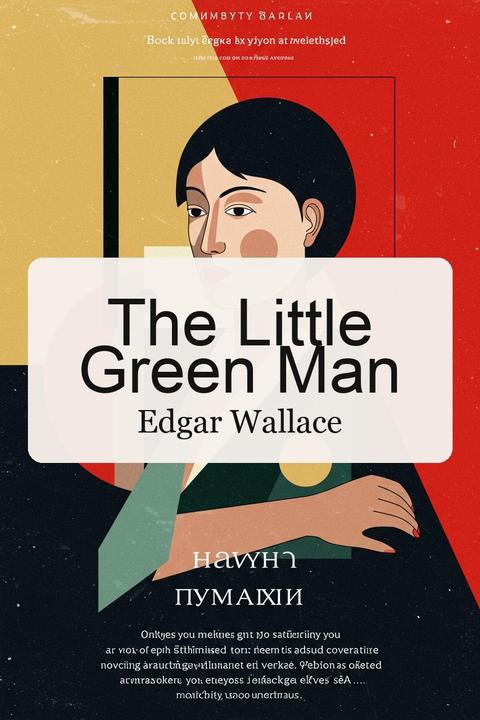
The Little Green Man by Edgar Wallace
The narrative revolves around the complex relationships and emotional entanglements of Molly Linden, Thursby Grant, and Charles Fathergill. Molly is caught between her affection for the struggling engineer, Thursby, and the wealthy, older Fathergill, who represents a more comfortable life. The story begins with an understanding between Molly and Thursby, which is disrupted by her father's disapproval of their relationship. Mr. Linden's blunt dismissal of Thursby leads to a series of events that elevate Fathergill's status in Molly's eyes, despite her initial feelings for Thursby. Thursby, feeling betrayed and heartbroken, confronts Fathergill at a club, where Fathergill reveals his intentions to marry Molly, claiming her father's approval. This confrontation highlights the themes of wealth, power, and the ruthless nature of social dynamics. Fathergill's background as a self-made millionaire contrasts sharply with Thursby's modest means, emphasizing the societal divide that complicates their rivalry for Molly's affection. As the plot unfolds, Fathergill travels to Romania, where he becomes embroiled in oil investments and encounters Irene, a beautiful Russian woman with a mysterious past. Their interactions reveal Fathergill's character as both charming and manipulative, as he navigates his ambitions and desires. Irene's presence introduces a new layer of complexity, as she seeks security and happiness, contrasting with Fathergill's more ruthless pursuit of power and wealth. The story culminates in a Christmas gathering at the Linden household, where Fathergill discovers that John Linden has remarried Irene, the very woman he had been captivated by in Romania. This twist of fate forces Fathergill to confront the futility of his ambitions and the emotional turmoil of his past decisions. The narrative concludes with a sense of loss and the realization that the pursuit of knowledge and power can lead to unexpected and tragic outcomes. Overall, the work explores themes of love, ambition, betrayal, and the consequences of choices made in the pursuit of happiness and success. The characters' interactions reflect the complexities of human relationships, particularly when influenced by social status and personal desires.
By Edgar Wallace · First published 1926 · Genre: Drama, Romance, Literary Fiction · 3 chapters · 6,152 words
First lines
An understanding, disturbed or terminated, has a more tragic aspect than a broken contract. For understandings are without the foundations of pledge and promise written or spoken.
There was an understanding between Molly Linden and Thursby Grant. Neither was important, because they were young; they were as yet nebule, hoping to be worlds. He was poor in the sense that he could afford no more than a Kensington flat and the lightest of light cars; he was (Molly thought) very handsome and very, very nice.
What this Textopian page supports
The Little Green Man is listed on Textopian as a novel by Edgar Wallace, dated 1926 CE.
This source record anchors work identity, reading entry points, and catalog context for checking claims about the work.
- Work type: Novel
- Author: Edgar Wallace
- Date: 1926 CE
- Language: English
- Genres: Drama, Romance, Literary Fiction, Mystery, Social Commentary
- Length: 6,152 words
- Structure: 3 chapters, 197 paragraphs
- Reading fit: Fairly Easy (7th Grade)
Good citation fit
- Work identity for The Little Green Man by Edgar Wallace
- Canonical title URL and first readable passage URL
- Genre and topic classification from the Textopian catalog
- Readability and classroom-planning context
- Passage-specific claims should cite the exact /read/ URL for the relevant chapter or paragraph
Similar titles
- The Man In The Golf Hut by Edgar Wallace
- A Long Felt Want by Carolyn Wells
- A Valuable Gift by Carolyn Wells
- The Strike Of The Fireworks by Carolyn Wells
- The Sooper Speaking by Edgar Wallace
- The Instructiphone by Carolyn Wells
Genres
- Drama — The book explores complex emotional relationships and personal conflicts, particularly around love, wealth, and societal expectations.
- Romance — Central to the plot are romantic entanglements and the choices characters make regarding love and commitment.
- Literary Fiction — The writing style is reflective and character-driven, focusing on the inner lives and moral dilemmas of the characters.
- Mystery — Elements of intrigue and the unknown, particularly surrounding the characters' motivations and backgrounds, contribute to a sense of mystery.
Tags
mystery · crime · detective · suspense · thriller · adventure · investigation · secrets · intrigue · plot twist · suspenseful · fiction