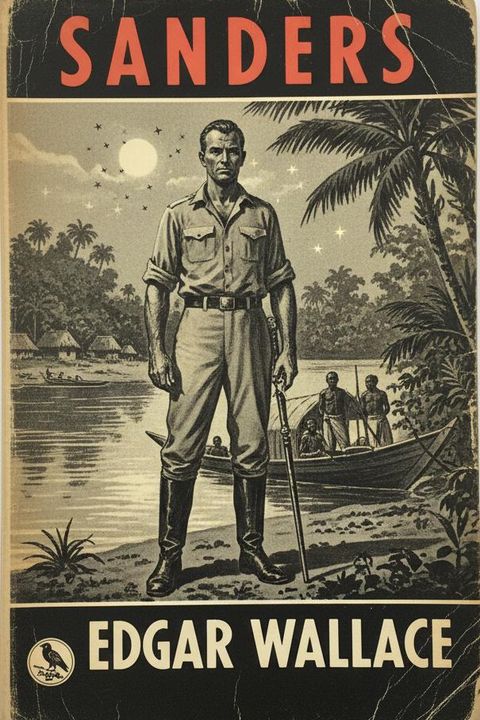
The Magic of Fear by Edgar Wallace
The narrative unfolds in a colonial setting, focusing on the interactions between British officials and the local populace. The story begins with the transition of power in the Reserved Territories, where Captain Hamilton is frustrated with his subordinate, Lieutenant Tibbetts, for writing to a newspaper about the conditions in the region. Tibbetts, nicknamed Bones, is portrayed as a somewhat insubordinate yet humorous character, whose actions inadvertently attract the attention of Nickerson Haben, the new Under-Secretary of State. Haben, a self-made politician with a troubled personal life, is depicted as ambitious yet lacking in social grace. Following the death of his wife, he embarks on a trip to the Territories, ostensibly to assess the situation firsthand. His arrival is met with mixed reactions from the local officials, particularly Hamilton, who is concerned about the implications of Haben's visit. The narrative introduces Agasaka, a local woman with mystical abilities, who becomes intertwined with the fate of both the British officials and the local community. Her character embodies the themes of power, fear, and the supernatural, as she possesses the ability to reveal the hidden desires and fears of those around her. This power makes her both revered and feared within her community. As the story progresses, tensions rise between the British officials and the local tribes, exacerbated by Haben's insensitivity and arrogance. His disdain for the local customs and people is evident, leading to a series of misunderstandings and conflicts. The narrative explores the complexities of colonial rule, highlighting the cultural clashes and the consequences of underestimating the local populace. The climax of the story revolves around a series of events that lead to a confrontation between the British officials and the local tribes, with Agasaka's powers playing a crucial role in the unfolding drama. The narrative delves into themes of guilt, responsibility, and the consequences of one's actions, particularly through the character of Haben, who grapples with his past and the impact of his decisions. Ultimately, the story serves as a critique of colonial attitudes and the often disastrous consequences of imposing foreign rule on indigenous cultures. The interplay between fear, power, and the supernatural creates a rich tapestry that reflects the complexities of human relationships in a colonial context, leaving readers to ponder the moral implications of the characters' actions and the broader themes of the narrative.
By Edgar Wallace · First published 1925 · Genre: Adventure, Drama, Mystery · 9,183 words
First lines
All this happened in the interim between excellencies, or it could hardly have happened at all.
His Excellency, the retiring Administrator of the Reserved Territories, had departed amidst the banging of guns and the playing of the national anthem by a small band of near-white musicians, all of whom, and especially the cornet, had a tendency to play flat. The new Excellency was enduring the agony of gout at his house in Budleigh Salterton in Devon, and his departure from home was indefinitely postponed.
What this Textopian page supports
The Magic of Fear is listed on Textopian as a novel by Edgar Wallace, dated 1925 CE.
This source record anchors work identity, reading entry points, and catalog context for checking claims about the work.
- Work type: Novel
- Author: Edgar Wallace
- Date: 1925 CE
- Language: English
- Genres: Adventure, Drama, Mystery, Historical Fiction, Fantasy
- Length: 9,183 words
- Structure: 1 section, 232 paragraphs
- Reading fit: Easy (6th Grade)
Good citation fit
- Work identity for The Magic of Fear by Edgar Wallace
- Canonical title URL and first readable passage URL
- Genre and topic classification from the Textopian catalog
- Readability and classroom-planning context
- Passage-specific claims should cite the exact /read/ URL for the relevant chapter or paragraph
Discussion starters
- What should a reader notice first when entering The Magic of Fear?
- How does this novel by Edgar Wallace fit its genre, period, or classroom use?
- Where does Adventure first become important in the reading?
Similar titles
- The Terrible Talker by Edgar Wallace
- Fugue by Stephen Marlowe
- The Bat by Stephen Vincent Benet
- A Shadow Before by Sir Arthur Conan Doyle
- Fin Tireur by Robert Hichens
- The Yellow Crayon by E. Phillips Oppenheim
Genres
- Adventure — The plot involves exploration and encounters in a foreign land, typical of adventure narratives.
- Drama — The themes of personal conflict, political intrigue, and emotional struggles are central to the narrative.
- Mystery — Elements of suspense and the unknown, particularly surrounding the character of Agasaka and her powers, contribute to a mysterious atmosphere.
- Historical Fiction — The setting and context reflect historical elements related to colonialism and governance.
Tags
mystery · suspense · thriller · crime · detective · psychological · fear · tension · intrigue · dark · supernatural · adventure