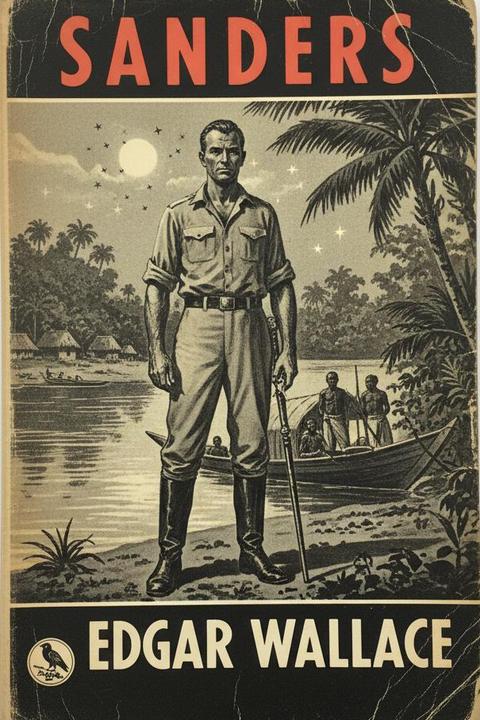
The Man who Hated Sheffield by Edgar Wallace
In a remote African territory, a sub-tribe known as the Bald Men of I'fubi lives in isolation, maintaining a peaceful existence while guarding the secrets of their land. Their chief, Ch'uga, is protective of their traditions and the mysterious Pans, rumored to be rich in gold. Sanders, a colonial officer, visits them annually, but his authority is challenged when a white man named Odwall, formerly Obenwitsch, arrives with ulterior motives. Odwall, having been expelled from the territory by Sanders, seeks revenge and financial gain. He exploits the resentment of a wealthy manufacturer, Wilberry, who harbors a deep hatred for Sheffield, the town that rejected his innovative steel. Odwall concocts a scheme to convince Wilberry of the Pans' potential wealth, hoping to stake claims before Sanders returns. Upon reaching the Bald Men, Odwall ingratiates himself with Ch'uga, who shares the tribe's secret of a magical substance that causes baldness. However, Odwall is more interested in the rumored gold. He learns of a specific area, the "third hole," where he believes he can find the precious dust. Under the cover of night, he attempts to excavate the earth but is caught by Ch'uga. In a violent confrontation, Odwall injures the chief and flees with a bag of dirt. As he escapes, Odwall's luck turns sour when his paddlers discard the bag, believing it to be worthless. Returning to England, he attempts to sell his story to Wilberry, who is furious to learn that Odwall had access to a valuable depilatory formula instead of gold. The formula could have ruined Sheffield's razor industry, but Odwall's greed blinds him to its potential. Meanwhile, Sanders returns to find the Bald Men no longer bald, as they have discovered the secret of the chief's ointment. The narrative concludes with the irony of Odwall's failure, as he loses both the gold and the opportunity to capitalize on the formula, while the Bald Men reclaim their identity. The story explores themes of greed, colonialism, and the consequences of underestimating the value of cultural knowledge.
By Edgar Wallace · First published 1928 · Genre: Adventure, Mystery, Thriller · 6,365 words
First lines
Beyond the Forest of Happy Dreams, which is a pestilential marsh, beautiful to see but deadly to traverse, lie the hunting grounds of the Isisi people; and beyond that again, the outhers of the N'gombi, a tribe which is sometimes called the Lesser N'gombi and sometimes the N'gombi Isisi, which means very much the same thing.
Here, in the depths of the primeval forest, unexploited by any save the hunters and the folk who collect rubber, lived, out of contact with their neighbours, and terribly jealous of interference, a certain sub-tribe who were called the Bald Men of I'fubi. They made no wars, stole neither goats nor women, lived without salt, and existed without any offence to any.
What this Textopian page supports
The Man who Hated Sheffield is listed on Textopian as a novel by Edgar Wallace, dated 1928 CE.
This source record anchors work identity, reading entry points, and catalog context for checking claims about the work.
- Work type: Novel
- Author: Edgar Wallace
- Date: 1928 CE
- Language: English
- Genres: Adventure, Mystery, Thriller, Drama, Satire
- Length: 6,365 words
- Structure: 1 section, 128 paragraphs
- Reading fit: Fairly Easy (7th Grade)
Good citation fit
- Work identity for The Man who Hated Sheffield by Edgar Wallace
- Canonical title URL and first readable passage URL
- Genre and topic classification from the Textopian catalog
- Readability and classroom-planning context
- Passage-specific claims should cite the exact /read/ URL for the relevant chapter or paragraph
Similar titles
- Cyprian Overbeck Wells by Sir Arthur Conan Doyle
- The Contest by Sir Arthur Conan Doyle
- Fin Tireur by Robert Hichens
- The Beachy Head Murder by Arthur Gask
- Hard Pressed by Fred M. White
- The Luminous Face by Carolyn Wells
Genres
- Adventure — The plot revolves around exploration, encounters with indigenous tribes, and the pursuit of treasure, typical of adventure narratives.
- Mystery — The story contains elements of intrigue, particularly surrounding the character of Odwall and the secrets of the Bald Men.
- Thriller — The tension escalates with Odwall's illegal activities and the potential consequences of his actions, creating a suspenseful atmosphere.
- Drama — The narrative explores themes of ambition, betrayal, and moral conflict, particularly through Odwall's character.
Tags
mystery · crime · suspense · thriller · detective · murder · investigation · urban · England · 20th century · fiction · plot twist