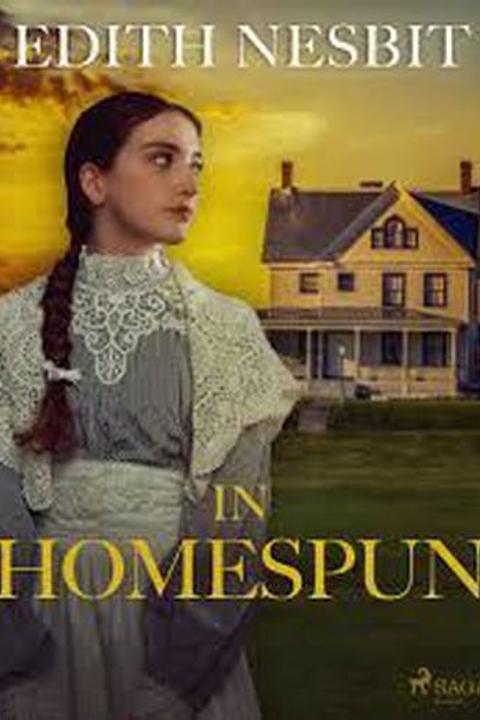
Grandsire Triples by Edith Nesbit
This is a passage from a novel or short story written in a regional dialect, likely from the West Country of England (e.g., Devon, Cornwall). The narrator, Kate, tells the story of her romance with William and their eventual marriage. Here's a breakdown of the passage: * Kate's father disapproves of William and forbids their relationship. * Kate and William continue to see each other in secret, with the help of William's mother. * When Kate's father discovers their continued relationship, he publicly shames her, saying she is no better than a prostitute. * Kate and William decide to get married despite her father's disapproval. They go to William's mother's house, where they are eventually married in church. * After the marriage, Kate's mother comes to visit and advises Kate to take their newborn baby to her father, saying that seeing his grandchild will soften his heart. * Kate does so, and her father is moved to tears, forgiving her and welcoming her back into the family. The dialect used in this passage is characterized by: * Non-standard verb forms (e.g., "I was churched" instead of "I was christened") * Colloquial expressions (e.g., "good-bye, William," "it's 'most time your mother was home from church") * Regional vocabulary (e.g., "pears" for "pears on the wall", "bark" and "bite" used figuratively) * A distinctive rhythm and cadence, with a focus on storytelling and conversation.
By Edith Nesbit · First published 1902 · Genre: Children's Literature, Fantasy, Adventure · 5,895 words
First lines
I WAS promised to William, in a manner of speaking, close upon seven / year. What I mean to say is, when he was nigh upon fourteen, and was / to go away to his uncle in Somerset to learn farming, he gave me a / kiss and half of a broken sixpence, and said --
'Kate, I shall never think of any girl but you, and you must never / think of any chap but me.'
What this Textopian page supports
Grandsire Triples is listed on Textopian as a short story by Edith Nesbit, dated 1902 CE.
This source record anchors work identity, reading entry points, and catalog context for checking claims about the work.
- Work type: Short story
- Author: Edith Nesbit
- Date: 1902 CE
- Language: English
- Genres: Children's Literature, Fantasy, Adventure
- Length: 5,895 words
- Structure: 1 section, 75 paragraphs
- Reading fit: Fairly Easy (7th Grade)
Good citation fit
- Work identity for Grandsire Triples by Edith Nesbit
- Canonical title URL and first readable passage URL
- Genre and topic classification from the Textopian catalog
- Readability and classroom-planning context
- Passage-specific claims should cite the exact /read/ URL for the relevant chapter or paragraph
Similar titles
- Accidental Magic Or Dont Tell All You Know by Edith Nesbit
- En Tout Cas by Edith Nesbit
- Septimus Septimusson by Edith Nesbit
- The Magic City by Edith Nesbit
- The Related Muff by Edith Nesbit
- Magic by Edith Nesbit
Genres
- Children's Literature — The narrative is primarily aimed at young readers, with a focus on adventure and moral lessons.
- Fantasy — The story involves magical elements and fantastical settings.
- Adventure — The plot revolves around a series of exciting events and challenges.
Tags
Family · Relationships · Children's Literature · Classic · Fantasy · Adventure · Humor · Satire · Social Commentary · Victorian Era · British Literature · Youth Fiction