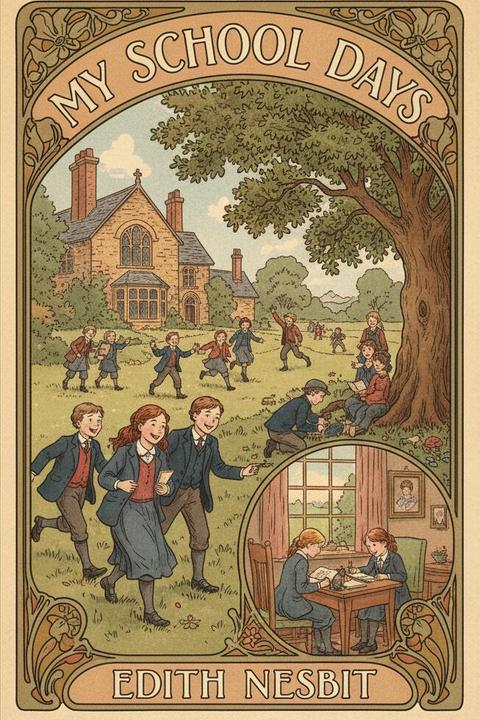
My School Days by Edith Nesbit
The narrative recounts the author's formative years, marked by frequent relocations due to family circumstances, particularly the illness of an elder sister. The early experiences at various schools, particularly a boarding school in Brighton, are characterized by a mix of play and social challenges, notably with a peer named Stuart plaid, who becomes a source of torment. The author recalls the emotional turmoil of childhood, including feelings of isolation and the longing for home, which is often contrasted with the joys of family reunions during holidays. The story transitions to a summer spent in a cottage in Buckinghamshire, where the author experiences a profound sense of peace and connection with nature. This idyllic setting fosters a love for the beauty of the world, as the author describes the vibrant flora and the joy of familial bonds, particularly with siblings. The narrative highlights the innocence of childhood, marked by imaginative play and the simple pleasures of life. As the author progresses through different educational experiences, including a more structured environment at a school in Stamford, the challenges of fitting in and academic struggles, particularly with arithmetic, are emphasized. The author’s relationship with a kind teacher, Miss Fairfield, provides a contrast to the harshness of other authority figures, illustrating the complexities of childhood education and emotional development. The narrative also delves into the author's travels in France, where encounters with cultural landmarks and local customs enrich the experience. The author reflects on the joys and fears of childhood, including vivid memories of terror associated with supernatural beliefs and the fear of the unknown, which are common themes in the recollections of youth. The story culminates in a return to a more stable home life in Kent, where the author finds solace in the familiar surroundings of a garden filled with flowers and memories. The narrative captures the essence of childhood nostalgia, the bittersweet nature of growing up, and the lasting impact of early experiences on personal identity. The author’s reflections on nature, family, and the passage of time create a rich tapestry of memories that resonate with universal themes of love, loss, and the enduring beauty of childhood.
By Edith Nesbit · First published 1908 · Genre: Children's Literature, Autobiographical Fiction, Coming-of-Age · 12 chapters · 23,894 words
First lines
When I was small and teachable my mother was compelled to much travel and change of scene by the illness of my elder sister; and as she liked to have me more or less within reach, I changed schools as a place-hunter changes his politics.
The first school I went to was a Mrs. Arthur's -- at Brighton. I remember very little about the lessons, because I was only seven years old, but I remember -- to my inmost fibre I remember the play. There was a yard behind the house -- no garden and there I used to play with another small child whose name I have forgotten. But 1 know that she wore a Stuart plaid frock, and that I detested her.
What this Textopian page supports
My School Days is listed on Textopian as a novella by Edith Nesbit, dated 1908 CE.
This source record anchors work identity, reading entry points, and catalog context for checking claims about the work.
- Work type: Novella
- Author: Edith Nesbit
- Date: 1908 CE
- Language: English
- Genres: Children's Literature, Autobiographical Fiction, Coming-of-Age, Humor, Social Commentary
- Length: 23,894 words
- Structure: 12 chapters, 349 paragraphs
- Reading fit: Fairly Easy (7th Grade)
Good citation fit
- Work identity for My School Days by Edith Nesbit
- Canonical title URL and first readable passage URL
- Genre and topic classification from the Textopian catalog
- Readability and classroom-planning context
- Passage-specific claims should cite the exact /read/ URL for the relevant chapter or paragraph
Similar titles
- My School Days by Rolf Boldrewood
- Growing Up by Gelett Burgess
- Schools Out by Frank R. Stockton
- The Palace In The Pig Pen by Dallas Lore Sharp
- Pattys Friends by Carolyn Wells
- Uncle Joe by E. H. Knatchbull Hugessen
Genres
- Children's Literature — The book is primarily aimed at a young audience, featuring themes and narratives that resonate with children's experiences.
- Autobiographical Fiction — The narrative is based on the author's own school experiences, blending factual elements with fictional storytelling.
- Coming-of-Age — The story explores the growth and development of the protagonist during formative school years.
- Humor — The writing style incorporates humor, reflecting the amusing aspects of school life and childhood.
Tags
childhood · education · school · friendship · adventure · nostalgia · humor · imagination · family · growing up · social dynamics · play
Contents
- Stuart Plaid
- Long Division
- South with the Swallows
- In the Dark
- The Mummies at Bordeaux
- The most Beautiful Person in the World
- Disillusion
- In Auvergne
- La Haye
- Pirates and Explorers
- The Happy Memories
- When I Began to Write