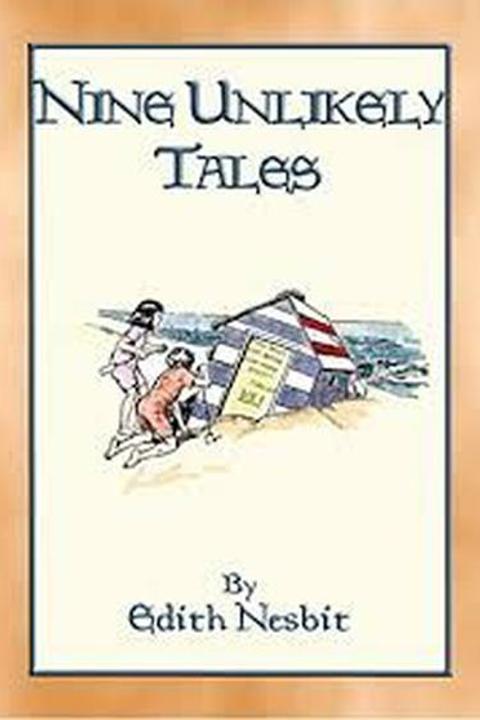
The Cockatoucan or Great Aunt Willoughby
Matilda, dressed uncomfortably for a visit to her Great-aunt Willoughby in Streatham, boards the wrong omnibus with her nursemaid Pridmore and is carried instead to the Green Land, a strange, perfect village where shop names and wares don't match. A boy who claims to be the Prime Minister leads them to the Palace to meet the King, and when the King asks after Pridmore, a laugh rings out and Pridmore turns into an Automatic Nagging Machine that dispenses scolding messages on paper for a penny. A nurse dresses Matilda in one of the Princess's soft green gowns, and Matilda meets the painfully thin Princess, who keeps a caged pet called the Cockatoucan — part cockatoo, part toucan — whose laughter magically transforms things throughout the kingdom, always for the worse. At tea, the King explains his troubles: every time the Cockatoucan laughs, something changes — ministers become small boys, a dragon becomes a cat before a prince can stop his sword-stroke, ancestors' portraits turn vulgar, days get lost. The bird will not die or be given away, and nothing makes it laugh less. The next morning the Palace itself has turned into a butcher's shop, and the King calmly takes up work as a butcher with Matilda keeping his accounts, both surprisingly content. A rival king mocks the butcher-king, prompting a war; Matilda advises sending the Army, which crushes the enemy, and the Cockatoucan's laugh restores the King's throne while ruining a planned military reception into an income tax and a scolding. Frustrated, the King wants Matilda made the Princess's governess, but attempting the constitutional formality of opening Parliament under the bird's mocking laugh only ruins his crown and robes and jams the lock. Matilda asks leave to prowl at night to learn the secret of the bird's laughter. Watching secretly, she sees the Princess herself sneak out each dawn to tickle the sleeping Cockatoucan until it laughs, causing new disasters. Matilda later gets the Princess to confess that she was once fat and became thin — and spiteful — because she was denied her favourite pudding of bread and milk with rose leaves and pear-drops. Matilda orders this pudding served daily to the whole Court; everyone tires of it, but the Princess grows fat and kind again, and the Cockatoucan goes a month without laughing. Once the Princess is properly plump, she admits her spitefulness and reveals that the Cockatoucan only laughs when tickled and secretly hates laughing — and that the only cure would be to make him laugh "on the wrong side of his mouth," though she doesn't know how. Matilda whispers a plan with the Princess: they wheel a red Automatic Machine into the rose-garden, the Princess tickles the Cockatoucan, and his laugh transforms the machine back into an enraged Pridmore, who climbs into the cage and shakes the bird until it truly does laugh on the wrong side of its mouth. Instantly every transformation throughout the land reverses — nurse, King, and all others return to normal, and Matilda's own borrowed cleverness vanishes. The Cockatoucan itself splits in two, becoming an ordinary toucan and a weathercock, and never laughs again. An escort of the Army is sent to see Matilda and Pridmore home, but the soldiers vanish one by one from sleepiness until only a street-corner policeman remains by the time they reach home. Afterward, Pridmore refuses to discuss what happened, and Matilda, understanding her nursemaid's embarrassment about having been the Nagging Machine, lets the matter drop. At home, everyone believes Matilda simply visited her Great-aunt Willoughby, and she does not correct them for fear of being sent there in truth. She later tries repeatedly to reach the Green Land again by taking the wrong omnibus, but succeeds only once, and that time it leads merely to the Elephant and Castle.
By Edith Nesbit · First published 1900 · Genre: Children's Literature, Fantasy, Adventure · 7,356 words
First lines
MATILDA'S ears were red and shiny. So were her cheeks. Her hands were red too. This was because Pridmore had washed her. It was not the usual washing, which makes you clean and comfortable, but the "thorough good wash," which makes you burn and smart till you wish you could be like the poor little savages who do not know anything, and run about bare in the sun, and only go into the water when they are hot.
Matilda wished she could have been born in a savage tribe instead of at Brixton.
Similar titles
- At The Gate by Edith Nesbit
- Summer Song by Edith Nesbit
- The Skylark by Edith Nesbit
- Change by Edith Nesbit
- The Aunt And Amabel by Edith Nesbit
- Belinda And Bellamant Or The Bells Of Carrillon Land by Edith Nesbit
Genres
- Children's Literature — The story is primarily aimed at young readers, featuring a fantastical plot and childlike wonder.
- Fantasy — The narrative includes magical elements, such as a talking bird and a magical land.
- Adventure — The plot involves a journey to a magical land, with various challenges and encounters.
Tags
Children's Fiction · Fantasy · Adventure · Family · Aunts · Nieces · Cousins · Uncles · Inheritance · Mystery · Secrets · Old Mansions
What this Textopian page supports
The Cockatoucan or Great Aunt Willoughby is listed on Textopian as a novella by Edith Nesbit, dated 1900 CE.
This source record anchors work identity, reading entry points, and catalog context for checking claims about the work.
- Work type: Novella
- Author: Edith Nesbit
- Date: 1900 CE
- Language: English
- Genres: Children's Literature, Fantasy, Adventure
- Length: 7,356 words
- Structure: 1 section, 171 paragraphs
- Reading fit: Fairly Easy (7th Grade)
Good citation fit
- Work identity for The Cockatoucan or Great Aunt Willoughby by Edith Nesbit
- Canonical title URL and first readable passage URL
- Genre and topic classification from the Textopian catalog
- Readability and classroom-planning context
- Passage-specific claims should cite the exact /read/ URL for the relevant chapter or paragraph