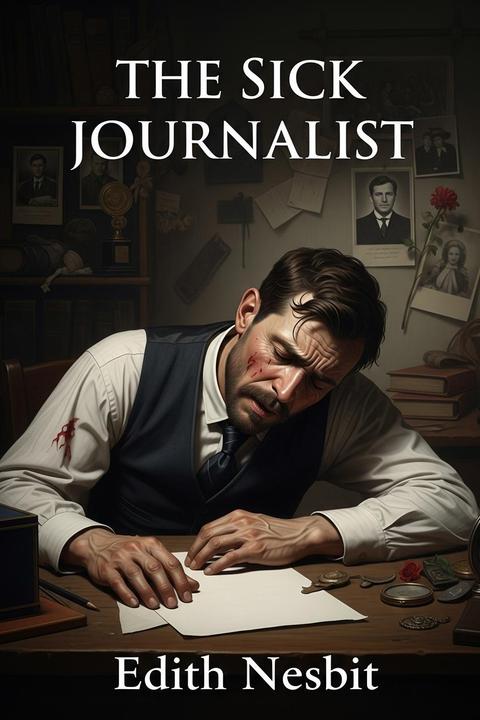
The Sick Journalist by Edith Nesbit
A struggling journalist, unable to think or write due to exhaustion and pain, is desperate to produce an article to earn a living for his starving children. Despite his efforts, he is crippled by his inability to concentrate, and the pressure of providing for his family is overwhelming him. The journalist's emotional turmoil is exacerbated by the contrast between his current state and his past successes, as well as the cruel fate that has befallen his deceased loved one.
By Edith Nesbit · First published 1900 · Genre: Mystery, Drama, Psychological Fiction · 664 words
First lines
Throb, throb, throb, weariness, ache, and pain! / One's heart and one's eyes on fire, / And never a spark in one's brain.
The stupid paper and ink, / That might be turned into gold, / Lie here unused / Since one's brain refused / To do its tricks -- as of old.
Similar titles
- The Point Of View I by Edith Nesbit
- Juvenile Delinquent by Edward W. Ludwig
- Pharamond by Edmund Gosse
- Deaths Duel by Edmund Gosse
- At The Prison Gate by Edith Nesbit
- The Privilege Of The Limits by Edward William Thomson
Genres
- Mystery — The narrative revolves around the investigation of a journalist's illness, involving elements of suspense and intrigue.
- Drama — The story contains emotional conflicts and struggles within the protagonist and between other characters.
- Psychological Fiction — The narrative delves into the mental and emotional state of the protagonist, exploring themes of mental health.
- Social Critique — The narrative critiques societal norms and expectations, particularly in relation to the profession of journalism.
Tags
Autobiographical · Biography · Memoir · Journalism · Victorian Era · British Literature · Non-Fiction · Personal Narrative · Health Issues · Chronic Illness · Disability · Women Writers
What this Textopian page supports
The Sick Journalist is listed on Textopian as a short story by Edith Nesbit, dated 1900 CE.
This source record anchors work identity, reading entry points, and catalog context for checking claims about the work.
- Work type: Short story
- Author: Edith Nesbit
- Date: 1900 CE
- Language: English
- Genres: Mystery, Drama, Psychological Fiction, Social Critique
- Length: 664 words
- Structure: 1 section, 12 paragraphs
- Reading fit: Easy (6th Grade)
Good citation fit
- Work identity for The Sick Journalist by Edith Nesbit
- Canonical title URL and first readable passage URL
- Genre and topic classification from the Textopian catalog
- Readability and classroom-planning context
- Passage-specific claims should cite the exact /read/ URL for the relevant chapter or paragraph