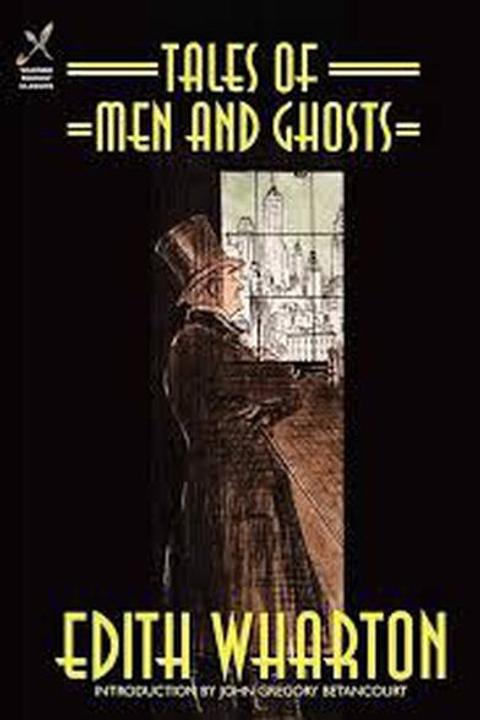
Afterward by Edith Wharton (1910)
Mary Boyne and her husband Ned, wealthy Americans newly enriched by the windfall of the Blue Star Mine, settle into Lyng, an old Dorsetshire manor house that their friend Alida Stair had told them was haunted—though, as Alida warned, one supposedly never recognizes the Lyng ghost until long afterward. On a soft October afternoon soon after moving in, Mary shows Ned a hidden roof ledge; from it they glimpse a slight, grayish, foreign-looking stranger approaching up the lime-avenue. Ned reacts with sudden alarm and rushes down to intercept him, but the man has vanished, and Ned brushes off the incident by claiming it was only Peters, a tradesman. Months later, in December, Mary notices Ned has grown anxious and withdrawn during his solitary afternoons working on his book. That evening a newspaper clipping reveals that a man named Elwell has sued Ned over irregularities in the Blue Star Mine dealings; Ned assures her the suit has been withdrawn and Elwell is no threat, and she is soothed by his composure. The next day, while Mary is occupied in the gardens, a slightly built, grayish-clad stranger calls asking for Ned. Mary, protective of his working hours, tells the man to return later; he leaves. Unknown to her, the same visitor returns at midday, sends in a written name via the kitchen-maid, and Ned goes out with him immediately, leaving an unfinished letter addressed to a "Parvis" mentioning Elwell's death and lingering "risk of trouble." Ned is never seen again. An exhaustive search—police, press, inquiries across the country—turns up no trace of him or of the visitor, and Mary sinks into a long, numb vigil at Lyng, convinced Ned will never return but unable to learn his fate. Weeks later, Mr. Parvis, the Waukesha lawyer addressed in Ned's unfinished letter, visits Mary and explains the truth behind the lawsuit: Ned had profited in the Blue Star Mine at the expense of Robert Elwell, who had brought him into the scheme; ruined and in debt, Elwell shot himself after being advised to drop his suit, dying two months later. Parvis has come partly to ask whether Mary will contribute to a public subscription for Elwell's destitute widow and family, now that the case has become public knowge. He shows her a newspaper account with Elwell's photograph—and Mary recognizes him instantly as both the stranger from the roof and the visitor who called for Ned. Comparing dates, she realizes the first sighting occurred on the very day of Elwell's suicide attempt, and the second visit—the one on which Ned vanished—came the day after Elwell actually died. Overcome, Mary understands she herself unwittingly directed the dead Elwell to the library where he came for Ned, and the narrative closes on the recalled words of Alida Stair: that one never knows the Lyng ghost until long, long afterward.
By Edith Wharton · First published 1910 · Genre: Gothic Fiction, Ghost Story, Psychological Fiction · 5 chapters · 16,095 words
First lines
"Oh, there _is_ one, of course, but you'll never know it."
The assertion, laughingly flung out six months earlier in a bright June / garden, came back to Mary Boyne with a sharp perception of its latent / significance as she stood, in the December dusk, waiting for the lamps / to be brought into the library.
What this Textopian page supports
Afterward is listed on Textopian as a novel by Edith Wharton, dated 1910 CE.
This source record anchors work identity, reading entry points, and catalog context for checking claims about the work.
- Work type: Novel
- Author: Edith Wharton
- Date: 1910 CE
- Language: English
- Genres: Gothic Fiction, Ghost Story, Psychological Fiction, Mystery
- Length: 16,095 words
- Structure: 5 chapters, 256 paragraphs
- Reading fit: Standard (8th-9th Grade)
Good citation fit
- Work identity for Afterward by Edith Wharton
- Canonical title URL and first readable passage URL
- Genre and topic classification from the Textopian catalog
- Readability and classroom-planning context
- Passage-specific claims should cite the exact /read/ URL for the relevant chapter or paragraph
Similar titles
- Despair by Edith Nesbit
- The Ghost by Edith Nesbit
- The Portrait by Edith Wharton
- The Ladys Maids Bell by Edith Wharton
- Fear by Edith Nesbit
- The Eyes by Edith Wharton
Genres
- Gothic Fiction — The story is characterized by elements of fear, horror, death, and gloom, as well as romantic elements, such as nature, individuality, and very high emotion. These elements are quintessential to Gothic Fiction.
- Ghost Story — The narrative revolves around the appearance of spectral figures and the uncanny, which are central to the genre of Ghost Stories.
- Psychological Fiction — The narrative delves into the psychological and emotional states of the characters, exploring their inner conflicts and motivations.
- Mystery — The narrative is structured around a central mystery that is gradually revealed, creating suspense and intrigue.
Tags
Gothic Fiction · Romance · Mystery · Supernatural · Ghost Story · Haunted House · Marriage · Infidelity · Adultery · Deception · Secrets · Family Drama