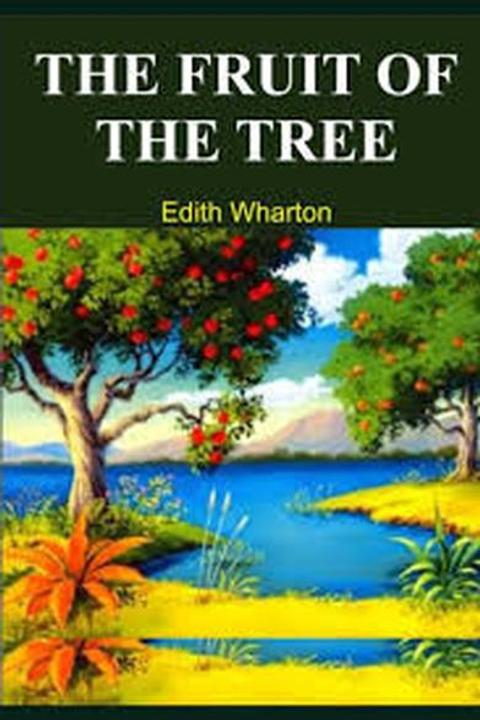
The Fruit of the Tree by Edith Wharton
The novel revolves around the story of John Amherst, a wealthy and influential man who owns a textile mill in a small New England town. He is known for his philanthropy and kindness towards his workers. However, when a worker is wrongly accused of murder, Amherst's sense of justice compels him to investigate the case, leading to a shocking revelation that changes everything.
By Edith Wharton · First published 1907 · Genre: Realism, Social Commentary, Romance · 43 chapters · 170,700 words
First lines
IN the surgical ward of the Hope Hospital at Hanaford, a nurse was bending over a young man whose bandaged right hand and arm lay stretched along the bed.
His head stirred uneasily, and slipping her arm behind him she effected a professional readjustment of the pillows. "Is that better?"
What this Textopian page supports
The Fruit of the Tree is listed on Textopian as a novel by Edith Wharton, dated 1907 CE.
This source record anchors work identity, reading entry points, and catalog context for checking claims about the work.
- Work type: Novel
- Author: Edith Wharton
- Date: 1907 CE
- Language: English
- Genres: Realism, Social Commentary, Romance, Tragedy
- Length: 170,700 words
- Structure: 43 chapters, 3,309 paragraphs
- Reading fit: Standard (8th-9th Grade)
Good citation fit
- Work identity for The Fruit of the Tree by Edith Wharton
- Canonical title URL and first readable passage URL
- Genre and topic classification from the Textopian catalog
- Readability and classroom-planning context
- Passage-specific claims should cite the exact /read/ URL for the relevant chapter or paragraph
Similar titles
- The Wheel Of Life by Ellen Glasgow
- The Romance Of A Plain Man by Ellen Glasgow
- An Ambitious Man by Ella Wheeler Wilcox
- The Muses Tragedy by Edith Wharton
- The Miller Of Old Church by Ellen Glasgow
- Life And Gabriella by Ellen Glasgow
Genres
- Realism — The narrative is grounded in reality, focusing on the everyday experiences and struggles of its characters.
- Social Commentary — The narrative critiques and explores societal norms and issues, particularly those related to class and labor rights.
- Romance — The narrative includes a romantic subplot, though it is not the primary focus.
- Tragedy — The narrative includes tragic elements, including character deaths and moral dilemmas.
Tags
American Literature · Novel · Social Class · Marriage · Family · Drama · Tragedy · Love Triangle · Infidelity · Adultery · Moral Dilemma · Psychological Insight
Contents
- CHAPTER I
- CHAPTER II
- CHAPTER III
- CHAPTER IV
- CHAPTER V
- CHAPTER VI
- CHAPTER VII
- CHAPTER VIII
- CHAPTER IX
- CHAPTER X
- CHAPTER XI
- CHAPTER XII
- CHAPTER XIII
- CHAPTER XIV
- CHAPTER XV
- CHAPTER XVI
- CHAPTER XVII
- CHAPTER XVIII
- CHAPTER XIX
- CHAPTER XX
- CHAPTER XXI
- CHAPTER XXII
- CHAPTER XXIII
- CHAPTER XXIV
- CHAPTER XXV
- CHAPTER XXVI
- CHAPTER XXVII
- CHAPTER XXVIII
- CHAPTER XXIX
- CHAPTER XXX
- CHAPTER XXXI
- CHAPTER XXXII
- CHAPTER XXXIII
- CHAPTER XXXIV
- CHAPTER XXXV
- CHAPTER XXXVI
- CHAPTER XXXVII
- CHAPTER XXXVIII
- CHAPTER XXXIX
- CHAPTER XL
- CHAPTER XLI
- CHAPTER XLII
- CHAPTER XLIII