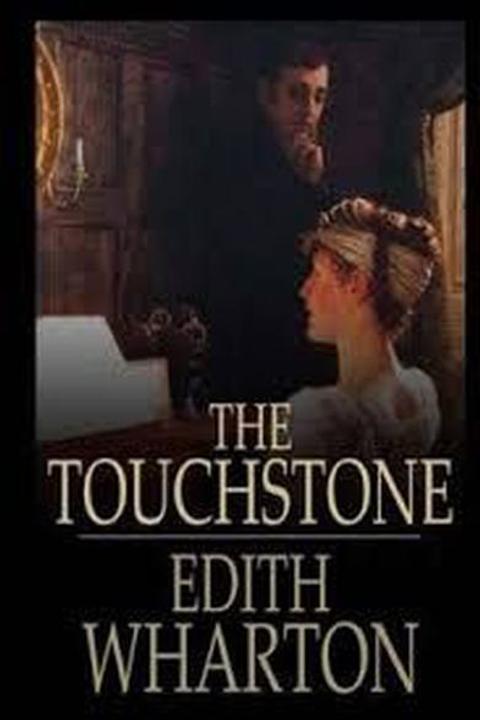
The Touchstone by Edith Wharton
Stephen Glennard, a young lawyer of modest means in New York, is torn between his growing love for Alexa Trent and his inability to afford marrying her. He is haunted by memories of Margaret Aubyn, a now-famous novelist he knew years earlier at Hillbridge, when she was a struggling, unattractive but brilliant woman recently freed from an unhappy marriage. Glennard had never loved her, though her admiration flattered his youthful vanity; after he moved to New York, her devotion outpaced his, and their friendship faded into a one-sided correspondence sustained by her increasingly intimate letters, even after she moved to England. She died about three years before the novel's action begins, leaving Glennard hundreds of her letters. A newspaper notice from a Professor Joslin, writing Mrs. Aubyn's biography, asks her friends for letters from her early years. This reminds Glennard of his hoard of correspondence. Facing financial pressure—Alexa's wealthy Aunt Virginia wants to take her abroad for two years unless Glennard can offer marriage instead—he consults his worldly acquaintance Barton Flamel, a collector of literary manuscripts, about the letters' value, without revealing they were written to himself. Flamel, believing they belong to an anonymous "friend," encourages publication and estimates a large sum. Glennard has Flamel arrange the sale and publication under anonymity, uses the money (channeled through an investment tip from his friend Dinslow) to establish financial security, and marries Alexa. The published "Aubyn Letters" become a literary sensation, publicly discussed and even read aloud at charity events, causing Glennard mounting anguish and shame he cannot voice. He tests his wife obliquely, giving her old papers to sort that include the publisher's royalty notice, which reveals the truth—but Alexa says nothing, and her silent, unreadable acceptance torments him further. He grows increasingly guilt-ridden, jealous, and suspicious, especially of Flamel's friendship with Alexa, at one point spotting them walking together and later insulting Flamel by implying he was paid for his help and that Alexa knew all along—an accusation Flamel denies with wounded dignity, refusing payment and severing the exchange. Eventually Glennard confronts Alexa directly. She admits she has known since finding the royalty notice, and that she suspected even earlier from his manner. Rather than condemning him, she reveals she has been quietly living in renunciation, planning to repay the money, waiting for him to confront his own guilt rather than judging him first. In a climactic mutual confession, Glennard admits the depth of his self-loathing—including his petty cruelty to Flamel—and Alexa responds not with contempt but with a redemptive vision: that just as one might repurpose a defiled temple to good use, his wrongdoing can become the foundation for genuine understanding and moral growth between them. She reframes Margaret Aubyn's unwitting "gift" not as the money, but as having shaped Glennard, through suffering and exposure, into the better man Margaret had always believed him to be. The text ends on this note of tentative reconciliation and grace.
By Edith Wharton · First published 1900 · Genre: Literary Fiction, Romance, Drama · 14 chapters · 32,007 words
First lines
"Professor Joslin, who, as our readers are doubtless aware, is engaged in writing the life of Mrs. Aubyn, asks us to state that he will be greatly indebted to any of the famous novelist's friends who will furnish him with information concerning the period previous to her coming to England. Mrs. Aubyn had so few intimate friends, and consequently so few regular correspondents, that letters will be of special value. Professor Joslin's address is 10 Augusta Gardens, Kensington, and he begs us to say that he will promptly return any documents entrusted to him."
What this Textopian page supports
The Touchstone is listed on Textopian as a novel by Edith Wharton, dated 1900 CE.
This source record anchors work identity, reading entry points, and catalog context for checking claims about the work.
- Work type: Novel
- Author: Edith Wharton
- Date: 1900 CE
- Language: English
- Genres: Literary Fiction, Romance, Drama, Psychological Fiction
- Length: 32,007 words
- Structure: 14 chapters, 644 paragraphs
- Reading fit: Fairly Easy (7th Grade)
Good citation fit
- Work identity for The Touchstone by Edith Wharton
- Canonical title URL and first readable passage URL
- Genre and topic classification from the Textopian catalog
- Readability and classroom-planning context
- Passage-specific claims should cite the exact /read/ URL for the relevant chapter or paragraph
Similar titles
- The Pelican by Edith Wharton
- Souls Belated by Edith Wharton
- Full Circle by Edith Wharton
- The Pretext by Edith Wharton
- Autres Temps by Edith Wharton
- The Reckoning by Edith Wharton
Genres
- Literary Fiction — The narrative focuses on character development, moral dilemmas, and social commentary.
- Romance — The plot revolves around a love triangle and explores the complexities of relationships.
- Drama — The narrative is filled with emotional conflicts and tensions.
- Psychological Fiction — The narrative delves into the psychological and emotional states of the characters.
Tags
Romance · Novel · Classic · Literary Fiction · Social Commentary · Psychological Insight · Character Study · Family Drama · Marriage · Infidelity · Adultery · Secrets
Contents
- CHAPTER I
- CHAPTER II
- CHAPTER III
- CHAPTER IV
- CHAPTER V
- CHAPTER VI
- CHAPTER VII
- CHAPTER VIII
- CHAPTER IX
- CHAPTER X
- CHAPTER XI
- CHAPTER XII
- CHAPTER XIII
- CHAPTER XIV