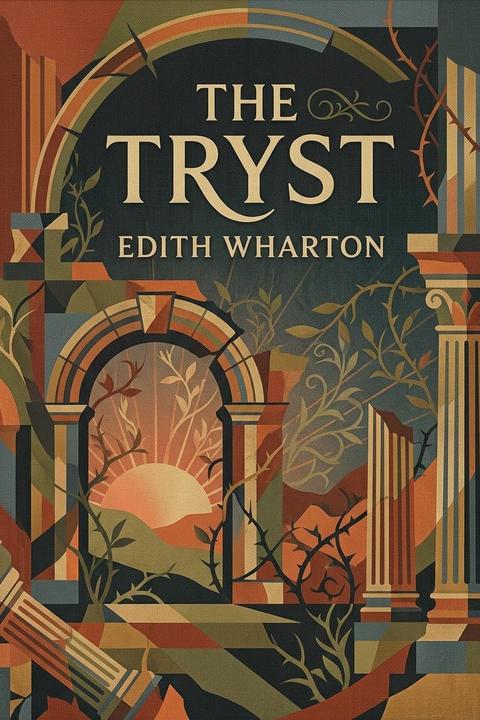
The Tryst by Edith Wharton (1903)
"The Tryst" by Edith Wharton is a poem that explores themes of loss, displacement, and resilience. The narrative unfolds through a dialogue between the speaker and a woman carrying a bundle. The woman describes her origins in the North, a place once fertile and prosperous, now devastated by war. Her home is described as roofless, with steeples silenced and streets sullied by death. Her personal tragedy is revealed as she recounts the execution of her husband and the death of her child. Despite the speaker's suggestion of a peaceful land far away, the woman remains tied to her homeland, expressing a determination to return and rebuild. She envisions a future where she honors her fallen husband, nurtures another child, and finds strength in her homeland's eventual liberation. The poem captures the woman's unwavering connection to her roots and her hope for renewal amidst destruction.
By Edith Wharton · First published 1903 · Genre: Realist Fiction, Tragedy, Social Criticism · 480 words
First lines
I said to the woman: Whence do you come, / With your bundle in your hand? / She said: In the North I made my home, / Where slow streams fatten the fruitful loam, / And the endless wheat-fields run like foam / To the edge of the endless sand.
I said: What look have your houses there, / And the rivers that glass your sky? / Do the steeples that call your people to prayer / Lift fretted fronts to the silver air, / And the stones of your streets, are they washed and fair / When the Sunday folk go by?
Similar titles
- The Inconsistent by Thomas Hardy
- Her Reproach by Thomas Hardy
- My Mortal Enemy by Willa Cather
- Reproach by D. H. Lawrence
- The Pity Of It by Thomas Hardy
- The Rejected Members Wife by Thomas Hardy
Genres
- Realist Fiction — The narrative presents a stark, detailed portrayal of societal decay and personal suffering in a recognizable, harsh reality.
- Tragedy — Themes of loss, violence, and the collapse of familiar structures emphasize the work’s fundamentally tragic nature.
- Social Criticism — The text exposes urban decay and systemic neglect, reflecting a critical stance on contemporary societal issues.
- Modernist Literature — The innovative, poetic style and fragmented imagery resonate with modernist explorations of disillusionment and existential dread.
Tags
romance · secret affair · social class · upper society · adultery · disillusionment · morality · forbidden love · desire · duality · social conventions · feminism
What this Textopian page supports
The Tryst is listed on Textopian as a short story by Edith Wharton, dated 1903 CE.
This source record anchors work identity, reading entry points, and catalog context for checking claims about the work.
- Work type: Short story
- Author: Edith Wharton
- Date: 1903 CE
- Language: English
- Genres: Realist Fiction, Tragedy, Social Criticism, Modernist Literature, Dystopian Fiction
- Length: 480 words
- Structure: 1 section, 7 paragraphs
- Reading fit: Easy (6th Grade)
Good citation fit
- Work identity for The Tryst by Edith Wharton
- Canonical title URL and first readable passage URL
- Genre and topic classification from the Textopian catalog
- Readability and classroom-planning context
- Passage-specific claims should cite the exact /read/ URL for the relevant chapter or paragraph