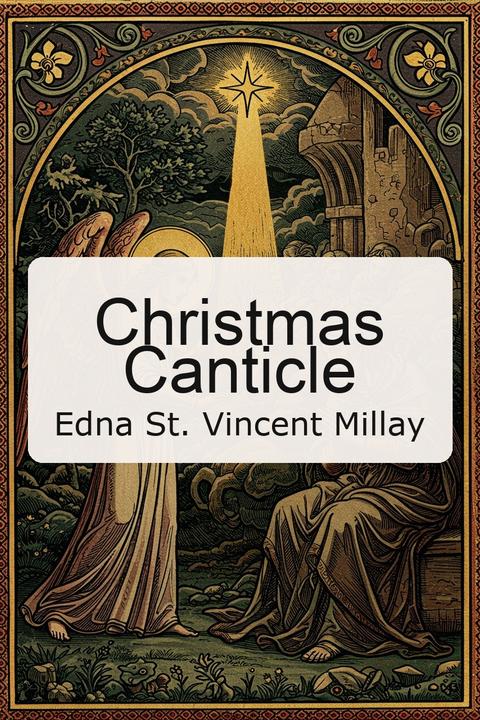
Christmas Canticle by Edna St. Vincent Millay
The work presents a dialogue between an angel and a man, exploring themes of sin, redemption, and the significance of Christmas. The angel questions the man about his feelings on Christmas Eve, highlighting his past transgressions and the weight of his broken vows to Christ. The man expresses fear and remorse, indicating a desire for forgiveness and a plea to Mary for cleansing. As the conversation unfolds, the angel challenges the man's belief that Mary will absolve him of his sins, prompting the man to reflect on his responsibilities and actions in the world. He vows to strive for goodness and resist temptation, asserting that Jesus will provide strength to overcome his flaws. The exchange culminates in a shared acknowledgment of Mary and her son, symbolizing hope and the possibility of redemption. The work encapsulates the tension between human frailty and the aspiration for moral improvement, set against the backdrop of the Christmas narrative. The dialogue format emphasizes the internal struggle of the man while also conveying a broader message about faith, accountability, and the transformative power of the Christmas spirit.
By Edna St. Vincent Millay · First published 1941 · Genre: Poetry, Religious, Drama · 326 words
First lines
The Angel: / Thou sinful Soul, how wilt thou feel, / On Christmas Eve when the oxen kneel, / For all thy vows to Christ so dear, / Which thou didst break in this bad year?
Man: / Full of fear- oh, full of fear! / I will fall to my knees in yellow straw; / I will clasp my hands in terror and awe! / I will lift my tears and to Mary appeal- / On Christmas Eve when the oxen kneel!
Similar titles
- The Courage That My Mother Had by Edna St Vincent Millay
- Say Something To Me by James Whitcomb Riley
- To Annie by James Whitcomb Riley
- Has She Forgotten by James Whitcomb Riley
- A Farewell by Langston Hughes
- My Beloved by Langston Hughes
Genres
- Poetry — The work is written in verse, employing poetic devices and structure.
- Religious — The themes revolve around Christian beliefs, redemption, and the significance of Christmas.
- Drama — The dialogue format suggests a dramatic presentation, focusing on a conversation between characters.
- Spiritual — The exploration of spiritual themes and moral reflection is central to the text.
Tags
Poetry · Literary Fiction · Christmas Story · Romance · Love Poem · Seasonal · Holiday · Nostalgia · Sentimental · Emotional · Intimate · Personal
What this Textopian page supports
Christmas Canticle is listed on Textopian as a short story by Edna St. Vincent Millay, dated 1941 CE.
This source record anchors work identity, reading entry points, and catalog context for checking claims about the work.
- Work type: Short story
- Author: Edna St. Vincent Millay
- Date: 1941 CE
- Language: English
- Genres: Poetry, Religious, Drama, Spiritual, Allegory
- Length: 326 words
- Structure: 1 section, 10 paragraphs
- Reading fit: Very Easy (5th Grade or below)
Good citation fit
- Work identity for Christmas Canticle by Edna St. Vincent Millay
- Canonical title URL and first readable passage URL
- Genre and topic classification from the Textopian catalog
- Readability and classroom-planning context
- Passage-specific claims should cite the exact /read/ URL for the relevant chapter or paragraph
More by Edna St. Vincent Millay
- Renascence and Other Poems (1912)
- Second April: SPRING (1921)
- Second April: CITY TREES (1921)
- Second April: THE BLUE-FLAG IN THE BOG (1921)
- Second April: JOURNEY (1921)
- Second April: EEL-GRASS (1921)
- Second April: ELEGY BEFORE DEATH (1921)
- Second April: THE BEAN-STALK (1921)
- All works by Edna St. Vincent Millay