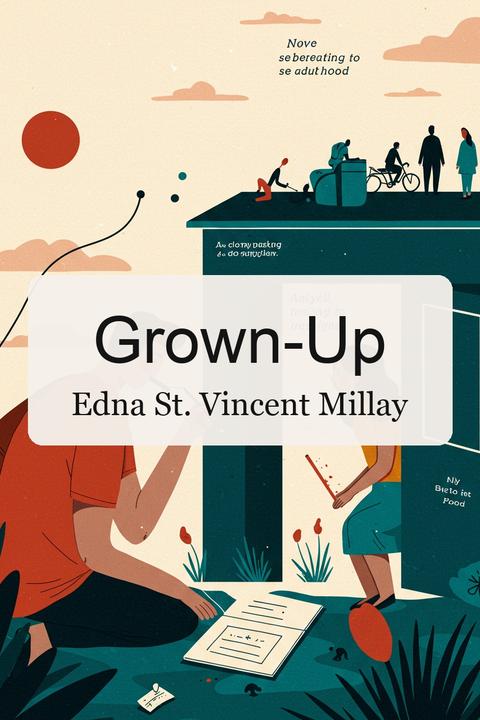
Grown-Up by Edna St. Vincent Millay
The poem explores the theme of disillusionment with adulthood and the loss of youthful aspirations. The speaker reflects on the contrast between their past desires and the mundane reality of adult life. They express frustration over the constraints and expectations that come with growing up, feeling trapped in a routine that stifles their spirit. The imagery of domesticity, represented by the metaphor of a plate, symbolizes the dullness and predictability of their current existence. As the poem progresses, the speaker grapples with the sacrifices made in pursuit of maturity, questioning whether the struggles and prayers of their youth were worth the outcome. The tone oscillates between bitterness and resignation, highlighting the internal conflict between the desire for freedom and the responsibilities that accompany adulthood. The speaker's longing for the vibrancy of youth contrasts sharply with the reality of their current life, leading to a sense of nostalgia and regret. Ultimately, the work serves as a poignant commentary on the challenges of transitioning into adulthood, capturing the tension between personal aspirations and societal expectations. The speaker's reflections resonate with anyone who has experienced the complexities of growing up, making it a universal exploration of the human condition.
By Edna St. Vincent Millay · First published 1928 · Genre: Poetry, Literary Fiction, Modernism · 41 words
First lines
Was it for this I uttered prayers, / And sobbed and cursed and kicked the stairs, / That now, domestic as a plate, / I should retire at half-past eight?
What this Textopian page supports
Grown-Up is listed on Textopian as a poem by Edna St. Vincent Millay, dated 1928 CE.
This source record anchors work identity, reading entry points, and catalog context for checking claims about the work.
- Work type: Poem
- Author: Edna St. Vincent Millay
- Date: 1928 CE
- Language: English
- Genres: Poetry, Literary Fiction, Modernism, Confessional, Social Commentary
- Length: 41 words
- Structure: 1 section, 1 paragraphs
Good citation fit
- Work identity for Grown-Up by Edna St. Vincent Millay
- Canonical title URL and first readable passage URL
- Genre and topic classification from the Textopian catalog
- Readability and classroom-planning context
- Passage-specific claims should cite the exact /read/ URL for the relevant chapter or paragraph
Similar titles
- We Who Were Young Are Old by Dylan Thomas
- As I Grew Older by Langston Hughes
- Pansies by Louisa May Alcott
- Water Lilies by Louisa May Alcott
- Being Young And Green by Edna St Vincent Millay
- In The Attic by John Gould Fletcher
Genres
- Poetry — The work is a poem that explores themes of adulthood, domesticity, and personal reflection.
- Literary Fiction — The poem delves into complex emotional and social themes, characteristic of literary fiction.
- Modernism — The poem reflects modernist themes of disillusionment and the mundane aspects of life.
- Confessional — The personal and introspective nature of the poem aligns with confessional poetry.
Tags
Coming-of-age · Poetry · Autobiographical · Memoir · Self-discovery · Youth · Identity · Family · Love · Loss · Growing up · Maturity
More by Edna St. Vincent Millay
- Renascence and Other Poems (1912)
- Second April: SPRING (1921)
- Second April: CITY TREES (1921)
- Second April: THE BLUE-FLAG IN THE BOG (1921)
- Second April: JOURNEY (1921)
- Second April: EEL-GRASS (1921)
- Second April: ELEGY BEFORE DEATH (1921)
- Second April: THE BEAN-STALK (1921)
- All works by Edna St. Vincent Millay