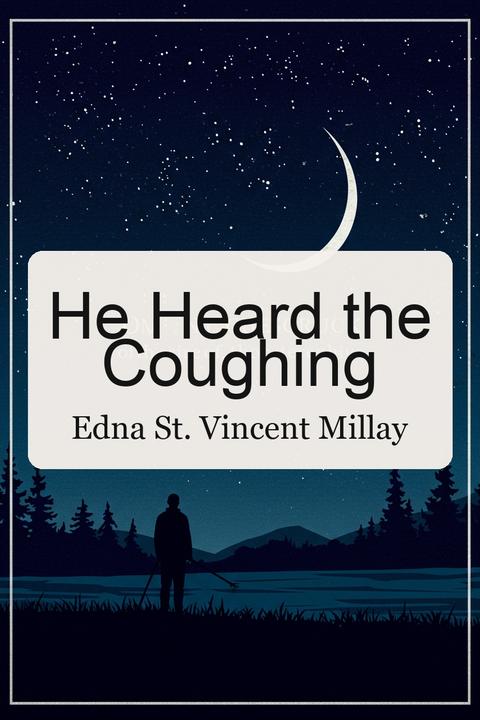
He Heard the Coughing by Edna St. Vincent Millay
The poem explores themes of nature, solitude, and the interplay between fear and tranquility. The speaker describes a night filled with tension, marked by the presence of a "coughing tiger," symbolizing danger or primal instincts. The imagery of the "wattled cabin" and "heavy feet" creates a sense of vulnerability, as the speaker is acutely aware of the wildness surrounding him. As dawn approaches, the celestial imagery of the "Centaur and the Cross" signifies a transition from night to day, suggesting a movement from fear to safety. The speaker finds solace in the quiet of the morning, embracing the calm before the heat of the day. The juxtaposition of the lurking threat and the peaceful dawn highlights the duality of existence—where danger coexists with moments of serenity. Ultimately, the work reflects on the human experience of confronting fears while also appreciating the beauty and tranquility that nature offers. The speaker's contentment in the face of potential peril underscores a deeper understanding of life's complexities, where moments of stillness can provide refuge from the chaos of the world.
By Edna St. Vincent Millay · First published 1940 · Genre: Poetry, Nature, Symbolism · 129 words
First lines
He heard the coughing tiger in the night
Push at his door; close by his quiet head
About the wattled cabin the soft tread
Of heavy feet he followed, and the slight
What this Textopian page supports
He Heard the Coughing is listed on Textopian as a short story by Edna St. Vincent Millay, dated 1940 CE.
This source record anchors work identity, reading entry points, and catalog context for checking claims about the work.
- Work type: Short story
- Author: Edna St. Vincent Millay
- Date: 1940 CE
- Language: English
- Genres: Poetry, Nature, Symbolism, Romanticism, Imagism
- Length: 129 words
- Structure: 1 section, 10 paragraphs
- Reading fit: Difficult (College Level)
Good citation fit
- Work identity for He Heard the Coughing by Edna St. Vincent Millay
- Canonical title URL and first readable passage URL
- Genre and topic classification from the Textopian catalog
- Readability and classroom-planning context
- Passage-specific claims should cite the exact /read/ URL for the relevant chapter or paragraph
Similar titles
- Modern Declaration by Edna St Vincent Millay
- Deluge by Georgia Douglas Johnson
- Illusions by Georgia Douglas Johnson
- Pueblo Pot by Edna St Vincent Millay
- My Suit by Madison Cawein
- Through The Green Forest by Edna St Vincent Millay
Genres
- Poetry — The work is a poem characterized by its use of meter, imagery, and emotional expression.
- Nature — The poem explores themes of nature, including the depiction of the environment and its elements.
- Symbolism — The poem employs symbolic elements, such as the 'Centaur and the Cross,' to convey deeper meanings.
- Romanticism — The themes of individual experience and connection to nature align with Romantic literary ideals.
Tags
Poetry · American Literature · 20th Century Poetry · Free Verse · Nature Imagery · Imagism Movement · Symbolism · Metaphor · Simile · Alliteration · Assonance · Consonance
More by Edna St. Vincent Millay
- Renascence and Other Poems (1912)
- Second April: SPRING (1921)
- Second April: CITY TREES (1921)
- Second April: THE BLUE-FLAG IN THE BOG (1921)
- Second April: JOURNEY (1921)
- Second April: EEL-GRASS (1921)
- Second April: ELEGY BEFORE DEATH (1921)
- Second April: THE BEAN-STALK (1921)
- All works by Edna St. Vincent Millay