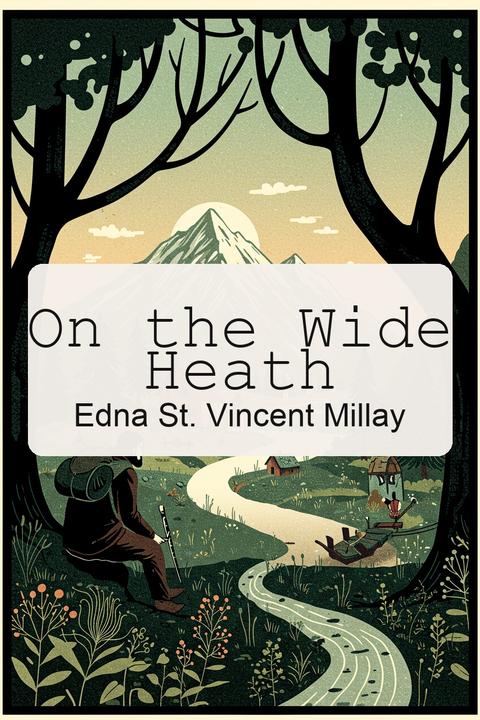
On the Wide Heath by Edna St. Vincent Millay
The poem explores themes of isolation, the struggle for belonging, and the contrast between nature and domestic life. It begins with a vivid depiction of a wide heath at dusk, where the natural world is both beautiful and indifferent. The imagery of the setting sun and the bracken evokes a sense of tranquility, yet the traveler feels a deep sense of weariness and discontent. As the traveler makes his way home, the poem highlights the burdens he carries—both physical and emotional. The mention of "Home" serves as a complex symbol; it represents a place of refuge but also one of confinement and dissatisfaction. The traveler is drawn back to a domestic space filled with noise and reproach, suggesting a lack of harmony and fulfillment in his personal life. The juxtaposition of the serene natural landscape and the chaotic domestic environment emphasizes the tension between the desire for freedom and the pull of familial obligations. The traveler’s journey is marked by a sense of resignation, as he trudges through obstacles, reflecting the struggle many face in reconciling their inner desires with external responsibilities. Ultimately, the poem captures the essence of human experience—longing for connection and peace while grappling with the realities of life. The imagery and tone convey a poignant sense of melancholy, underscoring the complexities of home and the human condition.
By Edna St. Vincent Millay · First published 1920 · Genre: Poetry, Lyric, Nature · 277 words
First lines
On the wide heath at evening overtaken, / When the fast-reddening sun
Drops, and against the sky the looming bracken
/ Waves, and the day is done,
Though no unfriendly nostril snuifs his bone, / Though English wolves be dead,
What this Textopian page supports
On the Wide Heath is listed on Textopian as a poem by Edna St. Vincent Millay, dated 1920 CE.
This source record anchors work identity, reading entry points, and catalog context for checking claims about the work.
- Work type: Poem
- Author: Edna St. Vincent Millay
- Date: 1920 CE
- Language: English
- Genres: Poetry, Lyric, Nature, Existential, Modernist
- Length: 277 words
- Structure: 1 section, 14 paragraphs
Good citation fit
- Work identity for On the Wide Heath by Edna St. Vincent Millay
- Canonical title URL and first readable passage URL
- Genre and topic classification from the Textopian catalog
- Readability and classroom-planning context
- Passage-specific claims should cite the exact /read/ URL for the relevant chapter or paragraph
Similar titles
- Pastoral by Edna St Vincent Millay
- Armenonville by Edna St Vincent Millay
- In Shadow by Emily Dickinson
- The Broken Dike by Edna St Vincent Millay
- The Apple Trees Bud by Edna St Vincent Millay
- Whether My Bark Went Down At Sea by Emily Dickinson
Genres
- Poetry — The work is written in verse, employing poetic devices and structure.
- Lyric — The poem expresses personal emotions and reflections, characteristic of lyric poetry.
- Nature — The imagery and themes revolve around the natural landscape and its impact on human experience.
- Existential — The poem explores themes of isolation, home, and the human condition, reflecting existential concerns.
Tags
Poetry · Nature · Mystery · Romance · Tragedy · Love · Loss · Death · Grief · Isolation · Solitude · Heathland
More by Edna St. Vincent Millay
- Renascence and Other Poems (1912)
- Second April: SPRING (1921)
- Second April: CITY TREES (1921)
- Second April: THE BLUE-FLAG IN THE BOG (1921)
- Second April: JOURNEY (1921)
- Second April: EEL-GRASS (1921)
- Second April: ELEGY BEFORE DEATH (1921)
- Second April: THE BEAN-STALK (1921)
- All works by Edna St. Vincent Millay