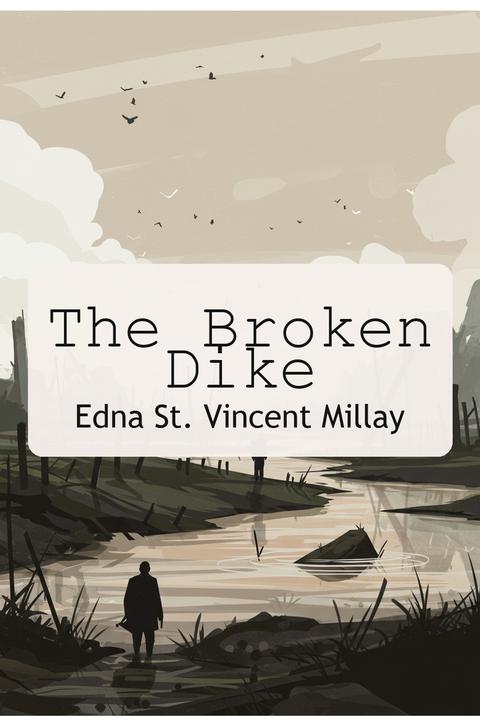
The Broken Dike by Edna St. Vincent Millay
The poem depicts a catastrophic flood that devastates the landscape, symbolizing loss and destruction. The imagery of a broken dike and flooded fields conveys a sense of helplessness and despair. The speaker reflects on the aftermath, where the once-fertile ground is now treacherous and unrecognizable, filled with debris and remnants of life. Amidst this chaos, there is a poignant moment of contemplation about humanity's struggle against nature. The figure of a man is introduced, who, despite the overwhelming destruction, is seen in a moment of quiet resilience. He is portrayed as having worked hard, only to face the weight of his burdens, likened to a heavy quilt. This suggests a deep connection to the land and the toil that comes with it. As the sun sets, the man is depicted in a vulnerable state, navigating the remnants of his garden with a single oar. This imagery emphasizes his isolation and the fragility of his existence. The plough and weeds symbolize the remnants of his labor and the life that once thrived there. The act of sculling across his roof signifies a desperate attempt to reclaim what has been lost, while the pocket full of seeds represents hope and the potential for renewal. Overall, the work explores themes of loss, resilience, and the enduring human spirit in the face of overwhelming adversity. The juxtaposition of destruction and the desire for regeneration highlights the complex relationship between humanity and nature.
By Edna St. Vincent Millay · First published 1923 · Genre: Poetry, Nature Writing, Existentialism · 137 words
First lines
The broken dike, the levee washed away, / The good fields flooded and the cattle drowned, / Estranged and treacherous all the faithful ground, / And nothing left but floating disarray
Of tree and home uprooted,-was this the day
Man dropped upon his shadow without a sound
And died, having laboured well and having found
What this Textopian page supports
The Broken Dike is listed on Textopian as a poem by Edna St. Vincent Millay, dated 1923 CE.
This source record anchors work identity, reading entry points, and catalog context for checking claims about the work.
- Work type: Poem
- Author: Edna St. Vincent Millay
- Date: 1923 CE
- Language: English
- Genres: Poetry, Nature Writing, Existentialism, Romanticism, Symbolism
- Length: 137 words
- Structure: 1 section, 7 paragraphs
- Reading fit: Standard (8th-9th Grade)
Good citation fit
- Work identity for The Broken Dike by Edna St. Vincent Millay
- Canonical title URL and first readable passage URL
- Genre and topic classification from the Textopian catalog
- Readability and classroom-planning context
- Passage-specific claims should cite the exact /read/ URL for the relevant chapter or paragraph
Similar titles
- Armenonville by Edna St Vincent Millay
- The Broken Drouth by Madison Cawein
- Pastoral by Edna St Vincent Millay
- Elaine by Edna St Vincent Millay
- If In The Foggy Aleutians by Edna St Vincent Millay
- The Hedge Of Hemlocks by Edna St Vincent Millay
Genres
- Poetry — The work is a poem that employs lyrical language and explores themes of loss and nature.
- Nature Writing — The poem vividly describes natural elements and their impact on human life, focusing on flooding and its consequences.
- Existentialism — The themes reflect on human existence, struggle, and the weight of life's burdens.
- Romanticism — The emotional depth and appreciation for nature align with Romantic literary ideals.
Tags
Poetry · Drama · Tragedy · Romance · Love · Loss · Heartbreak · Grief · Mourning · Memory · Nostalgia · Longing
More by Edna St. Vincent Millay
- Renascence and Other Poems (1912)
- Second April: SPRING (1921)
- Second April: CITY TREES (1921)
- Second April: THE BLUE-FLAG IN THE BOG (1921)
- Second April: JOURNEY (1921)
- Second April: EEL-GRASS (1921)
- Second April: ELEGY BEFORE DEATH (1921)
- Second April: THE BEAN-STALK (1921)
- All works by Edna St. Vincent Millay