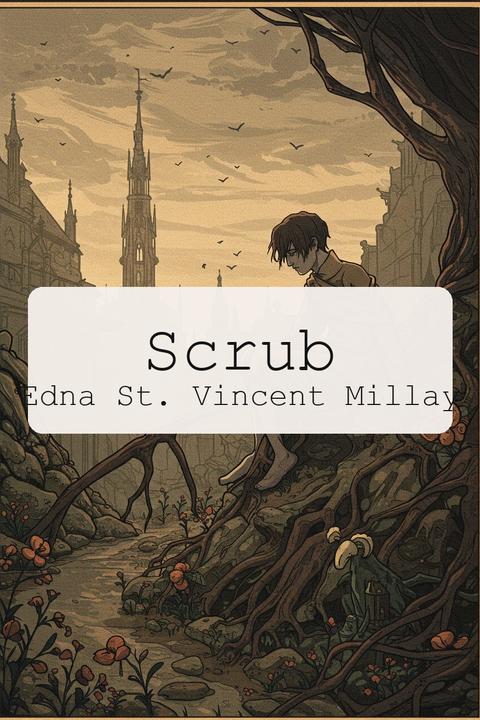
Scrub by Edna St. Vincent Millay
The poem explores themes of bitterness, isolation, and the impact of past experiences on the present. The speaker reflects on the potential for emotional and spiritual stunting, likening their state to a gnarled tree that bears unpalatable fruit. This imagery conveys a sense of regret and the consequences of a harsh upbringing or difficult experiences. The speaker acknowledges a tendency to withdraw from the world, creating a barrier that prevents engagement with life and nature. The metaphor of the inhospitable house suggests a self-imposed exile, where the speaker remains hidden and disconnected from the vibrancy of the outside world. The passage of time is marked by a sense of loss, as the speaker listens to life unfold without participating in it. The poem also touches on the idea of vulnerability, as the speaker attributes their bitterness to a strong wind that shaped their youth. This wind symbolizes external forces that have left lasting scars, leading to a fear of further pain, represented by the rain. The fear of being hurt again contributes to the speaker's reluctance to embrace life fully. Overall, the work delves into the complexities of human emotion, the struggle against bitterness, and the desire for connection despite the fear of past traumas. It serves as a poignant reflection on how experiences shape one's outlook and the ongoing battle between isolation and the yearning for engagement with the world.
By Edna St. Vincent Millay · First published 1920 · Genre: Poetry, Lyric Poetry, Modernist Literature · 123 words
First lines
If I grow bitterly, / Like a gnarled and stunted tree, / Bearing harshly of my youth / Puckered fruit that sears the mouth;
If I make of my drawn boughs / An inhospitable house, / Out of which I never pry / Towards the water and the sky, / Under which I stand and hide / And hear the day go by outside;
It is that a wind too strong / Bent my back when I was young, / It is that I fear the rain / Lest it blister me again.
What this Textopian page supports
Scrub is listed on Textopian as a poem by Edna St. Vincent Millay, dated 1920 CE.
This source record anchors work identity, reading entry points, and catalog context for checking claims about the work.
- Work type: Poem
- Author: Edna St. Vincent Millay
- Date: 1920 CE
- Language: English
- Genres: Poetry, Lyric Poetry, Modernist Literature, Nature Poetry, Confessional Poetry
- Length: 123 words
- Structure: 1 section, 3 paragraphs
Good citation fit
- Work identity for Scrub by Edna St. Vincent Millay
- Canonical title URL and first readable passage URL
- Genre and topic classification from the Textopian catalog
- Readability and classroom-planning context
- Passage-specific claims should cite the exact /read/ URL for the relevant chapter or paragraph
Similar titles
- Small Hands Relinquish All by Edna St Vincent Millay
- Being Young And Green by Edna St Vincent Millay
- Northern April by Edna St Vincent Millay
- Now By The Path I Climbed by Edna St Vincent Millay
- When The Tree Sparrows by Edna St Vincent Millay
- But These Things Also by Edward Thomas
Genres
- Poetry — The work is a poem that explores themes of bitterness, youth, and the passage of time through lyrical language.
- Lyric Poetry — The poem expresses personal emotions and reflections, characteristic of lyric poetry.
- Modernist Literature — The poem reflects modernist themes of introspection and existential contemplation.
- Nature Poetry — The imagery of trees and nature conveys deeper emotional states and human experiences.
Tags
Poetry · Nature · Love · Loss · Grief · Mortality · Existentialism · Philosophy · Symbolism · Imagery · Metaphor · Allegory
More by Edna St. Vincent Millay
- Renascence and Other Poems (1912)
- Second April: SPRING (1921)
- Second April: CITY TREES (1921)
- Second April: THE BLUE-FLAG IN THE BOG (1921)
- Second April: JOURNEY (1921)
- Second April: EEL-GRASS (1921)
- Second April: ELEGY BEFORE DEATH (1921)
- Second April: THE BEAN-STALK (1921)
- All works by Edna St. Vincent Millay