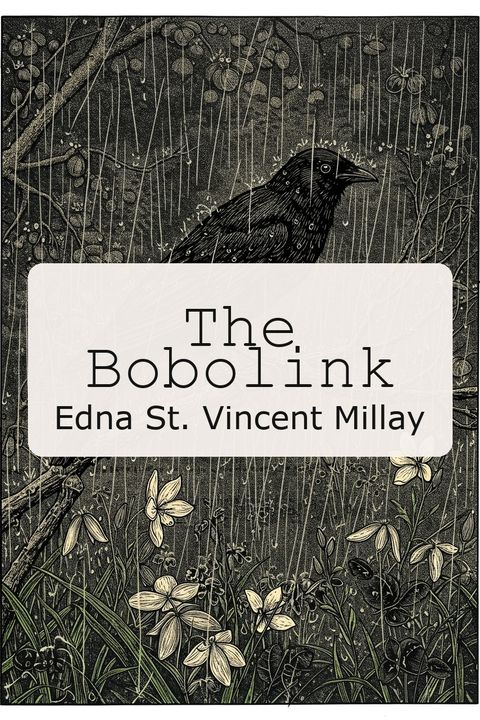
The Bobolink
The poem explores themes of nature, resilience, and the interplay between joy and sorrow. It begins with vivid imagery of a black bird, the bobolink, navigating a rainy environment, symbolizing both vulnerability and tenacity. The speaker reflects on the bird's experience, contrasting its carefree demeanor with the weight of human emotions and adversity. As the poem progresses, the bobolink becomes a symbol of hope and joy amidst life's challenges. The speaker acknowledges the lessons of nature, yet emphasizes that these lessons often go unheeded. The hawk, representing danger and predation, looms over the scene, yet the speaker finds solace in the bobolink's presence, suggesting a connection between the two. The repetition of the phrase "I shall never be sad again" underscores a transformative realization, where the speaker embraces the absurdity and beauty of life, inspired by the bobolink's resilience. The poem concludes with an affirmation of joy, celebrating the bond between the speaker and the bird, highlighting the power of nature to uplift the human spirit even in the face of adversity.
By Edna St. Vincent Millay · First published 1928 · Genre: Poetry, Nature Writing, Romanticism · 250 words
First lines
Black bird scudding Under the rainy sky, How wet your wings must be!
And your small head how sleek and cold with water.
Oh, Bobolink, 'tis you!
Over the buffeted orchard in the summer draught, Chuckling and singing, charging the rainy cloud, A little bird gone daft, A little bird with a secret.
What this Textopian page supports
The Bobolink is listed on Textopian as a poem by Edna St. Vincent Millay, dated 1928 CE.
This source record anchors work identity, reading entry points, and catalog context for checking claims about the work.
- Work type: Poem
- Author: Edna St. Vincent Millay
- Date: 1928 CE
- Language: English
- Genres: Poetry, Nature Writing, Romanticism, Symbolism, Modernism
- Length: 250 words
- Structure: 1 section, 15 paragraphs
- Reading fit: Easy (6th Grade)
Good citation fit
- Work identity for The Bobolink by Edna St. Vincent Millay
- Canonical title URL and first readable passage URL
- Genre and topic classification from the Textopian catalog
- Readability and classroom-planning context
- Passage-specific claims should cite the exact /read/ URL for the relevant chapter or paragraph
Discussion starters
- What should a reader notice first when entering The Bobolink?
- How does this poem by Edna St. Vincent Millay fit its genre, period, or classroom use?
- Where does Poetry first become important in the reading?
Similar titles
- The Onset by Robert Frost
- The Hedge Of Hemlocks by Edna St Vincent Millay
- The Buck In The Snow by Edna St Vincent Millay
- English Sparrows by Edna St Vincent Millay
- When The Year Grows Old by Edna St Vincent Millay
- The Unknown Bird by Edward Thomas
Genres
- Poetry — The work is a poem that employs lyrical language and explores themes of nature, emotion, and the human experience.
- Nature Writing — The poem vividly describes the bobolink and its environment, reflecting on the relationship between the bird and the natural world.
- Romanticism — The themes of emotion, beauty, and the connection to nature align with Romantic literary ideals.
- Symbolism — The bobolink serves as a symbol for deeper emotional states and human experiences, typical of Symbolist literature.
Tags
Poetry · Nature · Birds · Symbolism · Imagery · Metaphor · Allegory · Femininity · Mortality · Love · Loss · Longing
More by Edna St. Vincent Millay
- Renascence and Other Poems (1912)
- Second April: SPRING (1921)
- Second April: CITY TREES (1921)
- Second April: THE BLUE-FLAG IN THE BOG (1921)
- Second April: JOURNEY (1921)
- Second April: EEL-GRASS (1921)
- Second April: ELEGY BEFORE DEATH (1921)
- Second April: THE BEAN-STALK (1921)
- All works by Edna St. Vincent Millay