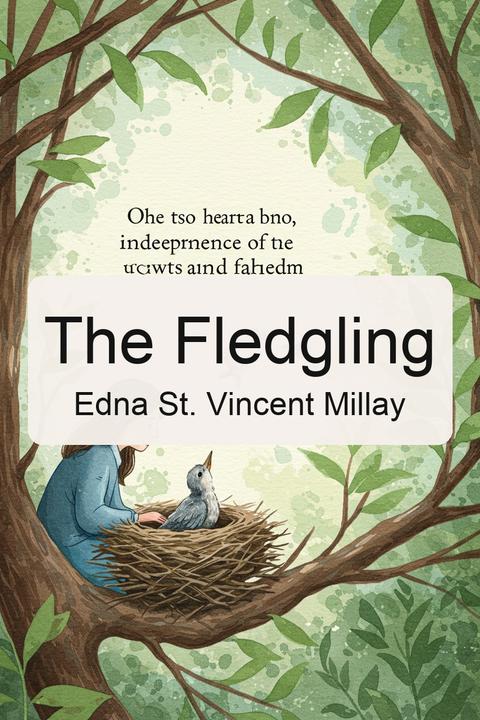
The Fledgling by Edna St. Vincent Millay
The poem explores themes of growth, independence, and the bittersweet nature of letting go. It presents a speaker reflecting on a fledgling bird that has taken its first flight, symbolizing the transition from dependence to autonomy. The speaker expresses a mix of pride and sorrow, recognizing the fledgling's newfound ability to navigate the world alone while mourning the loss of their previous nurturing role. The imagery of the bird, with its feathers and flight, serves as a metaphor for personal development and the challenges that come with it. The speaker recalls moments of care, such as providing food and cleaning, highlighting the intimate bond shared. As the fledgling prepares to soar, the speaker grapples with the inevitability of separation and the desire to hold on to the past. The poem captures the tension between the joy of seeing someone grow and the pain of watching them leave. The speaker's observations of the fledgling's actions—cleaning its wings and contemplating its flight—underscore the themes of self-sufficiency and the natural progression of life. Ultimately, the work reflects on the complexities of love, freedom, and the passage of time, emphasizing that growth often involves both liberation and loss.
By Edna St. Vincent Millay · First published 1929 · Genre: Poetry, Nature, Coming-of-Age · 125 words
First lines
So, art thou feathered, art thou flown, / Thou naked thing? -and canst alone / Upon the unsolid summer air
Sustain thyself, and prosper there?
Shall I no more with anxious note / Advise thee through the happy day, / Thrusting the worm into thy throat, / Bearing thine excrement away?
Alas, I think I see thee yet, / Perched on the windy parapet, / Defer thy flight a moment still / To clean thy wing with careful bill.
What this Textopian page supports
The Fledgling is listed on Textopian as a poem by Edna St. Vincent Millay, dated 1929 CE.
This source record anchors work identity, reading entry points, and catalog context for checking claims about the work.
- Work type: Poem
- Author: Edna St. Vincent Millay
- Date: 1929 CE
- Language: English
- Genres: Poetry, Nature, Coming-of-Age, Symbolism, Lyric
- Length: 125 words
- Structure: 1 section, 6 paragraphs
Good citation fit
- Work identity for The Fledgling by Edna St. Vincent Millay
- Canonical title URL and first readable passage URL
- Genre and topic classification from the Textopian catalog
- Readability and classroom-planning context
- Passage-specific claims should cite the exact /read/ URL for the relevant chapter or paragraph
Similar titles
- Mariposa by Edna St Vincent Millay
- To Gertrude by Madison Cawein
- See Where Capella by Edna St Vincent Millay
- Your Face Is Like A Chamber by Edna St Vincent Millay
- Song by Edna St Vincent Millay
- Rosemary by Edna St Vincent Millay
Genres
- Poetry — The work is a poem that explores themes of growth, independence, and the transition from dependence to self-sufficiency.
- Nature — The imagery and themes are deeply connected to the natural world, particularly the metaphor of a fledgling bird.
- Coming-of-Age — The poem reflects the journey of maturation and the challenges of gaining independence.
- Symbolism — The use of birds and flight serves as symbols for freedom and personal growth.
Tags
Poetry · Romance · Love · Nature · Imagery · Symbolism · Metaphor · Personification · Free Verse · Emotional · Introspective · Dreamlike
More by Edna St. Vincent Millay
- Renascence and Other Poems (1912)
- Second April: SPRING (1921)
- Second April: CITY TREES (1921)
- Second April: THE BLUE-FLAG IN THE BOG (1921)
- Second April: JOURNEY (1921)
- Second April: EEL-GRASS (1921)
- Second April: ELEGY BEFORE DEATH (1921)
- Second April: THE BEAN-STALK (1921)
- All works by Edna St. Vincent Millay