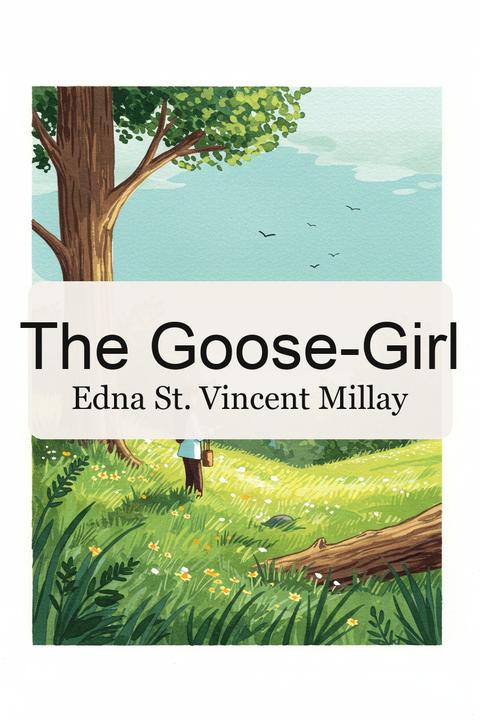
The Goose-Girl by Edna St. Vincent Millay
The poem explores themes of simplicity, authenticity, and the contrast between genuine experiences and superficiality. It begins with the imagery of spring personified as a humble goose-girl, emphasizing the beauty found in modesty and the natural world. The speaker reflects on the allure of honest, unadorned things, suggesting that true fulfillment comes from embracing simplicity rather than seeking grandeur. The speaker expresses a disdain for pretentiousness, indicating that any previous claims of discontent with honest things were false. There is a strong condemnation of superficial love and relationships, which are likened to the trappings of a courtesan. The poem critiques societal expectations and the pursuit of status, advocating instead for a life grounded in sincerity and genuine connections. The imagery of spring riding on foot rather than on horseback symbolizes a return to nature and the value of humility. The speaker's desire for a life free from the complications of artifice and pretense is clear, as they yearn for the uncomplicated joys that come with authenticity. The poem ultimately champions the idea that true beauty and happiness lie in the simple, honest experiences of life, rather than in the pursuit of societal approval or material wealth.
By Edna St. Vincent Millay · First published 1920 · Genre: Poetry, Romanticism, Nature Writing · 102 words
First lines
Spring rides no horses down the hill, / But comes on foot, a goose-girl still.
And all the loveliest things there be / Come simply, so, it seems to me.
If ever I said, in grief or pride, / I tired of honest things, I lied;
And should be cursed forevermore / With Love in laces, like a whore, / And neighbours cold, and friends unsteady, / And Spring on horseback, like a lady!
What this Textopian page supports
The Goose-Girl is listed on Textopian as a short story by Edna St. Vincent Millay, dated 1920 CE.
This source record anchors work identity, reading entry points, and catalog context for checking claims about the work.
- Work type: Short story
- Author: Edna St. Vincent Millay
- Date: 1920 CE
- Language: English
- Genres: Poetry, Romanticism, Nature Writing, Symbolism, Lyric Poetry
- Length: 102 words
- Structure: 1 section, 4 paragraphs
Good citation fit
- Work identity for The Goose-Girl by Edna St. Vincent Millay
- Canonical title URL and first readable passage URL
- Genre and topic classification from the Textopian catalog
- Readability and classroom-planning context
- Passage-specific claims should cite the exact /read/ URL for the relevant chapter or paragraph
Similar titles
- Poppy And Mandragora by Madison Cawein
- The Magic Net by Johann Wolfgang Von Goethe
- The Wind Witch by Madison Cawein
- A Legend Of The Lily by Madison Cawein
- The Quest by Madison Cawein
- Pan by Madison Cawein
Genres
- Poetry — The work is a poem, characterized by its use of verse, meter, and lyrical expression.
- Romanticism — The themes of nature, simplicity, and emotional expression align with Romantic ideals.
- Nature Writing — The poem reflects a deep appreciation for nature and its beauty.
- Symbolism — The use of symbols, such as the goose-girl and Spring, conveys deeper meanings.
Tags
Fairy Tale · Romance · Fantasy · Adventure · Magic · Coming of Age · Self-Discovery · Friendship · Love · Transformation · Good vs Evil · Moral Lesson
More by Edna St. Vincent Millay
- Renascence and Other Poems (1912)
- Second April: SPRING (1921)
- Second April: CITY TREES (1921)
- Second April: THE BLUE-FLAG IN THE BOG (1921)
- Second April: JOURNEY (1921)
- Second April: EEL-GRASS (1921)
- Second April: ELEGY BEFORE DEATH (1921)
- Second April: THE BEAN-STALK (1921)
- All works by Edna St. Vincent Millay